
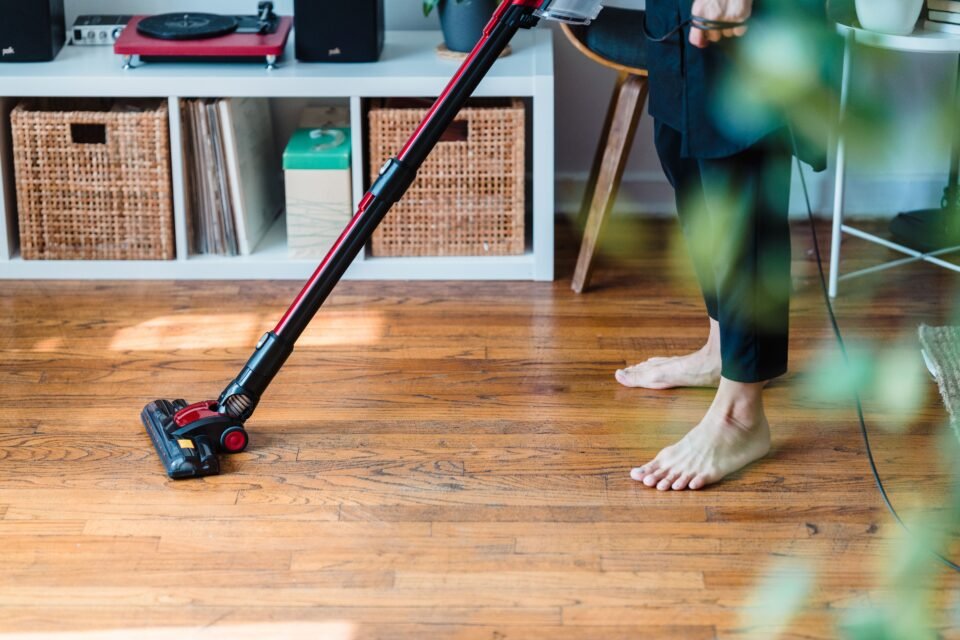
Dull, cloudy or scuffed hardwood does not mean your floors are worn out. In most homes the finish underneath is still healthy, and it only needs the right care to look brand new again. Hardwood is also one of the easiest surfaces to damage with the wrong routine. If you have ever searched for how to clean hardwood floors and ended up buried in conflicting advice about vinegar, steam mops and oil soaps, you are not alone. The honest answer to how to clean hardwood floors is that it depends mostly on the finish sitting on top of the wood, not on the species of timber underneath. Once you know your finish, getting that fresh, just-installed look becomes simple.
This guide shows you how to clean hardwood floors safely, step by step, so they look brand new again without damaging the finish, whether you have solid planks, engineered boards or an older floor that has seen decades of foot traffic. It also covers the topics many guides skip: how to identify your finish, how to treat engineered and laminate floors differently, how to deal with scuffs, wax, sticky residue and pet accidents, and when it is time to call a professional.
Quick Answer: How to Clean Hardwood Floors Without Damaging Them
If you only have a minute, here is how to clean hardwood floors the safe way:
- Remove loose dust and grit by sweeping with a soft broom or vacuuming with the beater bar switched off.
- Lightly mist a pH-neutral hardwood floor cleaner onto a microfiber pad. Never pour liquid directly onto the boards.
- Damp-mop one small section at a time, moving in the direction of the wood grain.
- Dry any wet spots immediately with a clean microfiber cloth and let the floor air-dry completely.
Three rules never change: skip the steam mop, never soak the boards, and never use wax or oil soap on a sealed floor unless your manufacturer specifically recommends it.
Before You Start: Know Your Floor Type and Finish
The most important step in how to clean hardwood floors happens before you pick up a mop. Different floor types and finishes react differently to water and cleaning products, so a method that is perfect for one floor can quietly ruin another.
Solid Hardwood, Engineered Hardwood and Laminate
Solid hardwood is milled from a single piece of timber, which means it can be sanded and refinished several times over its life. Engineered hardwood has a thin layer of real wood bonded to plywood or fibreboard underneath, so the wear layer is much thinner and moisture is a bigger risk. Laminate is a printed image of wood on a composite core, which is why many people call it fake wood flooring. Laminate is not real wood at all, and it swells quickly if water seeps into the seams.
Everything in this guide about how to clean hardwood floors applies fully to sealed solid wood. Engineered boards follow the same low-moisture approach but you should always check the manufacturer’s care guide first. Laminate needs even less water and a cleaner made specifically for laminate.
How to Identify Your Finish
Most modern floors are sealed with a surface finish such as polyurethane. Older floors, and some high-end custom floors, may be finished with penetrating oil, hard wax oil or traditional wax. Some floors are even left unfinished. You can find out which you have with a simple water-drop test in a hidden spot, such as inside a closet.
Place a single drop of water on the floor and watch it for a few minutes. If the drop beads up and stays on top, you have a sealed floor with a surface finish, and you can follow the standard method for how to clean sealed hardwood floors and how to clean polyurethane hardwood floors. If the drop slowly soaks in and darkens the wood, the floor is oiled, waxed or unfinished, and you need a gentler approach. That is the case when you want to know how to clean oiled wood floors, how to clean waxed wood floors, how to clean unfinished wood floors or how to clean unsealed wood floors, because those surfaces absorb moisture and need products made for them. If you are unsure, ask the installer or check the original paperwork.
Knowing the result of this test is the foundation of how to clean hardwood floors with confidence instead of guesswork.
Why the Finish Matters More Than the Wood Species
People often ask how to clean oak floors, how to clean maple floors or how to clean cherry hardwood floors as if each species needed its own method. In practice, the finish decides almost everything. Oak and maple with the same polyurethane coating are cleaned the same way, while two oak floors with different finishes are not. Whatever timber is under your feet, the principles of how to clean hardwood floors stay the same: remove grit first, use as little moisture as possible, use a cleaner designed for your finish, and dry quickly.
The Right Tools for Cleaning Hardwood Floors
Before you learn how to clean hardwood floors step by step, gather the right tools. Using the wrong tool is one of the most common ways people scratch or dull a floor that was perfectly fine.
- A soft-bristle broom or a microfiber dust mop for daily dry cleaning.
- A vacuum with a hard-floor setting and a soft brush head. This is how to vacuum hardwood floors without scratching: switch off the rotating beater bar, because a spinning brush can mark the finish.
- A flat microfiber mop with washable pads. Microfiber picks up fine dust and uses very little water.
- A spray bottle or a mop with a built-in spray function, so you control how much liquid reaches the floor.
- Clean, dry microfiber cloths for spot drying and buffing.
- Felt pads for furniture legs and mats for entrances.
Best Cleaners for Sealed Hardwood Floors
Look for a pH-neutral cleaner made for hardwood that dries quickly and leaves no film. Many people use Bona, and learning how to use Bona hardwood floor cleaner is simple. Shake the bottle, spray a light, even mist on a small area or directly on a microfiber pad, and mop. Do not rinse, and do not let it pool. The same steps apply when you ask how to use Bona wood floor cleaner or how to clean wood floors with Bona on a floor that is sealed. Always read the label first, because a cleaner made for sealed floors is not meant for oiled or waxed surfaces.
Whenever you shop for a product, remember that the best answer to how to clean hardwood floors is not a magic formula but a gentle cleaner used in small amounts.
Natural and DIY Options
Many homeowners prefer to learn how to clean wood floors naturally, and how to clean hardwood floors naturally is a popular search for good reason. The safest natural option is plain water on a well-wrung microfiber mop, which works well for light dirt on a sealed floor. This is also the simplest answer to how to clean hardwood floors with water: use a barely damp pad, never a wet one. For anyone asking how to clean hardwood floors without chemicals, a dry microfiber mop followed by a barely damp pass does the job for most households. Be careful with homemade mixtures, and read the section below on vinegar before you try one.
How to Clean Hardwood Floors Step by Step
Follow this routine every time you wonder how to clean hardwood floors properly. If you are asking how do you clean hardwood floors or how do I clean hardwood floors in the simplest possible terms, this is the answer.
Step 1: Clear the Room
Move chairs, rugs and small furniture out of the way so you can reach every board. Check that nobody needs to walk through the room while the floor is drying, because footprints on a damp finish are annoying to fix.
Step 2: Sweep or Vacuum
Remove loose dirt, sand and pet hair before you add any moisture. Sweep with a soft broom or use a vacuum set for hard floors. This first pass is the most underrated part of how to clean hardwood floors, because grit trapped under a mop acts like sandpaper and wears down the finish over time. Pay attention to corners and edges, where dust collects.
Step 3: Apply Cleaner Sparingly
Lightly mist your hardwood floor cleaner onto a small section of floor or onto the mop pad. Resist the urge to use more, because extra liquid does not clean better, it only increases the chance of water getting into seams. If you are researching how to clean hardwood floors without leaving residue, this is the key: a tiny amount of cleaner, no more than the label allows.
Step 4: Damp-Mop With the Grain
Now comes the part most people mean when they ask how to mop hardwood floors. Use a flat microfiber mop with a lightly damp pad, and mop in the direction of the wood grain, working in sections of a few square feet. The same technique is how to mop wood floors, how do you mop hardwood floors and how to mop timber floors. To avoid marks, change or rinse the pad whenever it looks dirty, because a dirty pad simply spreads grime around. This is also how to clean hardwood floors without streaks, since streaks usually come from too much cleaner or a pad that is already filthy.
Step 5: Dry Immediately
Wipe any damp patches with a dry microfiber cloth, especially along seams and near baseboards. If you are researching how to wash hardwood floors, remember that washing in the traditional sense, with a bucket and a sloppy mop, is exactly what you should not do. Fast drying is the secret of how to clean hardwood floors without leaving cloudy marks.
Step 6: Let the Floor Air-Dry
Open a window or run a fan if the room is humid and give the floor a few minutes before walking on it or replacing furniture. How to clean hardwood floors well is as much about patience as technique.
How Often Should You Clean Hardwood Floors?
The best way to approach how to clean hardwood floors on a schedule is to match your effort to your traffic. A busy household with pets and children needs more frequent care than a quiet apartment. People often ask how often should you clean hardwood floors, how often should you mop hardwood floors and how often to mop wood floors. In most homes, mopping is only needed every few weeks, because sweeping and vacuuming do most of the work.
| Task | Frequency | Notes |
| Dust mop or sweep | Daily in high-traffic areas | Removes grit before it scratches |
| Vacuum with soft brush | Weekly | Beater bar off |
| Spot clean spills | Immediately | Blot, do not rub |
| Damp-mop with hardwood cleaner | Every 2 to 4 weeks, or as needed | Less often for low-traffic rooms |
| Deep clean | A few times a year | See the next section |
| Inspect finish and consider recoating | Yearly check | Recoat when water no longer beads |
How to Deep Clean Hardwood Floors
Sometimes regular care is not enough. If you are wondering how to deep clean hardwood floors or how to deep clean wooden floors, the goal is to remove built-up residue and ground-in dirt without using more water or harsher chemicals. Start with a thorough vacuum, then mop with your normal hardwood cleaner using a clean pad, working in small sections and changing the pad often. For floors with heavy buildup, repeat the pass rather than pressing harder.
The same patient approach applies when you want to know how to clean dirty hardwood floors, how to clean extremely dirty hardwood floors or how to clean old hardwood floors that have not been properly maintained for years. The principle of how to clean hardwood floors deeply is repetition, not force. Avoid scrubbing brushes and abrasive pads, which scratch the finish, and avoid soaking the boards. If the floor still looks dull after two or three careful passes, the issue is probably worn finish, not dirt, and you may need a professional. Anyone researching how to clean hardwood floors professionally should know that experts use specialised machines, controlled moisture and finish-safe products, which is why they can often restore floors that look beyond saving.
What Not to Use on Hardwood Floors
A big part of how to clean hardwood floors correctly is knowing what to avoid. These mistakes cause most of the damage that people later blame on wear and tear.
Steam Mops
It can be tempting to look up how to steam clean hardwood floors or how to steam mop hardwood floors because steam seems clean and chemical-free. Flooring professionals and manufacturers generally advise against it. Heat and moisture can push water into seams, cloud the finish and cause boards to warp over time. When it comes to how to clean hardwood floors safely, steam is best left for tile.
Vinegar and Water
Searches such as how to clean hardwood floors with vinegar, how to clean wood floors with vinegar, how to wash hardwood floors with vinegar and how to mop wood floors with vinegar are extremely common, so it deserves a clear answer. Many flooring organisations and manufacturers recommend against regular vinegar cleaning, because acidity can slowly dull a polyurethane finish. A diluted mix may not cause visible harm in one use, but repeated use can leave the floor looking hazy. A pH-neutral hardwood cleaner is the safer choice, and you should always follow your floor maker’s guidance.
Oil Soap, Wax and Shine Products
People ask how to clean hardwood floors with Murphy’s oil soap because it is a familiar household product. On sealed floors, oil soap can leave a film that attracts dirt and makes the floor look dull. Likewise, how to wax hardwood floors is a question for waxed floors only. Putting wax on a polyurethane-sealed floor creates a slippery, cloudy layer that is hard to remove. If you already have buildup, see the section on stains below for how to remove wax from a wood floor.
Soaking Wet Mops and Abrasive Pads
A wet mop is the number one enemy of hardwood. Even on a sealed floor, standing water finds its way into gaps. If you are curious how to clean hardwood floors without water at all, a dry microfiber mop and a quick buff with a dry cloth is a safe option for light dust. Disposable wet pads from sprays and mops are fine on sealed floors when used lightly. This is how to clean hardwood floors with a Swiffer without overdoing the moisture, but they are not suitable for unfinished or oiled surfaces.
How to Clean Engineered Hardwood and Laminate Floors
A question many readers have is how to clean engineered hardwood floors, how to clean engineered wood floors or even simply how to clean engineered hardwood. The answer is the same low-moisture routine, just stricter: sweep or vacuum, use a barely damp mop, and dry immediately. Because the wear layer is thin, you should avoid anything abrasive and you should never let water sit. You can also use the same method for how to mop engineered hardwood floors, how to wash engineered hardwood floors and how to deep clean engineered hardwood floors, but always check the manufacturer’s recommendations first.
Laminate looks like wood but behaves differently. If you are searching how to clean laminate wood floors, how to clean fake wood floors or how to clean laminate hardwood floors, use a cleaner approved for laminate, mop with a very lightly damp microfiber pad and dry straight away. Laminate cores swell when they get wet, so be extra cautious with water around seams. The good news is that the general principles of how to clean hardwood floors, such as removing grit first and using minimal moisture, carry over to every wood-look floor.
How to Remove Stains, Scuffs and Sticky Residue
Even with a perfect routine, floors pick up marks. Here is how to deal with the most common ones on a sealed floor. Test any method in a hidden spot first.
| Problem | What to try |
| Scuff marks | Rub gently with a dry microfiber cloth or a clean tennis ball; use a little hardwood cleaner on a soft cloth if needed |
| Light scratches | Buff with a dry cloth, then use a touch-up marker or wax stick matched to your floor colour |
| Sticky residue | Wipe with a cloth barely dampened with your hardwood floor cleaner, then dry |
| Candle wax | Harden with a bag of ice, then lift with a plastic card |
| Grease | Blot, then wipe with a lightly damp cloth and a tiny amount of cleaner |
| Water marks | Light white rings may buff out with a dry cloth; dark stains usually need professional repair |
Scuff Marks
Many people ask how to remove scuff marks from hardwood floors, how to get scuff marks off wood floors or how to remove scuffs from hardwood floors. Start with the gentlest method, a dry microfiber cloth rubbed with light pressure, because most scuffs are just rubber or shoe material sitting on top of the finish. If that fails, a barely damp cloth with a little hardwood cleaner usually works. Avoid harsh solvents.
Scratches
Those wondering how to remove scratches from hardwood floors should first see how deep the scratch goes. Surface scratches in the finish can be hidden with a touch-up product and a soft cloth. Deep scratches that cut into the wood need filling or a professional repair. The same advice applies to how to remove scratches from wooden floor and how to clean scratched wood floors: clean the area first, then repair, never scrub.
Stains and Water Marks
If you want to know how to get stains out of hardwood floors or how to remove stains from hardwood floors, identify the stain first. Surface stains in the finish often lift with a damp cloth and cleaner, while dark stains that have penetrated the wood are much harder. For white rings, see how to remove water stains from wood floor guidance on your finish type; a dry cloth and gentle buffing sometimes helps. For deep dark marks, call a professional.
Sticky Residue, Wax and Candle Wax
Sticky spots happen when spills or too much cleaner dry on the floor. For how to remove sticky residue from hardwood floors, wipe with a barely damp cloth and cleaner, then dry. If you ask how to get candle wax off wood floor, let the wax harden with ice and lift it gently with a plastic card, never a metal blade. Old product buildup is another story: how to remove wax from wood floor or how to remove residue from hardwood floors may require a dedicated cleaner or a professional if the wax layer is thick. For grease, learn how to remove grease from hardwood floors by blotting first, then wiping lightly.
How to Make Hardwood Floors Shine
Shine is one of the biggest reasons people search for how to get hardwood floors to shine, how to shine hardwood floors and how to get wood floors to shine. Real shine comes from a clean surface and a healthy finish, not from heavy products. Start with a thorough pass using your normal method for how to clean hardwood floors, and then buff dry with a clean microfiber cloth.
Many readers also ask how to polish hardwood floors, how to polish wood floors, how do you polish hardwood floors or how to shine up hardwood floors. A polish made for your finish can add a gentle glow, but only use it as directed and never over wax. If you are looking for how to shine wood floors without refinishing, the answer is usually a deep clean followed by a manufacturer-approved restorer. For dull or hazy results, how to clean dull hardwood floors starts with removing residue, and how to restore shine to hardwood floors depends on whether the finish is worn. For waxed surfaces only, how to buff wood floors with a soft pad can help. If the finish is truly worn through, no amount of cleaning will bring the shine back, and recoating or refinishing is the answer.
How to Clean Hardwood Floors With Pets and Kids
Pets and children are tough on floors, so how to clean hardwood floors with pets is one of the most practical questions. Trim pet nails, wipe paws at the door and clean up accidents immediately. Pet urine should be blotted up right away, because it can soak into seams and stain the wood. After blotting, wipe with a cloth lightly dampened with hardwood cleaner and dry fully.
Pet hair is another daily battle. For how to get dog hair off hardwood floor surfaces, a microfiber dust mop or a rubber broom pulls hair together quickly, and a soft-brush vacuum finishes the job. With children, sticky juice and snack crumbs are the usual culprits, so keep a spray bottle of cleaner and a dry cloth handy. Frequent quick passes are the easiest way to master how to clean hardwood floors in a family home.
How to Clean Hardwood Floors in Special Situations
Some situations need extra care. In a busy kitchen, how to clean hardwood floors in the kitchen means wiping spills at once and using mats near the sink and stove, since water and grease are the biggest threats there. After removing carpet, how to clean hardwood floors after removing carpet starts with careful vacuuming and removing any tape, adhesive or padding residue before using any cleaner. After building work, how to clean hardwood floors after construction means vacuuming thoroughly several times before mopping, because fine dust scratches when it is rubbed in.
Older floors need patience. When people ask how to clean old hardwood floors, how to restore old wood floors or how to clean parquet floor surfaces, the best advice is to start gently, test in a corner and go slowly. Wax-finished or worn floors should not be treated like new sealed floors. In every one of these scenarios, how to clean hardwood floors safely begins with identifying the finish and using the least aggressive method that works.
How to Disinfect and Sanitize Hardwood Floors
Many homeowners ask how to disinfect hardwood floors, how to disinfect wood floors or how to sanitize hardwood floors, especially after illness or a pet accident. Harsh disinfectants such as bleach can damage the finish. Choose a product that states it is safe for sealed hardwood, apply it lightly, follow the contact time on the label and dry the floor afterwards. If you are ever unsure, a regular clean with a pH-neutral cleaner removes most dirt, which is the first step of any sanitising routine. Knowing how to clean hardwood floors thoroughly often matters more than the disinfectant itself.
How to Keep Hardwood Floors Clean Longer
Prevention is the easiest part of caring for wood. If you want to know how to keep hardwood floors clean and how to keep wood floors clean, the answer is to stop dirt from reaching the floor in the first place.
- Place mats at every entrance and ask everyone to remove outdoor shoes.
- Fit felt pads to furniture legs, which is also how to protect hardwood floors from furniture damage.
- Use breathable rugs with a floor-safe pad. If you need to know how to clean an area rug on hardwood floor surfaces, lift the rug and clean the floor beneath it regularly, because trapped dust and moisture can mark the finish.
- Keep indoor humidity steady, since wood expands and contracts with the seasons.
- Clean up spills at once and do not let water sit.
If you want to know how to care for hardwood floors, how to care for wood floors, how to take care of hardwood floors or how to maintain hardwood floors, these habits do more than any product. Good maintenance combined with the right method for how to clean hardwood floors will extend the life of your finish by years.
Common Mistakes When Learning How to Clean Hardwood Floors
Most problems come from a handful of habits. Using too much water is the biggest, followed by using a vacuum with a spinning brush, using steam, and leaving spills to dry. Another is switching between several cleaning products, which can cause buildup and cloudy marks. Finally, ignoring the finish type is a mistake that affects everything else. Avoiding these mistakes is half of how to clean hardwood floors successfully.
When to Call a Professional or Refinish
Sometimes cleaning is not the answer. If water no longer beads on the surface, the finish is worn and the floor needs recoating. If you see deep scratches, gray or black patches, boards lifting at the edges or persistent cupping, the damage is beyond routine care. Professionals can screen and recoat the surface or sand and refinish it completely. No guide on how to clean hardwood floors can fix structural damage, but knowing when to stop and call an expert can save a floor.
FAQs About Cleaning Hardwood Floors
How often should I mop hardwood floors?
Sweep or vacuum often and mop only when needed, typically every two to four weeks depending on traffic. Too much mopping adds moisture and wears the finish. Homes with pets or children may need a light mop more often, while low-traffic rooms can go longer between wet cleans.
What is the best homemade cleaner for hardwood floors?
Plain water on a well-wrung microfiber mop is the safest do-it-yourself option for a sealed floor. It removes light dirt without leaving residue. Mixtures with oil, soap or acid can build up or dull the finish, so check your manufacturer’s guidance before using anything other than water or a hardwood-safe cleaner.
How do I make hardwood floors shine?
Shine comes from a clean surface and a healthy finish. Remove residue with a proper hardwood cleaner, then buff dry with a clean microfiber cloth. Avoid layering wax or polish on a sealed floor, because it creates a cloudy film. If the shine is gone for good, the finish may need recoating.
How do I get scratches and scuffs off hardwood floors?
Light scuffs often disappear with a dry microfiber cloth or a barely damp cloth with a little hardwood cleaner. Surface scratches can be hidden with a matching touch-up marker or wax stick. Deep scratches that reach the wood require filling or professional repair, so do not scrub them.
How do I clean hardwood floors without leaving streaks?
Streaks come from too much cleaner, a dirty mop pad or slow drying. Use only a light mist of cleaner, change or rinse the pad often and dry any damp patches right away with a clean microfiber cloth. Working in small sections helps you control moisture and prevents marks.
Final Thoughts: Your Hardwood Floor Cleaning Checklist
Now that you know how to clean hardwood floors safely, the routine is easy to remember. Identify your finish first, because that one step shapes how to clean hardwood floors correctly. Remove grit before you mop, use only a light mist of a pH-neutral cleaner, mop with the grain and dry immediately. Avoid steam, soaking, wax on sealed floors and harsh solvents. Handle scuffs, wax, sticky residue and pet accidents quickly and gently, and use mats, felt pads and a steady schedule to keep dirt off the floor.
Quick checklist:
- Know your finish with the water-drop test.
- Sweep or vacuum with the beater bar off.
- Mist cleaner lightly and damp-mop with the grain.
- Dry spots right away and let the floor air-dry.
- Mop only as needed, not on a rigid timetable.
- Call a professional when the finish is worn or boards are damaged.
With a little care and the right method, how to clean hardwood floors becomes a quick routine, and your floors can look brand new again and stay that way for many years