
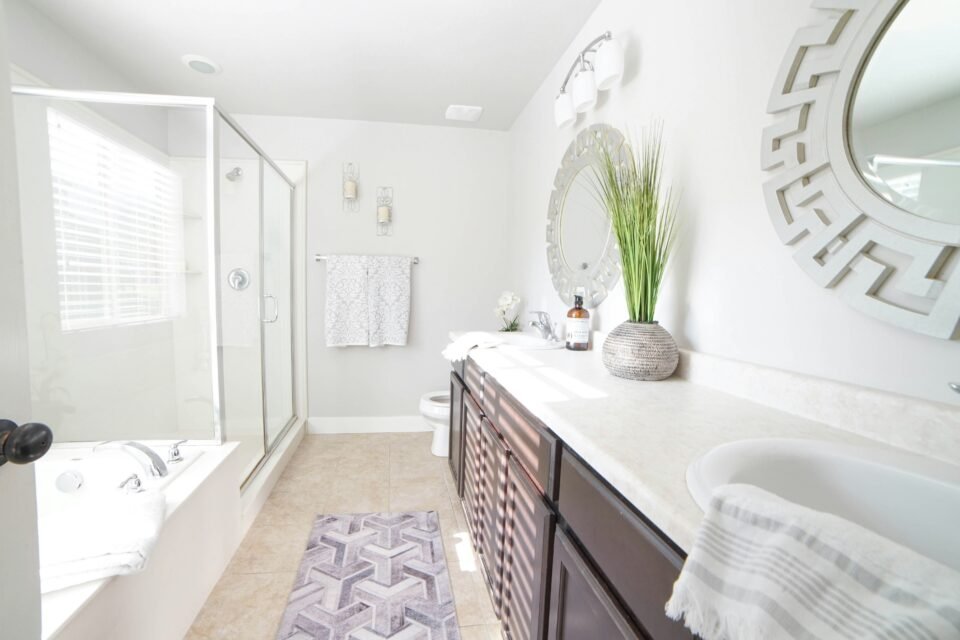
Knowing how to clean bathroom well is less about scrubbing harder and more about working in the right order. Most people spray a cleaner, wipe it off right away, and wonder why the shower still looks cloudy and the faucet is still spotty. The fix is simple. Start high, let each product sit for the time printed on its label, scrub only where you need to, and finish with the floor.
This guide shows how to clean bathroom from top to bottom in about 45 minutes, plus a 10-minute weekly refresh for busy weeks. You will learn how to clean bathroom surfaces without damaging them, how to handle soap scum, mold, hard water stains and smelly drains, and which products should never be mixed. Whether you are a renter preparing for a move-out inspection, a first-time homeowner, or a parent whose bathroom takes a daily beating, you can follow along on your phone while you work.
The 10-Step Bathroom Cleaning Order
If you only have a minute, here is how to clean bathroom in the right order:
- Open a window or run the fan, put on gloves, and clear the counters.
- Dust the fan, vents and light fixtures.
- Spray the shower, tub and toilet bowl cleaner, then let them sit.
- Clean the mirror and any glass.
- Clean the sink, faucet and countertop.
- Scrub the shower, tub, tile, grout and drains.
- Scrub and wipe the toilet.
- Disinfect high-touch surfaces.
- Mop the floor.
- Wash towels, the bath mat and the shower curtain liner.
The logic is simple. Dust falls, so you clean high areas first. Cleaners need time to work, so you apply them early and scrub later. The toilet is the dirtiest fixture, so it comes near the end, and the floor comes last so you only mop once.
Supplies and Chemical Safety
The supplies you actually need
You do not need a dozen specialty products to learn how to clean bathroom properly. A small kit covers almost everything.
| Supply | What it is for | When you need it |
| All-purpose bathroom cleaner (for example, Scrubbing Bubbles) | Sinks, counters, tubs, tile | Every clean |
| Dish soap (for example, Dawn) | Soap film and greasy residue on most surfaces | Every clean |
| Toilet bowl cleaner and brush | Bowl and under the rim | Every clean |
| Glass cleaner or squeegee | Mirror and shower glass | Every clean |
| Microfiber cloths | Wiping and polishing without lint | Every clean |
| Non-scratch sponge | Tubs, sinks, shower walls | Every clean |
| Grout brush (for example, OXO Good Grips) | Grout lines, corners, drain edges | Monthly or when stains show |
| Disinfectant | High-touch spots, especially when someone is sick | As needed |
| Baking soda | Gentle scrubbing paste for sinks and tubs | Occasionally |
| White vinegar | Light mineral deposits on suitable surfaces | Occasionally, never mixed with bleach |
| Rubber gloves and a mop | Hand protection and floors | Every clean |
The brand names above are examples, not tested winners. Always check the product label and the care instructions for your fixtures before you use anything.
Cleaning versus disinfecting
The CDC’s guidance on when and how to clean and disinfect your home explains that cleaning with soap or detergent removes dirt and most germs in many household situations, while disinfecting matters most when someone is sick or at higher risk. Cleaning removes dirt and film. Disinfecting applies a labeled product to a surface that is already clean, and it only works if the surface stays wet for the contact time on the label. For a routine bathroom, clean everything and disinfect the high-touch spots.
Chemical safety rules
- Never mix bleach with vinegar, ammonia or any other cleaning product. Mixing can release dangerous fumes.
- Ventilate the room with a window or fan, and wear gloves. Add eye protection if you are spraying overhead.
- Read the label for dwell time and surface warnings, and test on a hidden spot first.
- Keep children and pets out until surfaces are dry.
How to Clean Bathroom Step by Step
Step 1: Clear the space and let in fresh air
When you are working out how to clean bathroom efficiently, an empty counter is half the job. Remove toothbrushes, soap dispensers and décor, toss empty bottles, and pull down the bath mat and shower curtain liner to wash later. Open a window or switch on the fan, then put on rubber gloves.
Step 2: Dust the fan, vents and high spots
Dry dust turns into muddy streaks once it meets water, so remove it first. Wipe the exhaust fan cover, vents, light fixtures and the top of the mirror with a dry microfiber cloth. If you wonder how to clean bathroom ceiling dust, the same dry cloth on a long handle works. Dark spots on the ceiling are a different job, covered in the mold section below.
Step 3: Spray and let the products work
Spray bathroom cleaner on the shower walls, tub and tile, and squeeze toilet bowl cleaner under the rim. Then walk away. Many labels call for several minutes of contact time, and disinfectants often need longer, so read yours. This pause is the real secret of how to clean bathroom fast: while the products work, you clean something else.
Step 4: Clean the mirror and glass
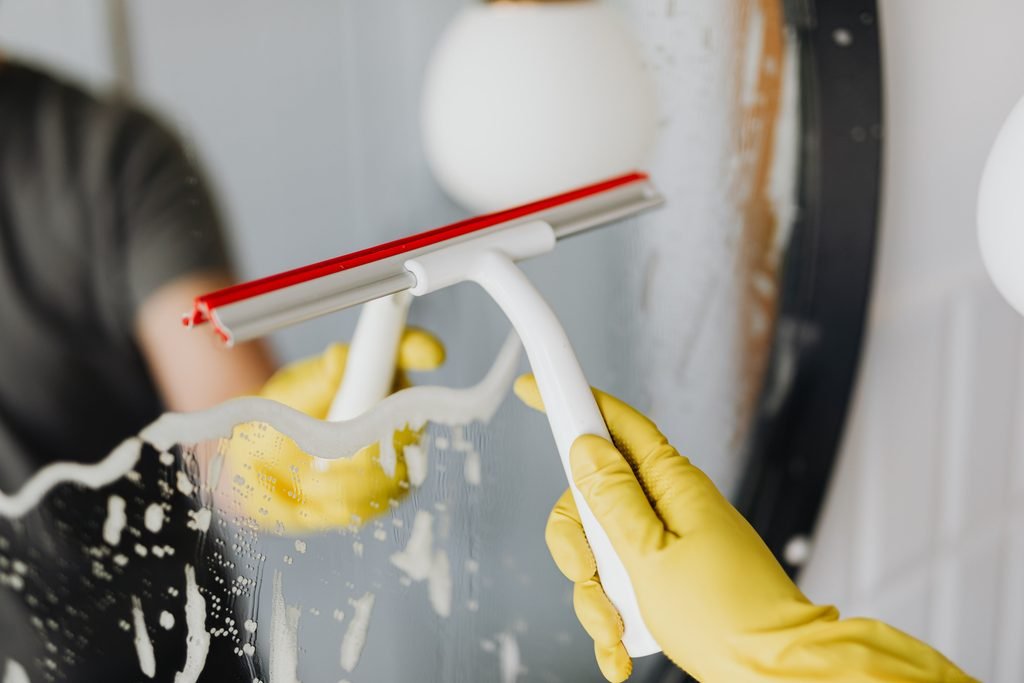
Spray glass cleaner on a microfiber cloth rather than on the mirror, and wipe from top to bottom. If you are unsure how to clean glass doors in bathroom spaces, use the same method and finish with a squeegee so water does not dry into spots. That also answers how to clean a shower glass door and how to clean bathroom glass in general: remove soap film before it hardens.
Step 5: Clean the sink, faucet and countertop
Wipe the countertop first and the basin second so hair and crumbs end up in the drain. For how to clean bathroom sink stains, a paste of baking soda and water on a soft sponge lifts most marks from porcelain, but test marble first. Polish the faucet with a damp cloth, paying attention to the base where water collects, which covers how to clean bathroom faucet.
If the water drains slowly, how to clean bathroom sink drain takes about two minutes: pull out visible hair, scrub the stopper, and flush with hot water. People also ask how to unclog bathroom sink with baking soda. A scoop of baking soda followed by hot water can loosen light buildup, but hair needs to be removed by hand or with a drain tool.
Step 6: Scrub the shower and tub
This is the biggest step, so work from the top down. If you are asking how to clean bathroom shower, start with how to clean shower walls: use a non-scratch sponge in overlapping strokes and rinse with warm water. For how to clean shower floor, scrub in small circles and pay attention to corners. A plastic or textured floor needs a soft brush rather than an abrasive pad, which is how to clean plastic shower floor and how to clean textured shower floor without scratching it. If you need how to clean a shower stall, treat it as walls plus a floor: top first, floor last.
Tubs follow the same pattern. How to clean bathtub stains depends on the material. A non-abrasive cleaner and soft sponge suit acrylic, while porcelain can handle a baking soda paste.
Tile and grout need a brush. How to clean tile shower surfaces is easy, but how to clean shower grout takes elbow grease. Dip a grout brush in cleaner, scrub along each line, and rinse. The same routine covers how to clean tiles and grout, how to clean shower tile grout and how to clean between tiles in shower corners.
Finish with the drains. For how to clean shower drain, lift the cover, pull out the hair, scrub the inside with an old brush, and rinse. The same steps answer how to clean bathtub drain and how to clean bathroom drain.
Step 7: Clean the toilet
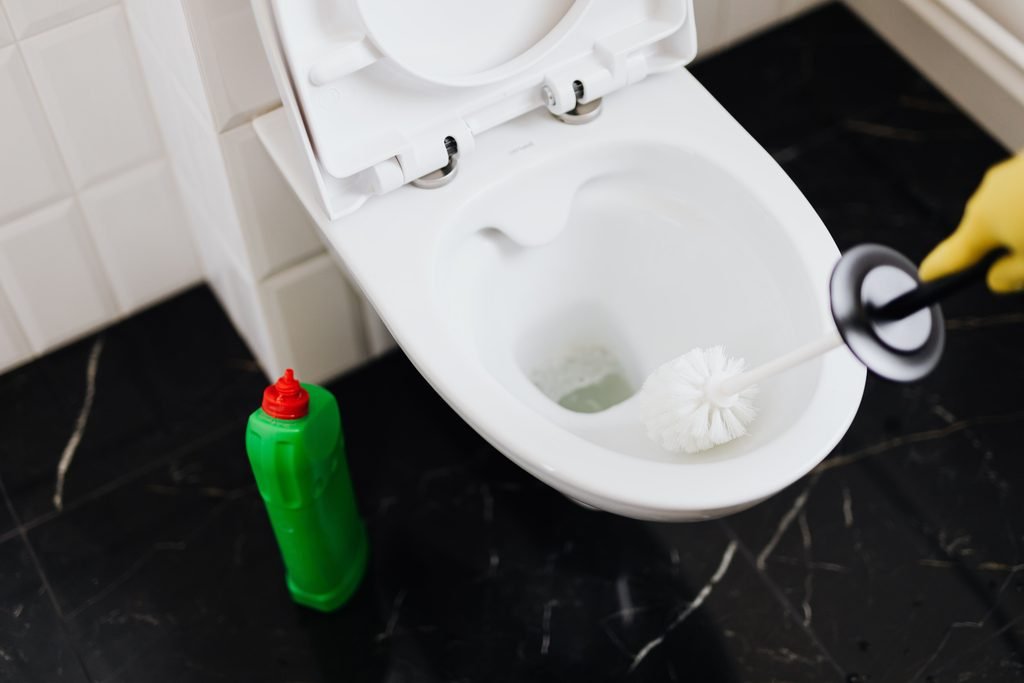
For how to clean the toilet bowl, brush under the rim and around the bowl with the cleaner that has been sitting, then flush. Wipe the seat, lid, hinges, tank, handle and base with a cloth and cleaner, working from cleanest to dirtiest. Then deal with the brush itself. How do you clean a toilet brush? Rinse it in the flushing bowl, spray it with disinfectant, let it dry in the open, and replace it when the bristles wear out.
Step 8: Wipe high-touch surfaces
Wipe the flush handle, faucet handles, doorknob, light switch and cabinet pulls with disinfectant and keep them wet for the time on the label. This is how to disinfect a bathroom without drenching every surface, and it works as how to sanitize bathroom touchpoints between deep cleans. For how to disinfect a shower or how to disinfect bathtub surfaces, rinse away cleaner first, then apply the disinfectant according to its label.
Step 9: Mop the floor
Sweep or vacuum loose hair, then mop. Here is how to mop a bathroom floor: start in the far corner, work toward the door, wring the mop well, and change the water when it turns cloudy. How to clean bathroom floor tiles follows the same method with extra attention on grout, and how to clean bathroom floor grout may need the brush from earlier. That is how to clean bathroom floor without leaving footprints on your way out.
Step 10: Wash the soft items
Wash towels and the bath mat on the warmest setting their labels allow. How to wash a bath mat is simple: shake it out, machine wash, and dry it fully. For how to clean shower curtain items, check the label, then wash them in the machine with a couple of towels. That covers how to clean shower curtain in washer and how to clean shower liner. A fabric bathroom rug follows the same rules, so how to clean bathroom rug is one more load. Rehang liners open so they dry quickly.
Weekly Refresh vs. Deep Clean
Not every clean needs 45 minutes. For a weekly refresh, which is the fastest answer to how to clean bathroom quickly, spray the sink, toilet and tub, wipe the mirror, disinfect the handles, swap the hand towel, and mop. That takes about ten minutes.
Once a month, do the full routine. If you are wondering how to deep clean bathroom surfaces or how to deep clean your bathroom before guests arrive, this is it: longer dwell time, more scrubbing on grout and caulk, clean drains, and a wipe of the fan cover and liner. For how to clean bathroom that is really dirty, start with the monthly routine and repeat any stubborn spot once. The same approach works for how to clean a dirty bathroom before a move-out and how to clean a disgusting bathroom after weeks of neglect.
So how often should you clean a bathroom? A weekly refresh and a monthly deep clean suit most households. Busy or shared bathrooms may need more.
| Bathroom area | Suggested frequency | Practical tip |
| Toilet | Weekly | Clean under the rim and around the base |
| Sink and faucet | Weekly | Wipe splashes with a cloth between cleans |
| Shower walls and tub | Weekly refresh, monthly deep clean | Squeegee after showers to slow soap scum |
| Shower glass door | Weekly | Wipe with a squeegee while the glass is wet |
| Grout and caulk | Monthly | Look for dark spots and dry the area well |
| Drains | Monthly | Pull hair out before it builds up |
| Floor | Weekly | Mop last |
| Bath mat and towels | Weekly, or when damp or smelly | Hang to dry completely |
| Shower curtain liner | Monthly | Wash, then hang it open |
| Exhaust fan cover | Every few months | Dust it so air can move freely |
Fixing Common Bathroom Cleaning Problems
Even when you know how to clean bathroom, a few stubborn problems need extra tactics.
Soap scum
Soap scum is a film of soap and minerals. For how to remove soap scum from bathtub surfaces, spray, wait, scrub with a non-scratch sponge, and rinse. A little dish soap on a damp sponge cuts through it on many surfaces. The same steps cover how to clean soap scum from shower walls and doors, plus how to clean bathroom scum on sink edges.
Some people choose vinegar or baking soda for tubs. If you do, how to clean bathtub with vinegar and how to clean bathtub with baking soda are both gentler than harsh scouring, and how to clean a bathtub with vinegar and baking soda is a common pairing. Check your tub’s care instructions first, and never use vinegar on natural stone.
Hard water stains
White crust and cloudy spots are mineral deposits. For how to remove hard water stains from plastic bathtub surfaces, use a mild cleaner labeled for that material, keep contact brief, and rinse well. For fixtures, how to clean shower fixtures is mostly a soft cloth and mild soap. If you have dark finishes, how to clean matte black bathroom fixtures means a soft cloth, mild soap and no abrasives. For how to clean a stained shower, repeat a gentle cleaner rather than reaching for something harsher.
Mold and mildew
Black spots usually signal moisture. For how to remove mold from shower surfaces, wear gloves and a mask, ventilate, and scrub small areas with detergent and water or a product made for mold, following its label. Do not mix products. How to get rid of mold in bathroom spaces starts by fixing the moisture: run the fan during and after showers, squeegee the walls, and let everything dry.
Here is how to handle common spots:
- Shower: how to get rid of black mold in shower and how to clean mold in shower use the same careful scrub, then a thorough rinse.
- Caulk: how to remove mold from caulk in shower means scrubbing with a brush. If dark stains sit under the surface, replace the caulk.
- Grout: how to remove mold from grout calls for a stiff brush and patience.
- Ceiling and walls: for how to remove mold from bathroom ceiling and how to clean mold off bathroom ceiling, use a damp cloth rather than a spray you would breathe in. The same care applies to how to remove mold from bathroom walls.
- Mildew: how to get rid of mildew in shower, how to remove mildew from shower and how to clean mildew from shower areas follow the scrub-rinse-dry pattern.
- Curtains: how to clean a moldy shower curtain means washing it according to its label, and replacing it if stains remain.
- Smell: for how to get rid of mildew smell in bathroom, dry the room, ventilate, and wash damp towels.
Some people call it fungus, but how to get rid of fungus in bathroom spaces is the same moisture-first approach. If growth is large, keeps returning, or sits behind walls, call a professional.
Slow drains and odors
For how to unclog a bathtub drain or how to unclog the shower drain, remove the stopper or cover, pull out the hair, and use a drain tool or plunger. Avoid stacking chemical drain products. How to deodorize shower drain odors is easier once the hair is gone: flush with hot water. For how to deodorize bathroom air, ventilation and clean towels matter most.
Stained grout and caulk
How to whiten grout in shower areas depends on the color. How to clean white grout in shower lines, how to clean yellow grout in shower lines, and how to clean black grout in shower lines all start with a gentle cleaner and a brush. Once grout is clean and dry, how to seal grout in shower floors and walls helps it resist moisture. For how to clean caulk in shower corners, scrub gently and dry afterward.
Cleaning Different Bathroom Surfaces Safely
Knowing how to clean bathroom with mixed materials means matching the cleaner to the surface.
- Natural stone: for how to clean marble shower, how to clean natural stone shower and how to clean stone shower surfaces, use a cleaner labeled for stone. Avoid vinegar and anything acidic.
- Fiberglass, acrylic and plastic: for how to clean fiberglass shower, how to clean acrylic bathtub and how to clean a plastic shower, choose non-abrasive products and soft sponges. How to remove stains from acrylic bathtub surfaces also calls for gentle products.
- Tile: how to clean porcelain tile shower surfaces and how to clean bathroom tiles are usually forgiving, but check grout and stone borders.
- Walls and cabinets: how to clean bathroom walls and how to wash bathroom walls means a damp cloth and mild cleaner. For how to clean bathroom cabinets, use a lightly damp cloth.
- Countertops and windows: how to clean bathroom marble countertops needs stone-safe products, and how to clean bathroom windows is the same as glass.
Natural Versus Commercial Cleaners
If you prefer pantry products, how to clean bathroom naturally usually means dish soap, baking soda and, on suitable surfaces, vinegar. People searching how to clean bathroom with baking soda or how to clean the bathroom with vinegar often want fewer fragrances and lower cost. That works for light cleaning, and how to clean bathroom naturally is a reasonable weekly approach.
Pantry products are not a substitute for a labeled disinfectant when disinfection matters, such as when someone is sick. Commercial cleaners can speed up heavy soap scum, and a labeled product is the right call when you need to disinfect. Whichever route you pick, read the label and never mix products.
I have never done this before. Where do I start with how to clean a bathroom?
Start by clearing the counters and opening a window, then follow the order in this guide: high to low, spray first, scrub second, floor last. Use one all-purpose cleaner and one toilet cleaner, and you are already covered.
What is the fastest way to get it done?
Use the 10-minute weekly refresh. Spray the toilet, tub and sink, wipe the mirror and handles, and mop. If you want how to clean bathroom easily, squeegee the shower after each use and keep a cloth by the sink.
Should I clean the shower or the toilet first?
Start the shower and toilet cleaners first so they can sit, then clean the toilet last because it is the dirtiest. Whenever you are learning how to clean a bathroom, remember that the order protects your clean surfaces.
Can I mix bleach and vinegar for a stronger cleaner?
No. Never mix bleach with vinegar, ammonia or other cleaners, because dangerous fumes can form. Use one product at a time and rinse between them.
How do I stop the bathroom from getting dirty so fast?
Ventilate, squeegee, and wipe the sink and faucet when they look splashed. Washing the mat and curtain liner on schedule also helps keep odors away.
Final Thoughts
Now you know how to clean a bathroom without guesswork: clear the space, dust high areas, apply products and let them work, scrub the shower and tub, handle the toilet last, disinfect high-touch spots, and finish with the floor. Use the weekly refresh to keep things easy and the monthly deep clean to stay ahead of grout, drains and mold.
Save this guide or turn the ten steps into your own bathroom cleaning checklist, and explore the related home-cleaning guides on our site to keep the rest of your home just as fresh. Next time someone asks how to clean a bathroom, you will have a plan you can follow in under an hour.