

A mirror can make a dark corner feel brighter, a narrow hallway feel wider and a plain wall feel finished. It can also look random, too small, hung too high or reflect the one messy shelf in your home. The difference is rarely the mirror itself. It is the size, the height, the position and what the glass reflects.
Here is the short answer on how to decorate with mirrors: choose a mirror roughly two-thirds to three-quarters the width of the furniture beneath it, hang it so its centre sits near eye level (about 57 to 60 inches, or 145 to 152 cm, from the floor), and place it where it reflects something worth seeing, such as a window, a lamp, a piece of art or a pretty corner. Then match the shape and frame to your style and fix it to the wall safely.
This guide goes further than a gallery of photos. You will find sizing and height rules, a room-by-room table, 15 specific ideas with placement and cautions, how to decorate with mirrors a simple way to test a mirror before you drill, renter-friendly and budget options, safety advice for heavy glass and the mistakes that most often spoil the look. Every home is different, so treat the measurements as starting points and trust what you see in your own room.
Quick Answer: 6 Rules for Decorating with Mirrors
- Size it to the space. Above furniture, aim for about two-thirds to three-quarters of its width.
- Hang it at eye level. The centre of the mirror should sit around 57 to 60 inches (145 to 152 cm) from the floor, unless it is above furniture.
- Decide what it reflects first. A window or a lamp doubles the good stuff. A cluttered corner doubles the mess.
- Mix shapes, not chaos. One strong shape (round, arched or rectangular) usually looks better than several competing ones.
- Protect the glass and the wall. Use hardware rated well above the mirror’s weight and check for studs.
- Test before you commit. Mark the size with painter’s tape and look at the reflection at different times of day.
Why Mirrors Work (and When They Do Not)
A mirror does not create light. It redistributes the light that already exists and adds a sense of depth by repeating the view. That is why a mirror beside a window can brighten a room, while a mirror facing a dark wall just shows you a dark wall.
Mirrors also act as a focal point. A framed mirror works like art: it draws the eye, adds shape and gives a blank wall something to do how to decorate with mirrors. Combine those two jobs, light and focal point, and you have the reason designers reach for mirrors in small rooms, hallways and spaces with little daylight.
The limits matter too. A mirror creates the illusion of space, not actual space. Placed badly, it can bounce glare into your eyes, repeat clutter or make a room feel busy. how to decorate with mirrors The rest of this guide is about avoiding those outcomes.
How to Choose the Right Mirror for Your Space
Choose the Right Size and Proportion
The most common mistake is a mirror that is too small. A small mirror floating on a big wall looks lost. Use these starting rules:
| Where it goes | Width guide | Placement guide |
|---|---|---|
| Above a sofa | About two-thirds to three-quarters of the sofa’s width | Roughly 6 to 8 inches (15 to 20 cm) above the sofa back |
| Above a console or entryway table | Slightly narrower than the table, or about two-thirds of its width | About 4 to 8 inches (10 to 20 cm) above the surface |
| Above a bathroom vanity | Equal to the vanity width or a little narrower | About 4 to 8 inches (10 to 20 cm) above the sink or backsplash |
| Above a fireplace mantel | Narrower than the mantel | A few inches above the mantel, leaving breathing room |
| Full-length mirror | At least about 50 inches (127 cm) tall to see head to toe | Lean it or hang it with the bottom near floor level |
| Statement wall mirror | Large enough to cover about half to two-thirds of the wall section | Centre near eye level |
These are guidelines, not laws. A very large leaning mirror can break the width rule and look great because it reads as a deliberate statement.
Match the Shape to the Room
- Round and oval mirrors soften rooms full of straight lines, such as boxy sofas, rectangular windows and tall cabinets.
- Rectangular mirrors suit formal, structured rooms and work well above console tables and mantels.
- Arched mirrors add a gentle architectural curve and look good against tall walls or beside doorways.
- Irregular or organic shapes feel modern and artistic but need calm surroundings, otherwise the room can look crowded.
- Sunburst and ornate mirrors work as a single focal piece. Give them space so the details can be seen.
Pick a Frame and Finish That Fits

The frame is part of your colour scheme. Warm brass or gold frames suit cosy, traditional or earthy rooms. Black metal frames look crisp in modern spaces. Natural wood adds warmth to minimalist or Scandinavian rooms. Painted frames can echo a cushion or curtain colour. how to decorate with mirrors A frameless mirror feels light and clean, and it can disappear into a wall, which is useful in a small bathroom. An antiqued, slightly foxed glass adds age and character but reflects less clearly, so it suits decorative spots more than grooming areas.
Decide What the Mirror Should Reflect
This is the step most guides skip, and it changes the result more than any frame. Before you choose a spot, stand where the mirror would hang and look at what it will show.
- Good things to reflect: a window, a view, a lamp, a plant, a piece of art, a nicely styled shelf or the far end of a room.
- Things to avoid reflecting: a cluttered desk, a laundry corner, bins, a bare dark wall or an unattractive door.
Test Before You Drill
Cut a piece of cardboard or kraft paper to the mirror’s size, or outline it with painter’s tape. how to decorate with mirrors Stick it on the wall at the planned height and check it in the morning, afternoon and evening. Then lean the real mirror in place and take a photo with your phone. The photo shows exactly what the glass reflects, which is easy to miss in person.
How to Decorate with Mirrors: 15 Ideas for Every Room
Each idea below includes where it works best, how to do it and what to watch out for.
1. Hang a Statement Mirror Above the Sofa
Best for: living rooms with a blank wall above the sofa.
Choose a mirror about two-thirds to three-quarters of the sofa’s width and hang it 6 to 8 inches above the back. how to decorate with mirrors A large round or arched mirror softens the straight lines of the sofa. If the wall faces a window, you also get extra daylight bounced into the room.
Watch out for: a mirror that reflects a TV screen or a messy bookshelf. Check the reflection from your seat.
2. Create a Mirror Gallery Wall
Best for: large walls, stairwells and dining areas.
Mix three to seven mirrors in different sizes, and keep one thing consistent: the frame colour, the shape family or the finish. how to decorate with mirrors Lay the arrangement on the floor first, keep about 2 to 3 inches (5 to 8 cm) between pieces and anchor the biggest mirror first. You can also blend mirrors with framed art so the wall does not turn into glass alone.
Watch out for: weight. Each mirror needs its own secure fixing.
3. Place a Mirror Above an Entryway Console
Best for: entryways and short hallways.
A mirror here gives you a last look before you leave and makes a tight entrance feel more open. Keep it slightly narrower than the console, and make sure the top is above the head height of the tallest person in your home. A tray for keys and a small lamp underneath complete the scene.
Watch out for: reflecting a pile of shoes or coats. Position it so it shows the lamp or a plant instead.
4. Use a Full-Length Mirror in the Bedroom
Best for: bedrooms and dressing areas.
A full-length mirror helps you check outfits and adds depth to the room. Lean it against a wall near natural light or hang it on the back of a door or wardrobe. how to decorate with mirrors Choose one at least about 50 inches (127 cm) tall; many are 60 inches or taller.
Watch out for: placement directly facing the bed. Some people find a reflection of the bed unsettling at night, and some follow feng shui principles that suggest avoiding it. how to decorate with mirrors If it bothers you, move it or cover it.
5. Style a Bathroom Vanity Mirror
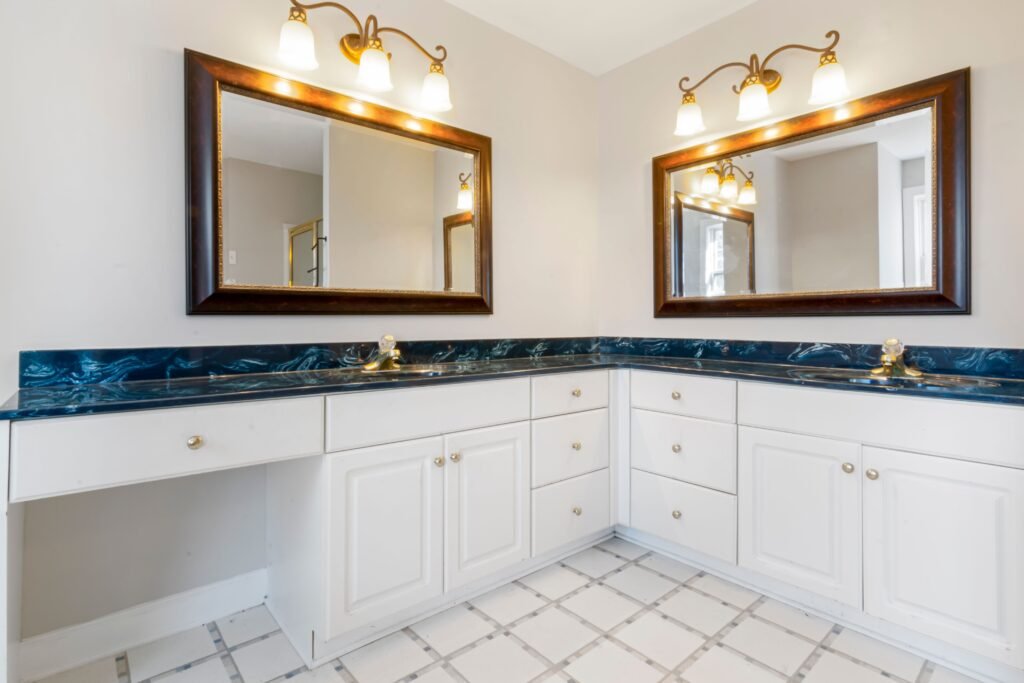
Best for: bathrooms and powder rooms.
A mirror about the same width as the vanity looks neat and balanced. Two matching mirrors above a double vanity look intentional. how to decorate with mirrors Add wall lights at both sides of the mirror, not just overhead, to reduce shadows on the face.
Watch out for: moisture. Choose a mirror with sealed edges or a moisture-resistant backing and use safety glass where possible. how to decorate with mirrors Humidity can eventually damage the silvering on cheap mirrors.
6. Brighten a Dark Hallway
Best for: narrow or windowless corridors.
Hang a mirror on the long wall near a light source, such as a doorway or a window at one end. The glass carries light further down the corridor. how to decorate with mirrors A tall, narrow mirror suits a tight space because it adds height without sticking out.
Watch out for: hanging it directly opposite another mirror, which creates an endless repeated image that many people find distracting.
7. Use a Round Mirror to Soften Straight Lines
Best for: rooms with lots of squares and rectangles.
A round mirror breaks up boxy furniture, windows and shelving. how to decorate with mirrors Use one over a sideboard, a bedside table or a small desk, or group two or three round mirrors of different sizes for a relaxed cluster.
Watch out for: scale. A round mirror needs a larger diameter than you expect to hold its own on a wall.
8. Add a Mirror Above the Fireplace
Best for: living rooms and dining rooms with a mantel.
A mirror above a mantel reflects the room, adds height and works well with candles or a vase on the mantel below. Keep it narrower than the mantel, either hung or leaned.
Watch out for: heat. If the fireplace is used for wood or gas fires, check the clearance and the mirror’s manufacturer instructions, how to decorate with mirrors because heat can damage the glass and its backing. Do not hang a mirror where it may sit above flames or very hot surfaces.
9. Use Mirrored Furniture Carefully
Best for: bedrooms, living rooms and hallways that need glamour.
One mirrored piece, such as a side table, a chest or a cabinet front, adds sparkle without making the room feel like a showroom. how to decorate with mirrors Pair it with soft textures such as wool, linen or velvet so the glass does not feel cold.
Watch out for: fingerprints and overload. Stick to one or two pieces.
10. Make a Small Dining Room Feel More Open
Best for: dining rooms and breakfast corners.
Place a large mirror behind or beside the table so it reflects candlelight, a window or a sideboard. how to decorate with mirrors It adds a feeling of depth and makes dinner feel more special at night.
Watch out for: glare from a window or ceiling light shining straight into diners’ eyes. Check at the times of day you actually use the room.
11. Add a Mirror to a Home Office
Best for: home offices and study corners.
Place a mirror on the side wall so it bounces light across the desk without sitting behind your screen. how to decorate with mirrors It also makes a small workspace feel less boxed in.
Watch out for: video calls. A mirror directly behind you shows the room to everyone on the call, and a mirror behind your monitor can add glare.
12. Try a Leaning Floor Mirror
Best for: bedrooms, living rooms and rentals.
A large floor mirror leaned against a wall looks relaxed and needs no drilling. how to decorate with mirrors Place a rug or a plant next to it, and angle it slightly so it does not reflect the ceiling light directly.
Watch out for: tipping. Fix it to the wall with an anti-tip strap or a discreet bracket, especially if you have children or pets.
13. Decorate with Mirrors in a Rental
Best for: renters and short-term homes.
Lean a large mirror on the floor, stand a smaller one on a console or shelf, or use an over-the-door mirror. For hanging, check your lease first, because a small nail hole is often easy to repair. how to decorate with mirrors Adhesive strips only suit light mirrors and only if the strip’s rated weight is well above the mirror’s weight.
Watch out for: relying on adhesive for heavy glass. If it falls, it can hurt someone and damage your floor.
14. Refresh an Old Mirror Frame on a Budget
Best for: thrifted, inherited or builder-grade mirrors.
A tired frame can look new with paint. See the simple project in the DIY section below. For a plain frameless bathroom mirror, how to decorate with mirrors you can add a frame kit or trim around the edge to turn it into a feature.
Watch out for: paint on the glass. Mask the edge carefully with painter’s tape.
15. Use Mirrors Outdoors Only When They Are Made for It
Best for: covered patios and garden walls.
A mirror can make a small garden feel deeper. Use only mirrors designed for outdoor use, because ordinary mirrors deteriorate in rain and humidity. how to decorate with mirrors Place the mirror where it reflects plants or a seating area.
Watch out for: birds and sunlight. Birds can mistake a reflection for open space, so break up the reflection with plants or a trellis. how to decorate with mirrors Keep mirrors away from dry leaves and other flammable materials where reflected sunlight might be strong.
Room-by-Room Mirror Guide

Use this table as a quick reference when planning.
| Room | Good mirror choice | Where to place it | Main benefit | Caution |
|---|---|---|---|---|
| Living room | Large round, arched or rectangular | Above the sofa, mantel or console | Focal point and extra light | Avoid reflecting a TV or clutter |
| Bedroom | Full-length or leaning mirror | Near a window, on a wardrobe or beside the dresser | Outfit checks and depth | Avoid facing the bed if it bothers you |
| Bathroom | Moisture-resistant, same width as vanity | Above the sink with side lighting | Even light for grooming | Choose sealed edges and safety glass |
| Entryway | Medium rectangular or round | Above a console | Last-minute check and a roomier feel | Keep the reflection tidy |
| Hallway | Tall, narrow or long | On the long wall near a light source | Brightens and adds depth | Avoid two mirrors directly opposite |
| Dining room | Large statement mirror | Behind or beside the table | Reflects candlelight and adds depth | Watch for glare at mealtime |
| Home office | Medium mirror | On a side wall | Spreads light across the desk | Avoid placing it behind your screen or camera view |
| Kitchen | Small to medium, with a sealed backing | Away from the stove, near a window | Bounces light onto the counters | Keep away from steam and grease |
Where to Place a Mirror to Make a Room Look Bigger
A mirror cannot add square footage, but it can change how the room feels. Use these placement rules:
- Put it beside or opposite a window. A mirror opposite a window reflects the outdoor view and brightens the room. Beside a window, it spreads the light along the wall. Check for glare from direct sun at different times of the day.
- Reflect something pleasant. A tidy shelf, a plant or a lamp doubles the good effect.
- Go tall in low rooms. A tall, vertical mirror draws the eye up and makes ceilings feel higher.
- Go wide in narrow rooms. A wide or horizontal mirror on the long wall makes a narrow space feel wider.
- Use a large mirror, not several small ones. One large piece reads as a window-like view, while many small pieces can feel cluttered.
- Keep light sources in the reflection. A lamp reflected in a mirror increases the sense of brightness at night.
How High Should You Hang a Wall Mirror?
A simple rule works for most walls: hang the mirror so its centre is around 57 to 60 inches (145 to 152 cm) from the floor. how to decorate with mirrors That is a common gallery height and it suits most adults’ eye level. Adjust it for your household, for example by lowering a mirror if the main users are children or wheelchair users.
For mirrors above furniture, the furniture decides the height. Leave about 4 to 8 inches (10 to 20 cm) between the furniture top and the bottom of the mirror so the two read as a group.
How to mark the spot:
- Measure the mirror’s height and the position of its hanging hardware on the back.
- Decide on the centre height, then subtract half the mirror’s height to find where the bottom edge will sit.
- Mark the wall with painter’s tape and check the level.
- Mark where the hooks or anchors will go, based on the hardware measurements on the back, and check for studs and pipes before drilling.
Mirror Decorating Mistakes to Avoid
- Choosing a mirror that is too small. It looks like an afterthought. Go bigger than your first instinct.
- Hanging it too high. The middle of the glass should meet your eyes, not the ceiling.
- Reflecting clutter. Check the reflection before you drill.
- Facing mirrors at each other. Two mirrors directly opposite create endless repeats, which many people find dizzying.
- Ignoring glare. A mirror facing a window or a bright bulb can throw hard light into your eyes.
- Using a bathroom mirror that is not moisture-resistant. Humidity can ruin the backing.
- Relying on adhesive hooks for heavy mirrors. Use proper anchors rated for the weight.
- Covering every wall in glass. One or two strong mirrors per room is usually enough.
- Forgetting the frame colour. A frame that clashes with metals or woods in the room can look off.
- Skipping cleaning. A smeared mirror looks dull no matter how nice the frame is. Wipe it with a soft cloth and a glass cleaner.
Safety Tips for Hanging Heavy Mirrors
A large mirror can weigh from around 20 pounds (9 kg) to well over 50 pounds (23 kg) depending on size, glass thickness and frame. Treat it like any heavy object on a wall.
- Check the weight. Look at the product details or weigh it with a scale.
- Use hardware rated well above that weight. Do not push the limit of an anchor or hook.
- Find the studs. Screwing into a stud is stronger than a plastic anchor in plasterboard. If you cannot hit a stud, use anchors designed for heavy loads and follow the manufacturer’s limits.
- Use two fixing points. Two hooks or a cleat spread the load and keep the mirror level. A French cleat is a strong choice for heavy mirrors.
- Check the wire or hanging hardware on the mirror itself. Old wire can weaken. Replace it if you see rust or fraying.
- Secure leaning mirrors. Use an anti-tip strap or bracket.
- Take extra care above beds, cots and seating. A fall could hurt someone, so choose the strongest fixing possible.
- Prefer safety-backed or tempered glass in bathrooms, children’s rooms and high-traffic areas where it is available.
- Work with a second person. Mirrors are awkward and heavy, and wearing gloves helps with grip.
- Be careful with curved or magnifying mirrors. Concave mirrors can focus sunlight, so keep them out of direct sun and away from flammable items.
- Re-check the fixings once a year and tighten or replace anything that has loosened.
Budget-Friendly and Renter-Friendly Mirror Ideas
You do not need to spend a lot to decorate with mirrors well.
Budget ideas
- Shop second-hand stores, flea markets and online marketplaces for solid-framed mirrors. Check that the glass is not cracked and that the frame is sturdy.
- Paint or restyle an old frame instead of buying new.
- Group a few small, inexpensive mirrors in one shape family for a gallery look.
- Add a frame or trim around a plain builder-grade mirror.
Renter ideas
- Lean a large floor mirror against the wall.
- Place a medium mirror on a console, sideboard or shelf.
- Use an over-the-door mirror in a bedroom.
- If you hang one, check the lease and use as few fixings as possible.
Simple DIY Project: Refresh an Old Mirror Frame
Skill level: beginner. Time: about one to two hours plus drying time.
You need: painter’s tape, fine sandpaper, a damp cloth, primer, paint or spray paint, and a drop cloth.
- Take the mirror off the wall, lay it flat on a drop cloth and clean the frame.
- Cover the glass edge carefully with painter’s tape and paper.
- Lightly sand the frame to help the primer grip, and wipe away the dust.
- Apply primer and let it dry as directed.
- Apply two thin coats of paint, letting each dry fully. Work in a ventilated area, especially with spray paint.
- Remove the tape gently, let everything cure and rehang the mirror.
How to Decorate a Frameless Mirror
A frameless mirror is a blank canvas. You can add a wooden or metal frame kit, glue on trim, attach a rope or leather strap for hanging, or place a slim shelf below it for plants and candles. Choose a method that does not damage the glass edges.
Frequently Asked Questions About Decorating with Mirrors
What is the best place to put a mirror in a living room?
Above the sofa, above a console or on a wall beside or opposite a window are the most useful spots. Pick the position that reflects light or a pleasant view, not clutter.
Should a mirror face a window?
It can. A mirror opposite a window reflects the view and increases brightness. A mirror beside a window spreads the light along the wall. Check for glare at different times of day.
How do you decorate a wall with a mirror?
Choose a mirror about two-thirds of the width of the furniture below it, hang it with its centre near eye level and add a lamp, plant or art nearby. For a bigger wall, build a gallery of mirrors and art.
Can mirrors make a small room look bigger?
They can make it feel bigger and brighter by reflecting light and adding depth, but they do not change the actual size. Place them beside windows and reflect pleasant views.
How do you decorate a frameless mirror?
Add a frame kit, trim or a leather strap, or style a shelf below it with plants and candles.
How many mirrors are too many in one room?
There is no fixed number, but one or two strong mirrors usually look better than glass on every wall. Gallery walls work when the mirrors share a shape or colour theme.
Is it bad to put a mirror opposite the bed?
There is no safety issue, but some people dislike seeing a reflection when they wake at night, and feng shui traditions suggest avoiding it. If it bothers you, move the mirror or cover it at night.
What size mirror should go above a console table?
Choose one slightly narrower than the table, or about two-thirds of its width, and hang it 4 to 8 inches above the surface.
Final Thoughts on How to Decorate with Mirrors
Good mirror decorating comes down to a few habits: size the mirror generously, hang it at eye level, point it at something worth reflecting and fix it safely to the wall. Start with one mirror in the room that needs light or a focal point, test the size with tape, and check the reflection in a photo. If it looks right at different times of day, you are ready to drill.
Once you are comfortable, you can build up to a gallery wall, a leaning floor mirror or a refreshed thrifted frame. Keep the rules as a guide, but let the room tell you what works.