Modern kitchen cabinets are defined by clean lines, flat or very slim door fronts, minimal hardware, and a restrained palette of finishes. They look calm, they are easy to wipe down, and they make a kitchen feel larger than it is. This guide explains what “modern” really means, shows 20 ideas with the finish, cost tier, and best use for each, and then goes deeper than most inspiration lists: door styles, materials, hardware, real cost tiers, paint versus reface versus replace, small-kitchen tactics, and the mistakes that quietly ruin a modern kitchen.
What Makes a Kitchen Cabinet “Modern”?
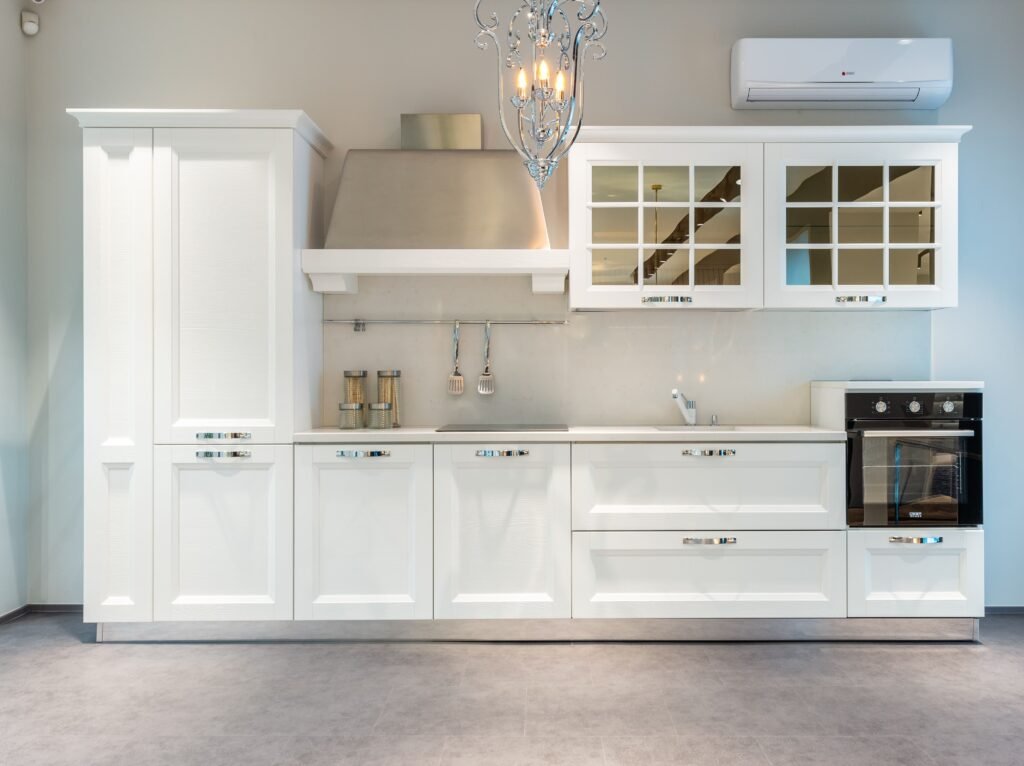
Five traits show up again and again:
- Flat or near-flat doors. Slab (flat-front) doors or a very slim Shaker profile, with no ornate molding or deep raised panels.
- Minimal or hidden hardware. Handleless edges, finger pulls, push-to-open latches, or slim bar pulls.
- Simple, controlled color. Whites, warm neutrals, deep greens, charcoal, black, or natural wood, usually limited to two tones.
- Smooth, low-sheen surfaces. Matte, satin, or high-gloss finishes, plus wood veneer or fine-grain laminate.
- Integrated function. Tall pantry units, panel-ready appliances, modern kitchen cabinets and pull-out storage so the surfaces stay clear.
If your cabinets tick three or four of these boxes, they will read as modern even in an older home.
What Are Modern Kitchen Cabinets? (Modern vs Contemporary vs Transitional)
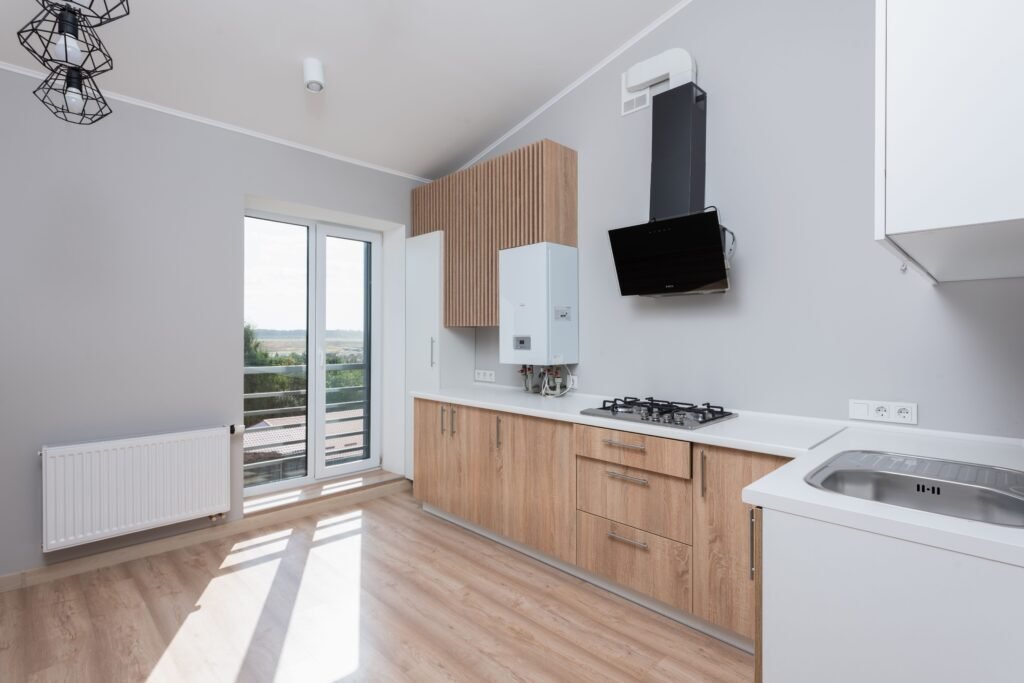
These three words get mixed up constantly, and many guides never separate them. They are not the same thing.
Modern refers to a specific design tradition rooted in the mid-twentieth century: function first, no decoration for its own sake, honest materials, modern kitchen cabinets and strong horizontal and vertical lines. Contemporary simply means what is current. It borrows from modern design but changes with trends, so it can include curves, bold textures, mixed metals, and fashionable colors. Transitional blends traditional warmth with modern simplicity, for example a slim Shaker door with a classic color and a simple pull.
| Modern | Contemporary | Transitional | |
|---|---|---|---|
| Door style | Flat slab, handleless | Slab, fluted, textured, slim Shaker | Shaker, shallow raised panel |
| Hardware | Hidden or minimal | Statement or minimal | Simple bar or cup pulls |
| Color | Neutral, black, wood | Trend-led, often bold | Soft neutrals, muted tones |
| Mood | Calm, architectural | Fresh, evolving | Warm, familiar |
| Best for | Minimalists, open plans | People who like to update | Mixed or older homes |
The practical takeaway: if you want a kitchen that still looks right in fifteen years, lean modern. If you enjoy refreshing your space, contemporary gives more room to play. If your home has traditional bones, transitional is the safest bridge.
20 Modern Kitchen Cabinet Ideas to Try
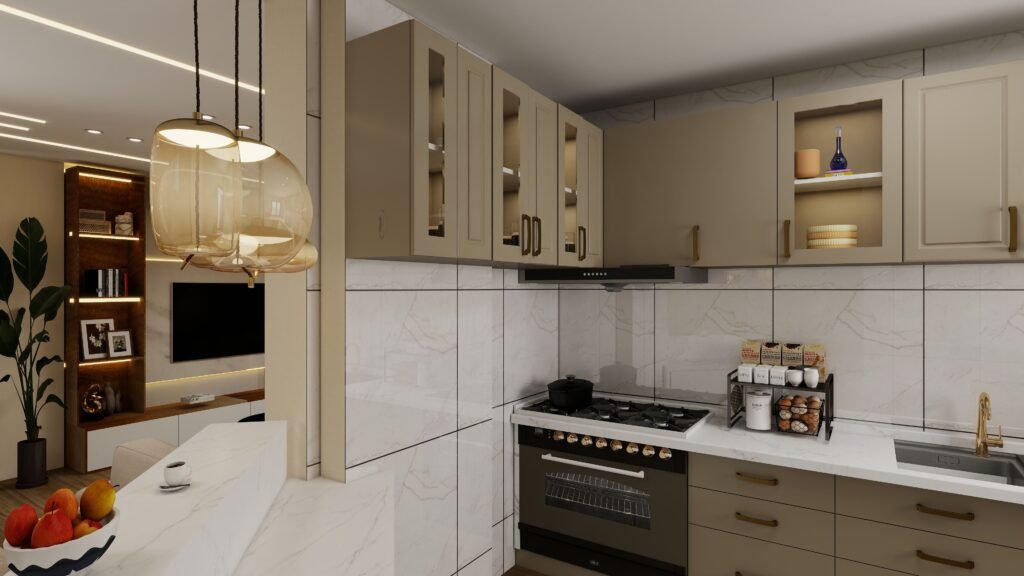
Every idea below includes the finish to look for, a cost tier (Low, Mid, or High), and who it suits best. Cost tiers are relative to each other, not exact prices. Real numbers appear in the cost section further down.
1. Flat-Front White Cabinets
The benchmark modern look. Matte or satin white slab doors keep the room bright and let countertops and lighting take center stage. Choose a warm white if your kitchen has little natural light; modern kitchen cabinets a cool white can feel clinical. Finish: matte or satin lacquer, or white laminate. Cost: Low to Mid. Best for: first-time renovators and resale-minded homeowners.
2. Handleless Slab Cabinets
Without pulls, the doors become one unbroken plane. Handleless systems use a routed channel, an integrated J-pull, or a finger groove at the top or bottom edge. Finish: any, but matte hides fingerprints best. Cost: Mid to High because of the extra milling. Best for: open-plan homes where the kitchen is always on show.
3. Slim Shaker for a Softer Modern Look
A slim Shaker has a narrow frame, often an inch or less, which gives a hint of detail without the busy look of a traditional Shaker. It is the easiest compromise if a fully flat door feels cold. Finish: painted or stained. Cost: Mid. Best for: families who want modern but not stark.
4. Matte Black Cabinets
Dramatic and grounded. Matte black works best with generous natural light, light countertops, and warm wood accents so the room does not feel like a cave. Finish: matte lacquer or black-stained veneer. modern kitchen cabinets Cost: Mid to High. Best for: larger kitchens and confident design choices. Expect to wipe dust and smudges more often than on lighter colors.
5. Wood Veneer and Warm Walnut
Real wood veneer brings grain and warmth to a flat door. Walnut, white oak, and ash are the most common. Book-matching the grain across doors creates a furniture-like effect. Finish: clear matte or oil-based. Cost: High. Best for: anyone who wants modern without a sterile look.
6. Two-Tone Upper and Lower Cabinets
Light uppers and darker lowers (or the reverse) add depth and visually lower or lift the ceiling. Keep the palette tight: two tones, repeated once or twice elsewhere in the room. Finish: matte paint on both. Cost: Mid. Best for: kitchens that feel flat or boxy.
7. Sage and Deep Green Cabinets
Green reads as natural and calming, and it pairs well with brass, oak, and white stone. Muted sage feels soft; a deep forest green feels rich. Always test it in your own light, modern kitchen cabinets since green shifts dramatically between morning and evening. Finish: satin or matte. Cost: Low to Mid. Best for: people who want color without losing the modern feel.
8. Navy and Charcoal Cabinets
Dark blue and charcoal give you the depth of black with a slightly friendlier tone. They hide scuffs well and suit stainless steel appliances. Finish: matte or satin. Cost: Low to Mid. Best for: busy households and kitchens with good lighting.
9. High-Gloss Cabinets for Small Kitchens
Glossy surfaces bounce light and create a sense of depth, which is why they are popular in compact kitchens. The trade-off is that they show fingerprints and demand flawless installation because gloss exposes uneven doors. Finish: acrylic or polyurethane high gloss. Cost: Mid to High. Best for: small or dim kitchens.
10. Glass-Front Accent Cabinets
One or two glass-front units break up a wall of solid doors and give you a place to display glassware. Use frosted or reeded glass if you do not want to keep the contents tidy. Finish: slim aluminum or wood frames. Cost: Mid. Best for: kitchens that feel heavy or closed in.
11. Open Shelving Mixed With Closed Storage
The key word is mixed. A single run of floating shelves beside closed cabinets looks intentional; an entire wall of open shelves quickly turns cluttered. Keep daily items behind doors. modern kitchen cabinets Finish: matching veneer or contrasting wood. Cost: Low to Mid. Best for: people who cook often and like their favorite items on view.
12. Floor-to-Ceiling Tall Cabinets
Running cabinets to the ceiling removes dust-catching gaps, adds storage, and gives the room a clean, architectural line. Use the top tier for items you rarely need. Finish: matte or veneer. Cost: Mid to High. Best for: kitchens with standard or high ceilings and a need for storage.
13. Integrated Appliances and Panel-Ready Fronts
A panel-ready refrigerator or dishwasher wears the same door as your cabinetry, so the whole wall looks like one piece of furniture. Finish: matches the cabinets. Cost: High. Best for: open kitchens and premium renovations.
14. Minimalist One-Wall Kitchen
One continuous run with tall units, a hidden hood, modern kitchen cabinets and no upper cabinets on the sink side can be stunning in apartments and studios. Plan storage carefully because you have fewer surfaces to work with. Finish: matte laminate or paint. Cost: Low to Mid. Best for: apartments and compact homes.
15. Island in a Contrasting Color
Keep perimeter cabinets calm and let the island carry the personality: deep green, charcoal, or warm wood against white. This is the lowest-risk way to try a bold color. Finish: matte or satin. Cost: Mid. Best for: open layouts and homeowners who like to change things later.
16. Textured and Fluted Cabinet Doors
Vertical fluting or fine texture adds tactile interest while keeping the silhouette flat. Use it sparingly, such as on an island or a single tall unit, so it stays a feature. Finish: painted, veneered, or textured laminate. Cost: Mid to High. Best for: kitchens that need warmth without ornament.
17. Japandi-Inspired Light Wood Cabinets
Japandi blends Japanese minimalism with Scandinavian warmth: pale oak or ash, soft off-whites, and plain hardware. It is quiet, practical, and very forgiving. Finish: matte clear coat. Cost: Mid to High. Best for: calm, clutter-free homes.
18. Industrial-Modern Steel and Concrete
Pair flat dark cabinets with concrete-look counters, steel accents, and open metal shelving. Keep one warm element, usually wood, so the space does not feel cold. Finish: matte black or gray, powder-coated metal details. Cost: Mid to High. Best for: lofts and urban homes.
19. Budget Modern: Painted or Refaced Cabinets
If your cabinet boxes are sound, modern kitchen cabinets you can get a modern look by replacing doors with flat slab fronts or painting existing ones in a matte neutral. Swap ornate knobs for slim pulls. Finish: matte paint or new slab doors. Cost: Low. Best for: tight budgets and anyone not ready for a full renovation.
20. Rental-Friendly Modern Upgrades
You cannot replace the cabinets, but you can change what people see. Use removable hardware swaps (keep the originals to reinstall), adhesive-free handles, under-cabinet lighting, and a peel-and-stick backsplash. Finish: not applicable. Cost: Low. Best for: renters.
Best Cabinet Door Styles for a Modern Kitchen
The door is the single biggest factor in how modern your cabinets look. Here is how the main styles compare, including the honest downsides.
| Door style | Look | Pros | Cons | Best for |
|---|---|---|---|---|
| Flat-front (slab) | Fully flat, no frame | Cleanest look, easy to clean | Shows warping and gaps; can feel stark | Strict modern kitchens |
| Slim Shaker | Narrow frame, flat center | Softer, widely loved | Slight dust ledge | Modern-leaning family homes |
| Handleless slab | No visible pulls | Seamless, very sleek | Higher cost; needs precise fitting | Open-plan kitchens |
| Inset | Door sits inside frame | Furniture quality | Expensive; less storage room | Transitional-modern blends |
| Glass-front | Frame with glass panel | Lightens heavy runs | Contents are visible | Accent units |
| Fluted or textured | Vertical grooves | Tactile and warm | Harder to wipe clean | Islands and feature walls |
A common question is whether Shaker cabinets count as modern. Standard Shaker is traditional or transitional, but a slim Shaker with simple hardware sits comfortably within a modern or contemporary kitchen. modern kitchen cabinets The frame width and the hardware matter more than the name.
Best Materials for Modern Kitchen Cabinets
Most inspiration lists skip materials, which is a mistake, because the substrate decides how long the cabinets last. Moisture is the main enemy near sinks and dishwashers.
| Material | Durability | Moisture resistance | Cost | Notes |
|---|---|---|---|---|
| Solid wood | High | Moderate, can expand and contract | High | Best for stained or painted frames; may crack on wide flat panels |
| Plywood | High | Good when sealed | Mid to High | Strong, holds screws well; top choice for boxes |
| MDF | Moderate | Poor if edges are exposed | Low to Mid | Very smooth for paint, ideal for slab doors; swells if water gets in |
| Particleboard | Lower | Poor | Low | Budget boxes; avoid near sinks and in humid kitchens |
| Laminate (HPL) | High surface durability | Good surface, edges need sealing | Low to Mid | Wide range of colors and textures |
| Thermofoil | Moderate | Moderate | Low to Mid | Seamless look, but heat near ovens can cause peeling |
| Acrylic | High | Good | Mid to High | Excellent for high gloss |
| Wood veneer | High on a stable core | Good with a quality finish | Mid to High | Real wood grain at lower cost than solid wood |
A practical combination is plywood boxes with MDF or veneered slab doors. You get smooth, modern fronts and a sturdy structure where it counts. Whatever you choose, ask how the edges are sealed, modern kitchen cabinets since unsealed edges are where water damage begins. Frameless (European-style) construction also gives you slightly more usable interior space than face-frame cabinets, which suits the flat-front look.
Finishes, Colors, and Hardware That Look Modern
Finishes
- Matte: the most popular modern finish. It hides glare and small imperfections, but darker mattes can show oils from hands.
- Satin: a gentle sheen that is easier to scrub, a good practical middle ground.
- High gloss: reflective and dramatic, best in small or low-light kitchens and demanding on installation quality.
- Wood veneer: natural grain with a matte or oil finish, warm and organic.
- Textured laminate: durable and often budget-friendly, available in stone, wood, and fabric looks.
Colors
Stay within two or three main tones. Reliable combinations include warm white with oak, sage with walnut, charcoal with light stone, and navy with brushed brass. modern kitchen cabinets Match the undertone of your cabinets to your countertop: a cool white cabinet beside a warm cream counter looks accidental, not designed. Always check samples in the room at morning, midday, and evening before you commit.
Hardware
Hardware is where a kitchen can quietly lose its modern edge.
- Edge pulls and finger pulls are mounted on or cut into the door edge for a nearly invisible look.
- J-pull profiles run the full width of the door and double as a handle.
- Push-to-open latches remove hardware completely, but need clearance and can wear over time if cheap.
- Slim bar pulls in black, steel, or brass add a precise line. Keep sizes and finishes consistent.
Soft-close hinges and full-overlay doors are worth the small premium. They give you tight, even gaps, which matter far more on flat doors than on paneled ones.
How Much Do Modern Kitchen Cabinets Cost?
Cost depends on the tier, the material, the finish, modern kitchen cabinets and your region, so treat the numbers below as typical US ballparks for planning in late 2026, not quotes. Prices vary widely by location, supplier, and the complexity of your layout. Always get at least three written quotes.
| Tier | What it means | Typical range (USD per linear foot, cabinetry only) | Lead time |
|---|---|---|---|
| Ready-made (stock) | Standard sizes, limited finishes | Roughly 100 to 300 | Days to a few weeks |
| Semi-custom | Standard boxes, more sizes and finishes | Roughly 150 to 650 | Several weeks |
| Custom | Built to your exact space | Roughly 500 to 1,200 and above | Often 8 to 16 weeks or more |
What pushes the price up: handleless milling, high-gloss acrylic, real wood veneer, integrated appliance panels, floor-to-ceiling units, specialty hardware, and complex corners.
Where you can save without hurting the look: choose flat laminate or painted MDF fronts, keep layouts simple, limit custom work to the most visible wall, use a plain slab door, and spend on hinges, modern kitchen cabinets drawer runners, and cabinet boxes rather than decoration. A well-built flat door in a modest finish will look better than an expensive door with poor installation.
Paint, Reface, or Replace: Which Is Right for You?
Most guides push a single route. The right answer depends on the condition of your cabinet boxes.
| Option | Best when | Cost level | Time | Limits |
|---|---|---|---|---|
| Paint | Boxes and doors are solid; style is simply dated | Lowest | A few days | Cannot change door shape; needs proper prep and a durable cabinet-grade paint |
| Reface | Boxes are sound, but you want new flat doors and drawer fronts | Moderate | Days to a week or two | Layout stays the same |
| Replace | Boxes are damaged, layout needs to change, or storage is poor | Highest | Weeks to months | Highest cost and disruption |
If your doors are ornate raised-panel and you want a modern look, painting alone rarely gets you there. Replacing the door shape through refacing makes a much bigger difference than changing the color. modern kitchen cabinets If you want to paint, spend your effort on preparation: clean, degrease, sand, prime with a bonding primer, and use a hard-wearing enamel. Skipping prep is the reason most painted cabinets chip within a year.
Small-Kitchen Tips for Modern Cabinets
Small kitchens benefit the most from modern design, provided you plan carefully.
- Go light and consistent. One or two closely related tones make walls feel further apart.
- Use gloss or reflective finishes selectively. A glossy upper run can bounce light into a dim room.
- Take cabinets to the ceiling. You gain storage and remove the dust shelf above standard cabinets.
- Choose drawers over doors for base units. Deep drawers give easier access than low shelves.
- Add pull-outs and corner solutions. Blind-corner pull-outs and slim pantry pull-outs convert awkward space into usable storage.
- Skip some uppers. One open shelf or a short run of tall cabinets can feel airier than a full row of uppers.
- Light the work area. Under-cabinet LED strips make a small kitchen feel bigger and safer.
Maintenance and Common Mistakes
Keep Them Looking New
- Wipe spills promptly, especially near the sink and dishwasher.
- Use a soft cloth with mild soap and water. Avoid abrasive pads, which dull matte finishes and scratch gloss.
- Dry edges and hinge areas, since trapped water is what damages MDF and particleboard.
- Adjust hinges once a year so door gaps stay even.
Mistakes to Avoid
- Choosing handleless without testing the grip. Try the finger pull or J-pull on a sample door first, especially if anyone in the home has limited hand strength.
- Ignoring moisture. Cheap particleboard or unsealed MDF around the sink is a short-lived choice.
- Using too many colors or finishes. Modern design relies on restraint. Two or three tones is plenty.
- Picking a color from a small chip. Test large samples in your real light.
- Forgetting storage. A beautiful minimalist kitchen fails if you have nowhere to put the small appliances. Plan pull-outs, a tall pantry, and an appliance garage.
- Mismatching undertones. Cabinets, counters, and flooring should share warm or cool undertones.
- Skipping the details. On flat doors, uneven gaps, poor alignment, and cheap hinges show immediately.
- Following a trend blindly. Bold fluting, black everything, or ultra-gloss can date quickly. Use trends in small doses.
FAQs About Modern Kitchen Cabinets
What are modern kitchen cabinets?
Modern kitchen cabinets are simple, clean-lined cabinets with flat or very slim door fronts, minimal or hidden hardware, and a restrained palette. They prioritize function and calm over decoration.
What is the difference between modern and contemporary kitchen cabinets?
Modern refers to a specific, timeless design tradition built on simplicity and function. Contemporary refers to whatever is current, so it can include curves, bold textures, and trendy colors. Modern stays consistent; contemporary evolves.
Are Shaker cabinets considered modern?
Traditional Shaker cabinets are not strictly modern, but a slim Shaker door with a narrow frame and simple hardware works well in modern and contemporary kitchens.
What is the best material for modern kitchen cabinets?
There is no single best material. Plywood boxes with veneered or painted MDF slab doors offer a strong balance of stability, smoothness, and cost. Solid wood and acrylic suit premium builds; laminate suits budgets.
What colors are best for modern kitchen cabinets?
Warm white, soft gray, charcoal, black, deep green, navy, and natural wood tones are the most reliable. Keep to two or three colors and match undertones across the room.
What hardware works with modern kitchen cabinets?
Edge pulls, J-pulls, finger grooves, slim bar pulls, and push-to-open latches are the most common. Keep finishes and sizes consistent across the kitchen.
Final Thoughts
The best modern kitchen cabinets are not the most expensive ones. They are the ones where the door style, material, finish, and hardware all agree with each other, and where the storage actually works for the way you cook. Start with the door and the material, decide your budget tier, choose a restrained palette, and test everything in your own light. Do that, and your kitchen will look sharp now and still look right years from now.