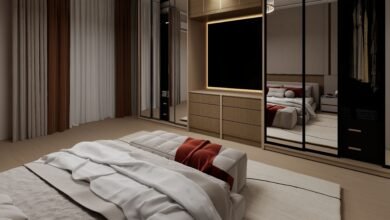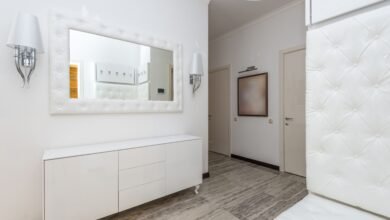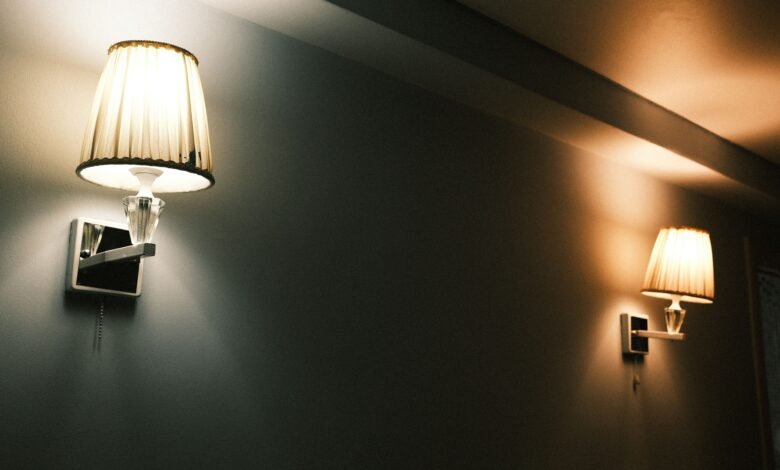
A ceiling light can fill a living room with brightness, but it rarely makes the room feel good. Wall sconces for living room spaces add the soft, layered glow that makes a sofa corner inviting, a fireplace wall dramatic and a piece of art look intentional. They also free up floor and table space, which matters in smaller rooms.
This guide goes beyond a gallery of pretty photos. You will find 15 specific ideas, exactly where to place sconces around sofas, fireplaces, TVs and artwork, practical height and spacing ranges (with the caveats that matter), wall sconces for living room how to choose size, brightness and colour temperature, plug-in versus hardwired options, and the mistakes that make good sconces look wrong.
Wall sconces for living room:
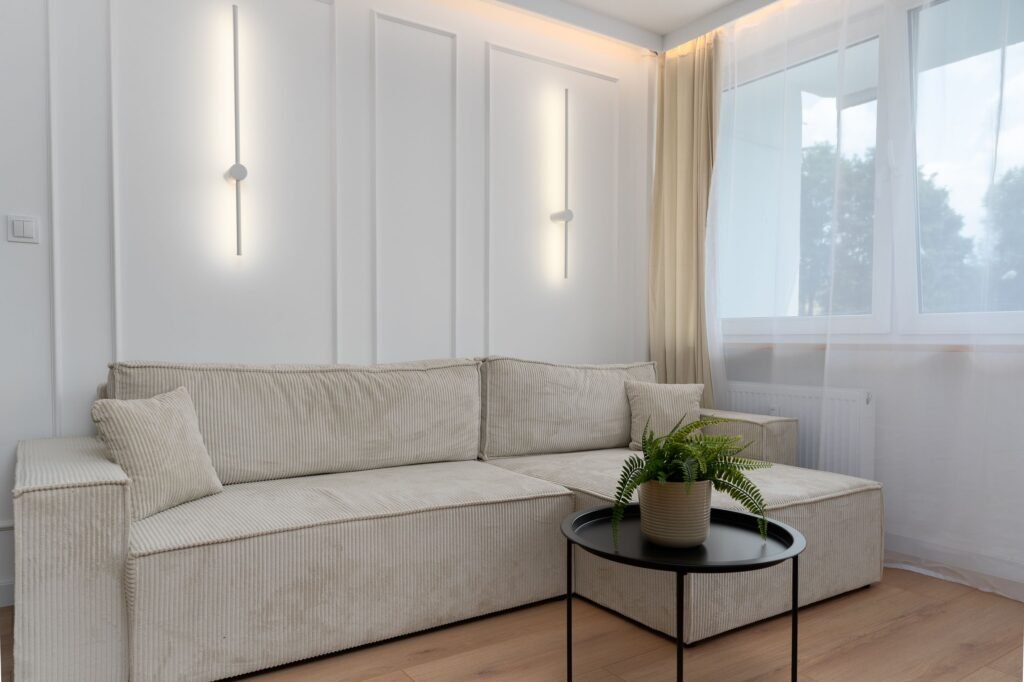
Place wall sconces in pairs on either side of a sofa, fireplace, artwork or window, with the centre of each fixture roughly 60 to 66 inches (152 to 168 cm) above the floor. wall sconces for living room Choose warm, dimmable light of about 2700 to 3000 K, and use sconces as ambient or accent lighting alongside lamps, not as your only light source.
| Planning question | Common starting point | Adjust for |
|---|---|---|
| Mounting height (centre of fixture) | 60 to 66 in (152 to 168 cm) from the floor | Ceiling height, fixture shape, seated eye level, glare |
| Spacing in a row on one wall | About 6 to 8 ft (1.8 to 2.4 m) apart | Fixture beam, wall width, furniture |
| Distance from corners, frames and windows | At least 6 in (15 cm) | Fixture canopy width |
| Colour temperature | 2700 to 3000 K (warm white) | Mood and the other lights in the room |
| Dimmer | Yes, LED-compatible | Bulb and driver compatibility |
These are widely used guidelines, not laws. Your wall, furniture and fixture design decide the final numbers, and the manufacturer’s instructions come first.
Why Add Wall Sconces to a Living Room?
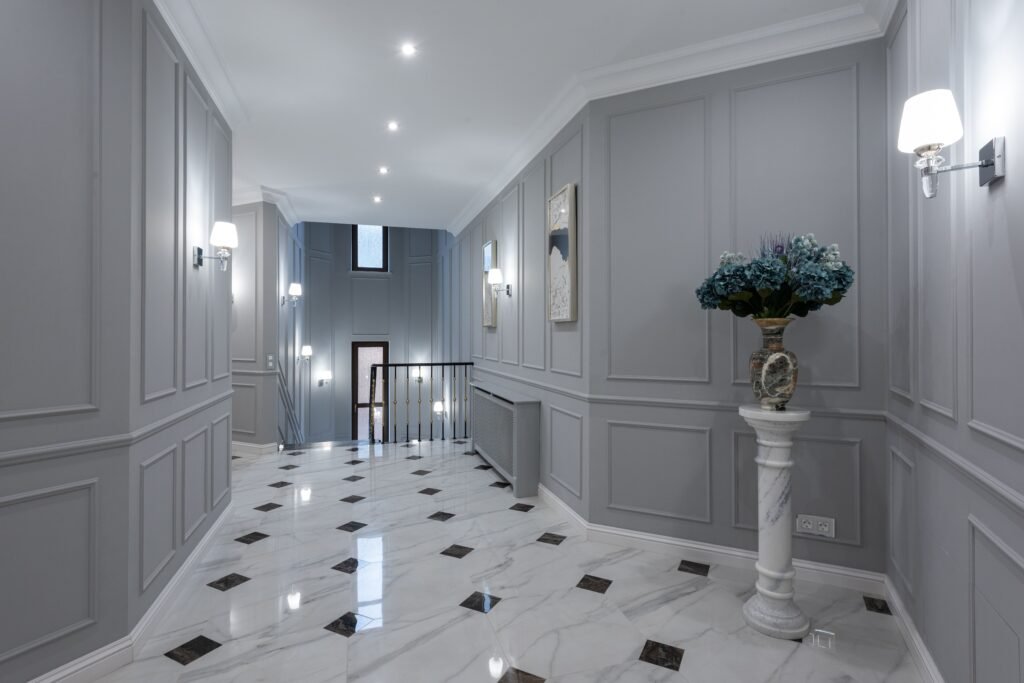
Living rooms do many jobs: conversation, reading, watching TV, wall sconces for living room working on a laptop. One overhead light cannot do all of them. Wall sconces help because they work at three levels.
| Lighting layer | What it does | How sconces help |
|---|---|---|
| Ambient | Gives the room general, comfortable light | Uplight or diffused sconces bounce soft light off the wall and ceiling |
| Accent | Highlights art, texture or architecture | Sconces beside a painting, mantel or bookcase draw the eye to it |
| Task | Helps you do something, like read | Swing-arm or directional sconces beside a chair or sofa |
Other benefits:
- They save space. No lamp base, no cord across the floor, no table needed.
- They reduce harsh overhead glare. Light at eye level is gentler than a ceiling spot.
- They add symmetry and character. A pair of sconces makes a wall look finished.
- They suit awkward rooms. Narrow rooms and rooms with limited surfaces benefit most.
15 Wall Sconce Ideas for Living Rooms
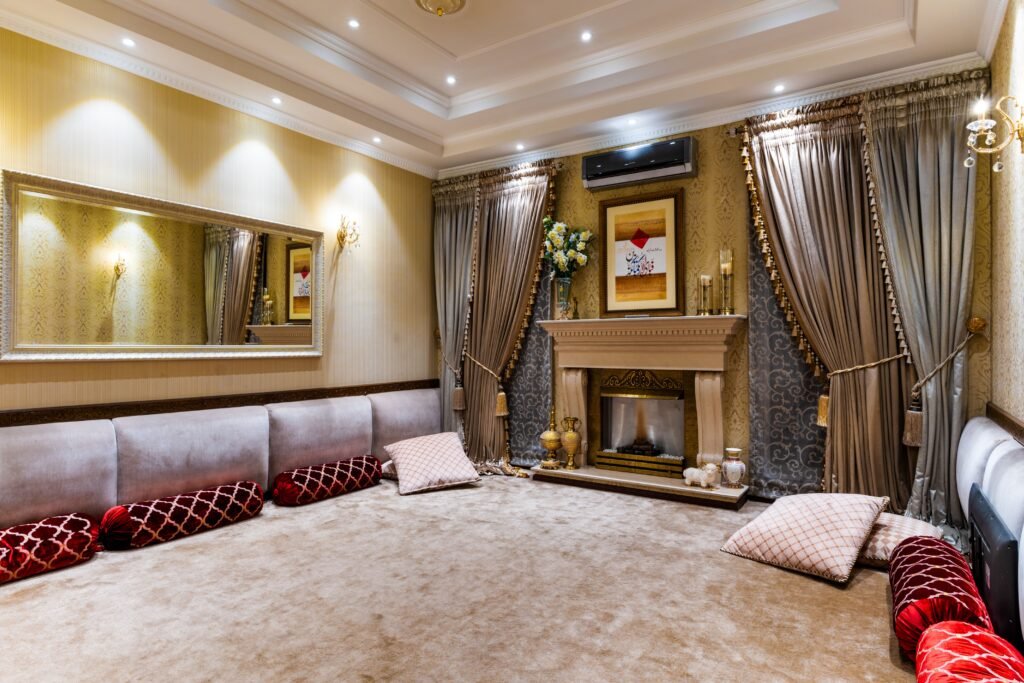
Modern and Minimalist Wall Sconces
1. Slim linear bar sconces. A thin vertical or horizontal LED bar gives clean light and almost disappears on the wall. wall sconces for living room It works well beside a media wall, in narrow rooms or flanking a large mirror.
2. Half-moon or flush-mount wall washers. These sit close to the wall and cast light up and down, creating soft arcs that highlight a textured plaster, brick or painted wall without glare. They are a good choice where space is tight.
3. Opal glass globes. A simple white globe diffuses light evenly and suits both modern and mid-century interiors. Pairs of globes can flank a sofa or sideboard for a calm, symmetrical look.
Brass, Black and Sculptural Sconces
4. Aged brass swing-arm sconces. The warm metal glows against deep colours like olive, navy or charcoal, and the arm can pivot toward a chair or book. Choose a finish that matches other metals in the room, such as lamp bases or frames.
5. Matte black sconces. Black adds definition against a white or pale wall and keeps a room from feeling washed out. Slim black arms or cones work in modern, industrial and farmhouse rooms.
6. Sculptural or ceramic sconces. If you want the light fixture to act like art, wall sconces for living room pick a hand-finished ceramic, a curved metal piece or a fixture with an unusual silhouette. Keep the rest of the wall simple so the shape stands out.
7. Plaster and textured sconces. Matte plaster shapes soften light and add texture, suiting Japandi, Mediterranean and organic-modern rooms.
Wall Sconces Beside a Sofa or Reading Chair
8. A matched pair flanking the sofa. Mount one sconce on each side of the sofa, ideally with the fixture centred a little above seated head height or in line with the back of the sofa. wall sconces for living room This creates a balanced, hotel-like look and gives soft light for conversation.
9. A swing-arm sconce above a reading chair. Directional light beside a chair works as a task light. Aim it at the page or screen from the side, and choose a diffused shade to avoid glare.
10. Plug-in sconces for renters. A plug-in sconce with a cord cover can look neat, needs no wiring and can be removed when you move. Run the cord down the wall in a paintable channel or along a corner for a clean finish.
Wall Sconces Around a Fireplace or TV Wall
11. A pair on either side of the fireplace. Sconces on each side of a chimney breast frame the focal point and add warm light that echoes the fire. Keep clear of heat and follow the fixture’s clearance guidance; wall sconces for living room if the fireplace is gas, wood or electric, check clearances for both the fixture and the fireplace.
12. Sconces beside a TV for softer contrast. A dark screen in a bright room causes eyestrain. Dimmable warm sconces on either side of the TV reduce contrast, but position them so they do not reflect in the screen.
Wall Sconces Beside Artwork or a Gallery Wall
13. Flanking a large painting. A pair of sconces on each side of large art makes it a focal point. wall sconces for living room Aim to centre the fixtures roughly in line with the middle of the artwork, and keep them far enough to the sides that they do not cover the frame.
14. Picture-light style sconces. A slim fixture above a painting directs light across its surface. Check the bulb’s colour rendering and avoid direct sun and strong heat on delicate art.
15. One statement sconce on a feature wall. A single bold sconce on an otherwise blank wall, near a doorway or over a console, can be enough, as long as the scale suits the wall and the room has other lights to balance it.
Where Should Wall Sconces Go in a Living Room?
Start with what you want to light, then pick the wall.
| Location | What to do | Watch out for |
|---|---|---|
| Either side of the sofa | A matched pair, centred on the sofa or on the wall space beside it | Don’t mount so low that people brush them; avoid shining straight into seated eyes |
| Reading chair | One directional or swing-arm sconce beside the chair | Switch or plug must be easy to reach |
| Fireplace | Pair on either side of the chimney breast | Heat, soot and clearance rules |
| TV wall | Dimmable pair beside the screen | Glare and reflections on the screen |
| Artwork or gallery wall | Pair beside or one above the art | Fixture shadows and glare on glossy frames |
| Console, sideboard or mirror | Pair on either side | Keep the pair symmetrical to the furniture |
| Windows | Pair on either side, mounted above the sill line | Curtain clearance and fabric safety |
| Entry or hallway | Row of sconces evenly spaced | Keep walkways clear |
Layouts for different living room sizes
| Room type | Sconce plan |
|---|---|
| Small living room | One pair on the main seating wall, slim or flush-mount, with a plug-in if you rent |
| Medium living room | Pair by the sofa or fireplace plus one task sconce by a reading chair |
| Large living room | Pairs by each focal point (fireplace, art, seating) with consistent finish across the room |
| Narrow living room | Slim sconces down the long wall at wider spacing, to avoid a corridor effect |
| Open-plan living room | Use sconces to define the lounge zone and distinguish it from dining or kitchen |
How High Should Living Room Wall Sconces Be?
A commonly cited standard is to mount the centre of the fixture about 60 to 66 inches (152 to 168 cm) above the finished floor. wall sconces for living room Some guides go as high as 70 to 72 inches for tall rooms, and some suggest lower heights for sconces above seating. That range of advice is a clue: the right height depends on the room.
What to consider:
- Fixture type. Uplights and shaded sconces can sit higher. Downlights and bare-bulb styles should sit higher so the bulb is not visible and does not cause glare.
- Ceiling height. In rooms with ceilings above about 9 feet, move the sconces up so they do not look stranded low on the wall.
- Seated eye level. If people sit near the sconce, keep the bulb or bright part above their line of sight.
- What you want to light. If you are lighting art, wall sconces for living room align the centre of the fixture with the centre of the artwork.
- Furniture height. A sconce above a tall sofa back or bookcase may need to be higher than one above a low bench.
- Wall features. Respect mouldings, switches and doors so the fixture does not look crowded.
Tape paper templates or cardboard cut-outs to the wall, step back and look at them in daylight and at night. Adjust before you drill.
How Far Apart Should Wall Sconces Be?
Spacing depends on the job.
- A pair flanking something (sofa, art, mirror, fireplace): place each sconce roughly 8 to 12 inches (20 to 30 cm) beyond the edge of the object, or far enough that it looks balanced and does not touch the frame.
- A row along a wall or hallway: about 6 to 8 feet (1.8 to 2.4 m) apart is common for living areas; wall sconces for living room hallways sometimes use wider spacing of 8 to 10 feet.
- Clearance: keep at least 6 inches (15 cm) between the fixture and doors, windows, corners and mouldings.
- Short walls: one well-placed sconce often looks better than two crowded ones.
The beam matters too. A fixture that casts a wide wash of light can be spaced farther apart than one with a tight spotlight.
How to Choose the Right Size, Brightness and Colour Temperature
Size
On a standard 8-foot wall, many sconces are about 12 to 20 inches tall, but proportion is more important than a number. A tall, narrow wall can handle a tall sconce; wall sconces for living room a wide wall with a large sofa may need a bigger fixture or a pair. Check how far the fixture sticks out from the wall (the projection) so it does not block walkways or hit curtains.
Brightness
Do not choose by wattage. Look at lumens (the light output).
| Purpose | Typical output per sconce | Notes |
|---|---|---|
| Ambient glow | About 200 to 450 lumens | Use pairs and dimmers |
| Accent | About 150 to 400 lumens | Focus on art or texture |
| Task (reading) | About 400 to 800 lumens | Directional with a diffused shade |
These are planning ranges. Check the fixture’s rated output, the shade’s effect and how much light the room already has.
Colour temperature and quality
- 2700 K to 3000 K (warm white) works best in most living rooms.
- 3500 K or higher looks crisper and cooler, and suits modern, bright rooms but may feel clinical in the evening.
- Colour rendering (CRI): choose 90 or higher for rooms with art, wood and fabrics, because it makes colours look more natural.
- Keep colour temperature consistent across all lamps and fixtures in the room.
Dimmers and bulbs
Almost every living room sconce should be on a dimmer. wall sconces for living room Check that the bulb or integrated LED is dimmable and that the dimmer is compatible with it; incompatible pairs can flicker or hum. Check the maximum bulb wattage, bulb shape and base type in the fixture’s instructions.
Light direction
- Uplight: bounces light off the ceiling for soft ambient glow
- Downlight: creates pools of light, good for tasks and art
- Up and down: creates a decorative wash on the wall
- Diffused or shaded: softest and least glaring
Plug-In vs Hardwired Wall Sconces
| Feature | Plug-in | Hardwired |
|---|---|---|
| Installation | Hang on a screw or hook and plug in | Wired into the home’s electrical system |
| Best for | Renters, quick updates, rooms without junction boxes | Homeowners, renovations, permanent installs |
| Cord | Visible unless covered | Hidden in the wall |
| Switch | Cord switch or plug-in smart switch | Wall switch or dimmer |
| Cost | Lower upfront | Higher because of electrical work |
| Safety | Use rated cords and avoid overloading outlets | Install by a qualified electrician following local rules |
Safety notes:
- Hardwired sconces should be installed by a qualified electrician who follows local electrical codes.
- Turn off power at the breaker before any work and test that it is off.
- Use cord covers or channels made for the job, and never run cords through places where they could be pinched or overheated.
- Check bulb and fixture ratings, and do not exceed the stated maximum.
- Keep fixtures away from curtains and heat sources according to the manufacturer’s instructions.
How to Layer Wall Sconces With Other Living Room Lighting
Sconces work best as part of a plan.
- Ceiling light or recessed lights for general brightness when needed (put them on a dimmer).
- Wall sconces for soft ambient light and accent.
- Table lamps and floor lamps for reading and warmth at lower levels.
- Accent lights (picture lights, shelf lights) for art and displays.
A good living room mixes at least three of these at different heights. wall sconces for living room Aim to avoid relying on one light source, and put each layer on its own switch or dimmer so you can change the mood.
Choosing a Style: Modern, Traditional, Farmhouse and More
| Style | Fixture traits | Typical finishes |
|---|---|---|
| Modern | Clean lines, geometric shapes, LED bars | Matte black, brushed nickel, white |
| Mid-century | Opal globes, tapered arms, curves | Brass, walnut, white glass |
| Traditional | Candle-style arms, fabric shades | Antique brass, bronze |
| Farmhouse | Gooseneck, barn-style, simple shades | Black, galvanized, aged metal |
| Japandi and organic | Plaster, paper, wood, soft curves | Natural, matte, muted tones |
| Industrial | Exposed bulbs, cages, swing arms | Black, iron, copper |
Match finishes to at least one other metal in the room, such as curtain rods, wall sconces for living room frames or lamp bases, but do not worry about perfect matches. Two or three related finishes can look layered rather than mismatched.
Materials, Budget and Sustainability
| Budget level | What to expect | Good for |
|---|---|---|
| Affordable | Simple metal or glass, plug-in options | Renters, first-time buyers |
| Mid-range | Better finishes, dimmable LED, sturdier build | Most homes |
| Designer | Hand-finished materials, sculptural pieces, specialist makers | Feature walls and statement pieces |
If sustainability matters, look for durable materials, repairable parts, replaceable bulbs and clear information about materials and certifications. Be cautious with broad claims such as non-toxic or eco-friendly unless the maker explains exactly what they mean and shows evidence.
Common Wall Sconce Mistakes to Avoid
- Hanging them too low. Exposed bulbs at eye level cause glare.
- Using the wrong scale. A tiny sconce on a big wall looks lost, and a huge one can overwhelm a small room.
- Uneven spacing and height. Use a level and measure from the same reference.
- Ignoring the switch. Put sconces on a dimmer or switch you can reach easily.
- Using cool, bright bulbs. They make a living room feel like an office.
- Mounting where furniture will block them. Check the layout, including seat backs and shelves.
- Choosing by looks alone. Check beam direction, brightness and projection.
- Placing near heat or curtains. Follow the maker’s clearance instructions.
- Relying on sconces alone. Add lamps and other layers.
- Skipping the template. Test positions with tape before you drill.
Before You Buy: A Quick Checklist
- Measure the wall, ceiling height and furniture
- Decide whether you need ambient, accent or task light
- Choose plug-in or hardwired
- Check lumens, colour temperature and dimmer compatibility
- Check projection, canopy width and bulb type
- Plan height and spacing with paper templates
- Confirm installation and safety requirements
Frequently Asked Questions
Where should wall sconces be placed in a living room?
Usually in pairs on either side of a sofa, fireplace, artwork, mirror or window, and singly beside a reading chair.
How high should wall sconces be in a living room?
A common starting point is 60 to 66 inches (152 to 168 cm) from the floor to the centre of the fixture. Adjust for ceiling height, fixture type and glare.
How far apart should living room wall sconces be?
For a row along a wall, about 6 to 8 feet apart. For a pair around a sofa or art, place them 8 to 12 inches beyond the edges of the object.
Are wall sconces enough to light a living room?
Usually not by themselves. Combine them with table lamps, floor lamps and perhaps a ceiling light to create layers.
Should wall sconces go on either side of a sofa?
Yes, that is a classic placement. A matched pair gives balance and soft light, provided they are high enough to avoid glare and bumping.
Key Takeaways
- Use sconces as ambient or accent lighting, not as your only light
- Mount them in pairs by sofas, fireplaces, art and windows, about 60 to 66 inches to the fixture centre as a starting point
- Space rows around 6 to 8 feet apart and keep 6 inches of clearance from edges
- Choose warm, dimmable light of about 2700 to 3000 K, and check lumens, not watts
- Decide between plug-in and hardwired early, and use an electrician for hardwiring
- Test positions with paper templates before you drill