20 Outdoor Kitchen Ideas for Every Space, Budget, and Climate

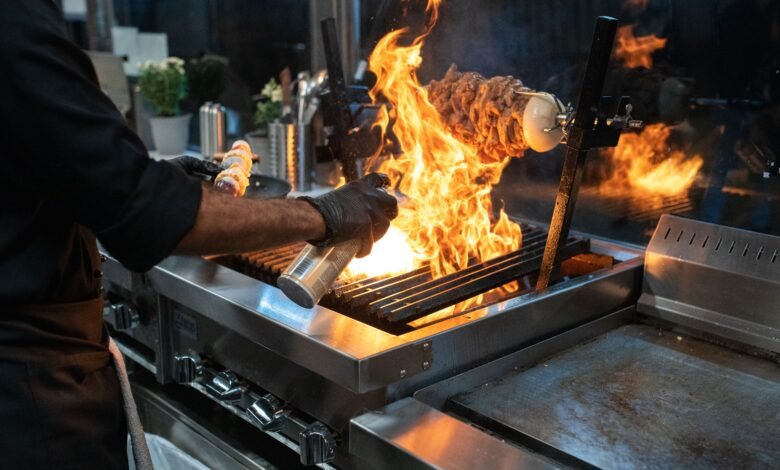
An outdoor kitchen can be a single grill and a prep table, or a full cooking, dining and bar setup under a roof. What matters is that it fits your space, your budget and your weather, and that it is safe to use.
Most guides give you a gallery of pretty photos and stop there. This one gives you 20 outdoor kitchen ideas with a size, a cost range and a “best for” note for each, then walks you through layout, materials, appliances, real costs, safety, climate and maintenance, so you can actually plan one.
In this guide:
- What an outdoor kitchen needs
- 20 outdoor kitchen ideas with size, cost and best-for notes
- Layout planning and the zone method
- Materials compared in a table
- Appliance checklist: must-have vs optional
- What an outdoor kitchen really costs
- Safety, ventilation and permits
- Ideas for hot, humid, rainy and cold climates
- Maintenance, common mistakes and FAQs
What Is an Outdoor Kitchen, and What Does It Need?
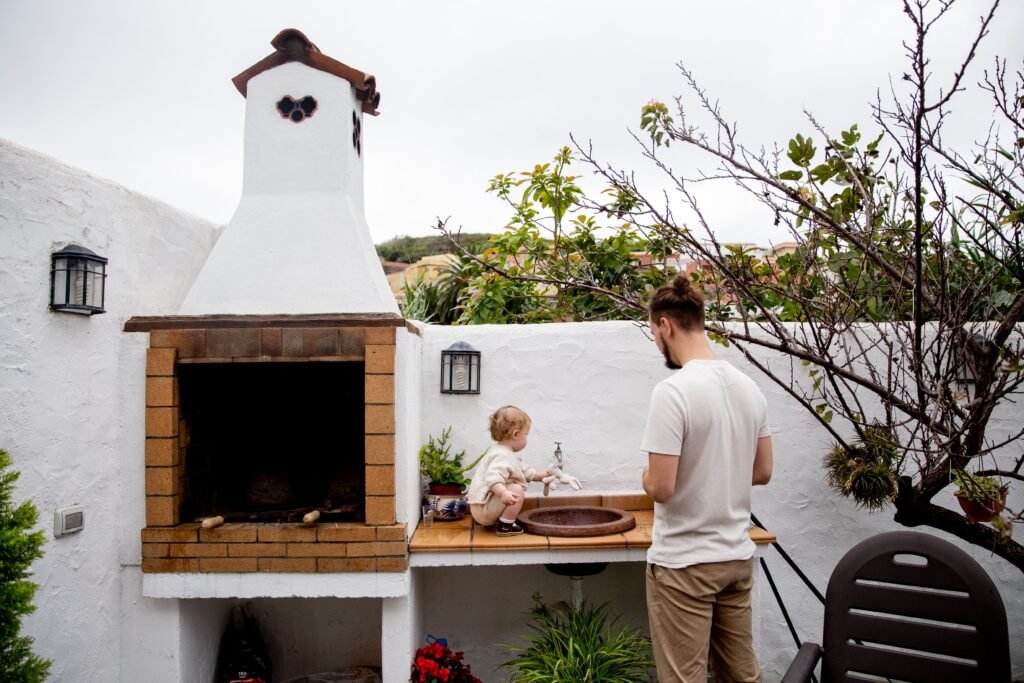
An outdoor kitchen is any permanent or semi-permanent cooking area outside your home. outdoor kitchen ideas It usually has a heat source, a work surface and some storage. Beyond that, you choose how far to go.
The essentials (every outdoor kitchen):
- A heat source: grill, griddle, pizza oven, smoker or kamado
- A flat, heat-safe prep surface
- Weatherproof storage for tools and fuel
- Safe clearance from walls, fences and overhanging branches
The upgrades (add as budget and space allow):
- Sink and running water
- Outdoor-rated fridge
- Bar seating or a dining table
- Roof, pergola or awning
- Lighting and heating
- Side burner, warming drawer or ice bin
Start with the essentials. outdoor kitchen ideas Most people use fewer features than they expect, and it is far easier to add a sink later than to rip out a layout that does not work.
20 Outdoor Kitchen Ideas to Try
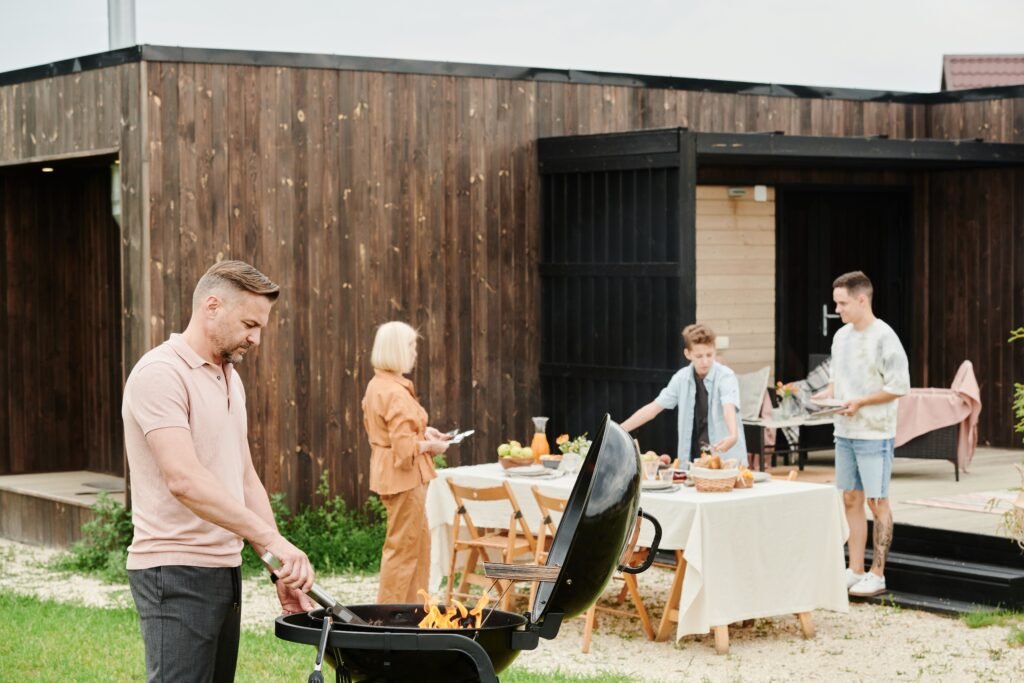
Costs below are rough planning ranges in US dollars for materials and appliances, outdoor kitchen ideas and exclude major groundwork, gas, water or electrical connections unless noted. Treat them as a way to compare ideas, then get local quotes.
1. Compact Grill and Prep Station for Small Patios
Size: about 1.5 to 2 m (5 to 6 ft) wide | Cost: $500 to $2,500 | Best for: Small patios, first-time builders
A freestanding or built-in grill with one counter beside it is the simplest outdoor kitchen. Choose a base with closed storage underneath so you are not carrying tools back and forth. outdoor kitchen ideas Keep it on the edge of the patio so the middle stays open for walking and seating.
Tip: Put the prep counter on the side nearest your back door, so food travels the shortest distance.
2. Straight-Run Kitchen for Narrow Spaces
Size: 2.5 to 4 m (8 to 13 ft) long, about 60 cm (24 in) deep | Cost: $2,500 to $9,000 | Best for: Narrow yards, side passages, walls and fences
A single line works like a galley: grill, counter, sink, storage, outdoor kitchen ideas all in a row. Leave at least 90 cm (3 ft) of walkway in front. Put the sink and fridge at one end and the grill at the other, with prep space in the middle.
3. L-Shaped Kitchen with Bar Seating
Size: about 3 x 2.5 m (10 x 8 ft) | Cost: $4,000 to $14,000 | Best for: Corners, hosts who like guests nearby
An L-shape separates the cooking side from the serving side and gives you a natural place for stools. Keep the grill on the shorter leg, away from where guests sit, so smoke and heat stay away from the seats.
4. Island Kitchen for Entertaining
Size: 3 m+ (10 ft+) with room around it | Cost: $8,000 to $30,000+ | Best for: Larger yards, frequent hosting
An island puts the cook in the middle of the party. outdoor kitchen ideas Face the seating toward the cooking side and keep walkways at least 1 m (3 ft) wide. Islands need the most groundwork and utility planning, so decide where gas, water and power will run before you pour anything.
5. Modular Outdoor Kitchen
Size: flexible, built from units | Cost: $2,000 to $12,000 | Best for: DIYers, people who might move or expand
Modular units (cabinets, grill bases, sink and fridge cabinets) can be arranged to fit your space and added to over time. Look for weather-rated finishes such as powder-coated aluminium or stainless steel, and check that the cabinets are designed to be vented for gas appliances.
6. Covered Pergola Kitchen
Size: typically 3 x 3 m (10 x 10 ft) or larger | Cost: $5,000 to $25,000+ with the structure | Best for: Sun, light rain, year-round use
A pergola gives shade and a sense of room without fully closing the space. outdoor kitchen ideas An adjustable-louvre or retractable roof lets you control sun and rain. If you cook under it, keep the grill where heat and smoke can escape, and never place a grill directly under a flammable canopy.
7. Pizza Oven and Kamado Corner
Size: about 1.2 to 2 m (4 to 6 ft) of counter | Cost: $1,000 to $6,000 | Best for: Food lovers, smaller budgets that want a focal point
A wood-fired, gas or multi-fuel pizza oven, or a ceramic kamado, can be the star of the whole kitchen. Give it a heat-proof base, a stainless or stone landing surface, and room beside it for peels, logs or charcoal.
8. Balcony or Rooftop Mini Kitchen
Size: under 2 m (6 ft) | Cost: $300 to $2,000 | Best for: Apartments, small balconies
Check your lease, building rules and fire regulations first. Many apartments restrict charcoal and some gas. Electric grills, induction hobs and compact fold-down counters are often allowed, and a weatherproof cabinet or cart keeps everything tidy.
9. Mobile Cart Kitchen for Renters
Size: about 1 to 1.5 m (3 to 5 ft) | Cost: $200 to $1,500 | Best for: Renters, anyone who wants to test the idea first
A sturdy cart with locking wheels, a grill and a work surface gives you a kitchen you can take with you. Lock the wheels during cooking, keep the cart on level ground and store it under cover in bad weather.
10. Budget DIY Outdoor Kitchen
Size: flexible | Cost: $800 to $4,000 | Best for: Careful spenders with basic building skills
Build a base from treated timber, concrete blocks or pavers, add a weatherproof worktop and drop in a grill. Keep gas and electrical work to licensed professionals, and spend your money on the things that must last: the worktop, the grill and the base.
11. Modern Concrete and Steel Design
Size: flexible | Cost: $6,000 to $25,000 | Best for: Contemporary homes, low maintenance
Sealed concrete counters, outdoor kitchen ideas stainless steel doors and clean lines look sharp and cope well with weather. Seal concrete as recommended, and expect stainless steel to show fingerprints and, in coastal air, some surface marks.
12. Rustic Stone and Wood Design
Size: flexible | Cost: $6,000 to $25,000 | Best for: Gardens with natural planting
Stone or brick faces blend into a landscape, and timber accents add warmth. outdoor kitchen ideas Keep wood away from heat and splash zones, and choose rot-resistant timber or composite for anything close to the ground.
13. Mediterranean Tiled Design
Size: flexible | Cost: $5,000 to $20,000 | Best for: Warm climates, colourful patios
Patterned tiles, terracotta and whitewashed walls create a relaxed lunch-on-the-terrace feel. Use frost-resistant, outdoor-rated tile and non-slip flooring, especially around the sink.
14. Hot-Climate Shaded Kitchen
Size: flexible | Cost: $5,000 to $25,000 | Best for: Hot, sunny regions
Orient the kitchen to avoid the afternoon sun, outdoor kitchen ideas add a shade structure and use light-coloured, heat-reflective surfaces. Avoid dark stainless steel in full sun, which gets too hot to touch, and give your fridge shade and airflow so it does not overwork.
15. Rain-Ready Roofed Kitchen
Size: flexible | Cost: $10,000 to $40,000+ | Best for: Wet climates
A solid roof, drainage and a raised base keep the kitchen usable in showers. outdoor kitchen ideas Plan roof overhang for wind-driven rain, and make sure cooking smoke can escape rather than building up under the roof.
16. Indoor-Outdoor Pass-Through Kitchen
Size: depends on your wall | Cost: $3,000 to $15,000 | Best for: Homes with a kitchen wall facing the yard
A pass-through window or bi-fold doors connect the indoor kitchen to an outdoor counter, so food and drinks move easily. Match the flooring and counter heights where you can, and keep cooking smoke away from the opening.
17. Kitchen with Fire Pit Seating
Size: adds about 3 x 3 m (10 x 10 ft) of seating | Cost: add $1,000 to $5,000 | Best for: Evening entertaining
Put the fire pit a few steps from the cooking zone so the cook is not in the middle of smoke. outdoor kitchen ideas Keep it a safe distance from structures, and never leave a fire unattended.
18. Bar and Drinks Station
Size: about 1.5 to 3 m (5 to 10 ft) | Cost: $1,500 to $8,000 | Best for: Hosts, poolside kitchens
A bar counter with an outdoor-rated fridge and an ice bin keeps drinks away from the cooking line. outdoor kitchen ideas Choose a fridge made for outdoor use, since standard indoor models are not designed for temperature swings or moisture.
19. Herb Garden Kitchen
Size: adds planters or a wall | Cost: add $100 to $1,500 | Best for: Cooks who want fresh flavour
Place pots of rosemary, thyme, mint, basil or chives within arm’s reach of the prep area. A vertical planter or a few raised boxes save space, and herbs add fragrance and a living backdrop.
20. Smart-Tech Outdoor Kitchen
Size: flexible | Cost: add $500 to $4,000 | Best for: Tech-friendly homes
App-connected grills and smokers, smart lighting and weather sensors for roofs can make the kitchen easier to use. outdoor kitchen ideas Pick features you will actually use, and make sure electronics are rated for outdoor conditions and protected by proper electrical safety devices.
How to Plan an Outdoor Kitchen Layout
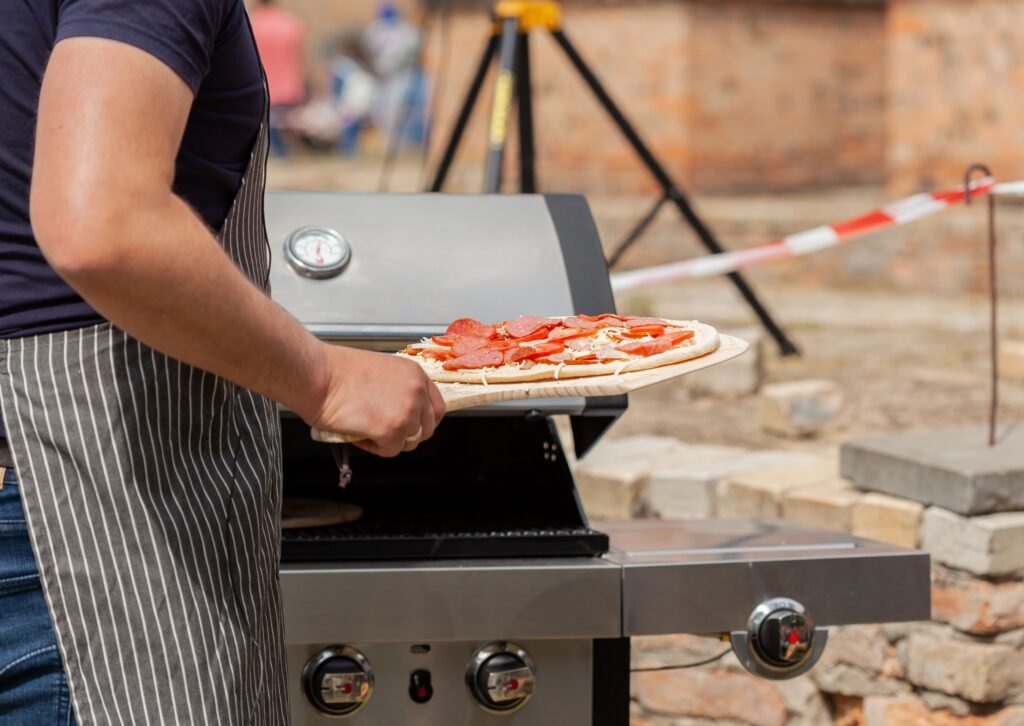
A good layout makes the kitchen feel effortless to use. A poor one makes you walk back and forth for a spatula.
Use the zone method
Divide the space into four zones:
- Cooking: grill, oven, smoker, side burner
- Prep: counter space, sink, cutting area
- Serving and dining: bar seating, table, tray space
- Storage: cabinets, fuel, tools, ice bin
Keep prep between cooking and the fridge or sink, outdoor kitchen ideas a bit like the work triangle in an indoor kitchen. Leave at least 90 cm (3 ft) of clear space around work areas and about 1 m (3 ft) for main walkways.
Choose the right position
- Close to the house: You will use it more, and trips for supplies are shorter.
- Away from wind: Watch which way smoke blows so it does not drift into seating or neighbours’ windows.
- Out of harsh midday sun where possible, or add shade.
- Away from flammable surfaces: fences, sheds, overhanging branches and timber decks.
- On level, solid ground that drains well, with a non-slip finish.
Pick a layout shape
| Layout | Best for | Watch out for |
|---|---|---|
| Straight run | Narrow spaces, walls | Limited counter space |
| L-shape | Corners, social cooking | Smoke near seating |
| U-shape | Larger kitchens | Needs more space and budget |
| Island | Open yards, entertaining | Groundwork and utilities |
| Modular or mobile | Renters, flexible plans | Fewer built-in features |
Plan utilities first
Decide where gas, water, drainage and power will run before you finalise the layout. Moving a gas line or drain after the fact is costly.
Best Materials for Outdoor Kitchens
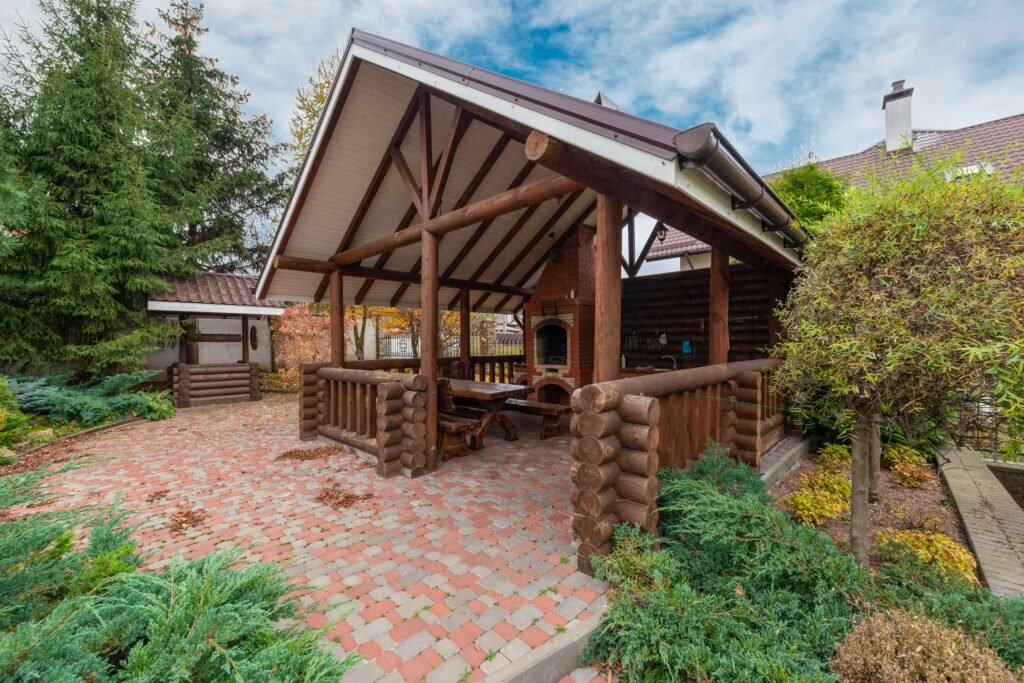
Weather, sun and spills are tough on materials. Choose for your climate, not just for looks.
| Material | Where to use it | Pros | Cons | Climate notes |
|---|---|---|---|---|
| Stainless steel | Cabinets, doors, counters | Durable, hygienic, easy to clean | Shows marks, gets hot in sun, can mark near the coast | Choose marine-grade near the sea |
| Sealed concrete | Counters, bases | Strong, modern, customisable | Needs sealing, can crack or stain | Check frost resistance in cold areas |
| Natural stone or granite | Counters | Beautiful, heat-resistant | Heavy, needs sealing, can be pricey | Some stones fade in strong UV |
| Porcelain tile | Counters, splashbacks, floors | Low-maintenance, frost-resistant types available | Grout needs care | Use outdoor-rated, non-slip tile |
| Brick or masonry | Bases, structures | Solid, classic | Heavy, less flexible | Good in most climates |
| Marine-grade polymer or composite cabinets | Cabinet boxes | Resist moisture and rot | Less natural look | Good for wet or humid areas |
| Treated timber | Frames, accents | Warm look, lower cost | Needs sealing, can rot near ground | Keep away from heat and splash zones |
Flooring: Choose non-slip, easy-to-clean surfaces such as pavers, sealed concrete or outdoor tile. Gaps in decking let food and grease fall through, and grease on timber can be a fire and stain risk.
Essential Appliances and Features
Use this as a checklist, and be honest about what you will use.
Must-have
- Grill, oven or other main heat source
- Weatherproof counter space
- Closed storage for tools and fuel
- Lighting over the cooking and prep areas
- A fire safety plan: extinguisher or fire blanket close by
Nice to have
- Sink with hot and cold water, or at least a cold tap
- Outdoor-rated fridge or drinks cooler
- Side burner or griddle
- Pizza oven or kamado
- Bar seating or dining table
- Heating for cool evenings
- Warming drawer, ice bin, trash and recycling pull-out
Luxury
- Smoker plus a separate grill
- Full refreshment centre
- Retractable or louvred roof
- Smart controls and integrated sound
Product-free alternatives: A sturdy folding table and a cool box do a surprising amount of work while you decide what to buy. A bucket of ice can stand in for a fridge for parties.
How Much Does an Outdoor Kitchen Cost?
Costs depend heavily on your country, the materials, outdoor kitchen ideas the appliances and the groundwork. Use these as rough planning tiers, not quotes.
| Tier | What you get | Rough range (USD) |
|---|---|---|
| Basic | Cart or compact station, grill, small counter | $500 to $3,000 |
| Mid-range | Modular or built-in counter, grill, storage, basic seating | $3,000 to $15,000 |
| Premium | Custom island or L-shape, sink, fridge, pizza oven or second cooker, shelter | $15,000 to $40,000+ |
Where the money goes:
- Appliances: grill, oven, fridge, side burner
- Counters and cabinets
- Base, paving and groundwork
- Utilities: gas, water, drainage, electrics (usually done by licensed trades)
- Shelter, lighting and heating
- Labour, if you are not building it yourself
Ways to save:
- Start with a grill, counter and storage, and add a sink or fridge later
- Use modular units instead of a fully custom build
- Keep utilities close to the house to shorten runs
- Do the finishing yourself, but hire professionals for gas and electrics
- Spend on durability where it counts: counters, cabinet boxes, and the grill itself
Get at least two or three local quotes, and ask what is and is not included.
Safety, Ventilation and Permits
Outdoor cooking involves fire, gas, electricity and water. Treat safety as part of the design, not an afterthought.
Fire and clearance
- Keep grills, ovens and fire features well away from walls, fences, sheds, overhanging branches and timber structures. A distance of around 3 m (10 ft) from the house is a widely used guideline for grills, but always follow the manufacturer’s manual and local rules.
- Never place a grill under a flammable canopy or roof.
- Keep a fire extinguisher or fire blanket close, and never leave a flame unattended.
Ventilation
- Never use a charcoal or gas grill in an enclosed space. Combustion produces carbon monoxide, which is odourless and dangerous.
- Under a roof, make sure smoke and heat can escape freely. Open sides, a raised roof or a properly designed extraction system help. Have anything more complex designed by a professional.
Gas
- Have gas lines, regulators and appliance connections installed and tested by a licensed professional.
- Check hoses for cracks and leaks regularly, and follow the manufacturer’s instructions for cylinders.
Electrics and water
- Outdoor sockets and lighting should be weather-rated and protected by the appropriate safety device (a GFCI or RCD, depending on where you live).
- Use licensed electricians, and keep cables and plugs out of wet areas.
Food safety
- Keep raw and cooked foods separate, and keep cold food cold, especially in hot weather.
- Wash hands and surfaces regularly, and use an outdoor-rated fridge if you store food outside.
Permits Rules differ widely. A simple freestanding grill rarely needs a permit, but a built structure with a roof, walls, gas, plumbing or electrics often does. outdoor kitchen ideas Check your local building or planning office, and also any homeowners’ association, landlord or listed-building or conservation-area rules. Do this before you buy or build.
Outdoor Kitchen Ideas for Different Climates
Hot and dry
- Shade the cooking and seating areas, and avoid dark metal in direct sun.
- Choose light, heat-reflective surfaces and give the fridge ventilation.
- Plan evening use, when it is cooler, with good lighting.
Hot and humid
- Choose materials that resist mould and moisture, like marine-grade polymer, stainless steel and sealed stone.
- Maximise airflow, and use covers on appliances when not in use.
- Store dry goods in sealed containers, as humidity spoils them quickly.
Rainy
- Add a solid roof or pergola with good drainage, and raise the base off the ground.
- Choose non-slip flooring and weather-sealed cabinets with drainage.
Cold or frosty
- Use frost-resistant tile, concrete and stone.
- Drain or winterise water lines to prevent freezing and cracks.
- Add overhead or wall-mounted heating and good lighting for short days.
Windy or coastal
- Position the grill out of the prevailing wind, add a windbreak or screen, and anchor lightweight furniture.
- In salty air, choose marine-grade steel and rinse surfaces regularly.
Maintenance and Winterising
A little regular care keeps an outdoor kitchen looking good and working safely.
Weekly or after each use
- Clean the grill grates and wipe down counters.
- Empty the grease tray, and cover appliances when cool.
Monthly
- Check gas hoses and connections for damage.
- Wipe stainless steel with a suitable cleaner, and check for rust or wear.
- Clean the fridge and check seals.
Seasonally
- Reseal concrete, stone or timber as recommended.
- Clear drains and gutters, and check the roof or pergola fixings.
- In cold climates, drain the water lines and sink, disconnect and store gas cylinders safely, and use breathable covers (plastic covers can trap moisture).
Common Outdoor Kitchen Mistakes and How to Avoid Them
| Mistake | Why it hurts | Fix |
|---|---|---|
| Placing the kitchen too far from the house | You stop using it | Keep it near the back door and indoor kitchen |
| Skipping utility planning | Costly changes later | Map gas, water, drainage and power first |
| Too little counter space | Cooking feels cramped | Allow at least 60 to 90 cm (2 to 3 ft) beside the grill |
| Using indoor appliances outside | They fail in weather | Buy outdoor-rated appliances |
| Dark surfaces in full sun | Too hot to touch | Choose lighter finishes or add shade |
| Ignoring smoke direction | Smoke drifts to guests or neighbours | Check the prevailing wind and move seating |
| Skipping lighting | Unusable after dark | Add bright task lighting over cooking and prep |
| Overbuilding at the start | Budget runs out | Build the essentials, then expand |
| Forgetting permits | Fines or forced changes | Check local rules before you build |
| No storage | Clutter and weather damage | Include closed, weatherproof cabinets |
FAQs About Outdoor Kitchen Ideas
What do you need in an outdoor kitchen?
At minimum: a heat source such as a grill, a weatherproof prep surface, storage and safe clearances. A sink, fridge, shelter and lighting are useful upgrades.
How much does an outdoor kitchen cost?
A basic cart or station can cost a few hundred to a few thousand dollars. Mid-range builds are often in the low to mid thousands up to about $15,000, and premium custom kitchens can run well beyond that. Local quotes matter.
What is the best layout for an outdoor kitchen?
A straight run suits narrow spaces, an L-shape suits corners and social cooking, and an island suits large open yards. Whatever you pick, plan clear cooking, prep, serving and storage zones.
Can you build an outdoor kitchen on a budget?
Yes. Start with a grill, a sturdy prep table and weatherproof storage, then add features over time. Spend most on the parts that must last.
How do you protect an outdoor kitchen from rain, sun and frost?
Use weather-rated materials, add a roof or pergola, make sure water drains away, cover appliances, and winterise water lines in cold climates.
Can I have an outdoor kitchen on a small patio or balcony?
Often yes, but check building and fire rules first. Electric grills, compact carts and fold-down counters suit small spaces best.
Final Thoughts
The best outdoor kitchen is the one you will actually use. Pick a layout that fits your space, choose materials for your climate, plan utilities and safety before you buy anything, and start with the essentials. You can always add a sink, a fridge or a roof later, but you cannot easily fix a kitchen that was built in the wrong place.