
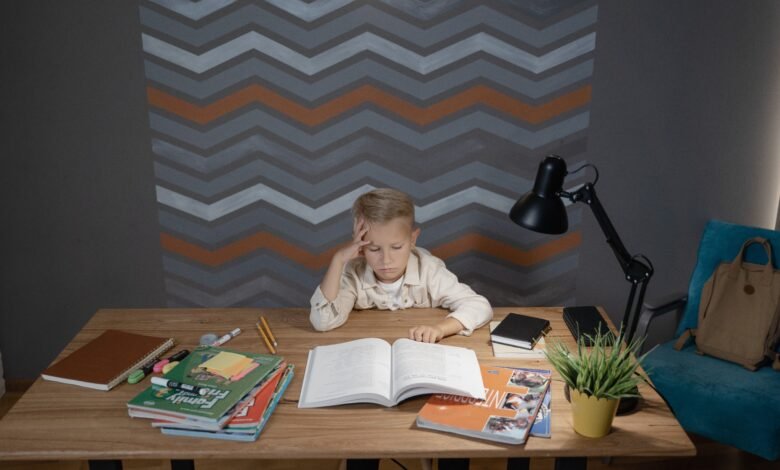
A child’s desk is one of the few pieces of furniture that shapes habits. A good study table for kids gives them a fixed place for homework, drawing and reading. It supports posture, keeps supplies organized and tells the brain that this is where focused work happens. A poor one, which is too high, too small, wobbly or cluttered, can lead to slouching, tired eyes and avoided homework.
This guide helps you choose well. It covers sizes by age, the main types of children’s desks, desk and chair sets, storage options, space-saving designs for small bedrooms, safety checks, styling ideas, where to buy, and common mistakes. If you are comparing a children’s desk with storage, a foldable study table for students or a loft bed with study table, you will find what you need below.
Why a Proper Study Table for Kids Matters
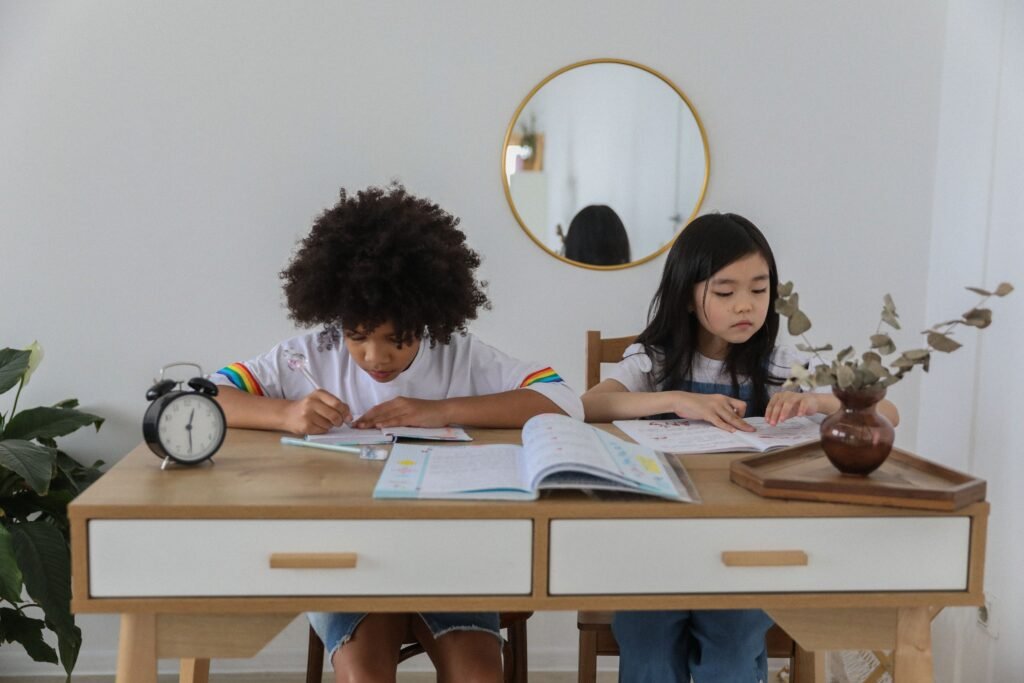
Children do not just sit at a desk. They write, draw, build, use laptops and tablets, and sometimes eat or play there. A well-chosen study table for kids helps in several ways:
- Posture. A desk and chair that fit your child’s body reduce strain on the neck, shoulders and back.
- Focus. A dedicated spot signals “study time” and cuts down on distractions from beds and toys.
- Organization. Drawers, shelves and a hutch keep books, stationery and art supplies in order.
- Independence. A child who can reach everything easily is more likely to start and finish homework alone.
- Routine. Sitting at the same desk at the same time each day builds a habit.
Ergonomic guidance for schools consistently stresses adjustability for children, study table for kids because their bodies change quickly. That is why many parents now prefer an adjustable children’s desk over a fixed-height one.
How to Choose a Study Table for Kids: Size and Height by Age

Size is the most important factor. A desk that looks beautiful but sits at the wrong height will not be used comfortably. Here are approximate heights based on common school-furniture standards, study table for kids such as the European standard EN 1729. Children of the same age vary a lot in height, so use this as a starting point and always check the fit on your child.
| Age (approx.) | Desk height | Chair seat height | Typical use |
|---|---|---|---|
| 3 to 4 years | 460 mm (about 18 in) | 260 mm (about 10 in) | Drawing, play, early learning |
| 4 to 6 years | 530 mm (about 21 in) | 310 mm (about 12 in) | Pre-school and early writing |
| 6 to 8 years | 590 mm (about 23 in) | 350 mm (about 14 in) | Primary homework |
| 8 to 11 years | 640 mm (about 25 in) | 380 mm (about 15 in) | Homework, reading, projects |
| 11 to 14 years | 710 mm (about 28 in) | 430 mm (about 17 in) | Middle school, laptop use |
| 14 years and up | 760 mm (about 30 in) | 460 mm (about 18 in) | Teen and adult sizing |
The Three-Point Fit Check
When your child sits down, check:
- Chair height. Feet should rest flat on the floor or a footrest, with knees at about a right angle.
- Desk height. The desk surface should sit near elbow height, so the shoulders stay relaxed.
- Legroom. Knees and thighs should clear the underside of the desk and any drawers.
Recommended Desk Dimensions
- Study table for primary students: around 90 cm wide and 45 to 50 cm deep is enough for a notebook and a textbook.
- Older students: 100 to 120 cm wide and about 60 cm deep fits a laptop, books and a lamp.
- Study table for 2 students: a long shared desk of 150 cm or more, with two chairs and a divider shelf.
Types of Children’s Desks: Which Study Table for Kids Is Right for You?
Small Children’s Desk and Small Children’s Desk and Chair
A small children’s desk (also called a children’s small desk or compact children’s desk) suits toddlers and young children, and bedrooms with limited floor space. study table for kids A small children’s desk and chair set is usually lightweight, low to the ground and easy to move. It works for drawing, puzzles and early writing.
Children’s Desk and Chair Set, Kids Desk and Chair Set and Junior Desk and Chair Set
A kids desk and chair set is the simplest way to get a matching, correctly sized combination. A children’s desk and chair set or junior desk and chair set often includes a table and one or two chairs sized for the same age group. study table for kids Because the pieces are designed together, the proportions are usually right. Sets are also tidy and easy to buy. Look for sets with rounded corners, a sturdy frame and a washable surface.
You will also see alternative names for the same idea: childs desk and chair, children’s small desk and chair, children’s desk chair set, children’s desk table and chair and childs chair and desk. They all mean a desk-and-seat package for young users.
Study Table and Chair Set for Students
A study table and chair set for older children is built bigger. A study table and chair set for students, table chair set for study or study desk with chair set often has a larger surface, study table for kids a drawer or shelf and a more supportive chair. A study table set for students may include a bookshelf or a hutch. For teens, a study table and chair for teenager use should have enough depth for a laptop and enough legroom for long sessions.
Learning Table and Chair
A learning table and chair is typically for younger children. It is lower, lighter and often brightly colored, and it may include a play surface or built-in storage. It fits Montessori-style setups, where children can sit, stand and move on their own.
Writing Table and Chair Set
A writing table and chair set or children’s writing desk has a flat, study table for kids clean surface and often a slim design. It suits children who mainly read, write and draw. A writing table with a small drawer is perfect for a quiet corner.
Adjustable Children’s Desk and Adjustable Study Table for Students
An adjustable study table for students or height adjustable study table for students lets you raise or lower the surface as your child grows. An adjustable study table with chair gives you both adjustable. An adjustable writing table for students often tilts as well, which helps with reading and drawing. Adjustable desks cost more at first, but one desk can last from primary school to college, making it a good value in the long run.
Children’s Folding Desk and Foldable Study Table
A children’s folding desk, foldable study table for students or children’s folding desk and chair is ideal when space is tight. It folds away after use, study table for kids leaving more room to play. The best foldable study table has a locking mechanism, a stable base and a surface that does not flex under writing. Test it carefully, since weaker folding desks can wobble.
Children’s Double Desk and 2 Chair Study Table
A children’s double desk or 2 chair study table works for siblings or a parent who sits beside a younger child. Check that there is enough width for two people to work without bumping elbows.
Children’s Desk with Hutch and Hutch Desk
A children’s desk with hutch, children’s hutch desk or children’s desk and hutch has a shelf unit above the work surface. It holds books, a lamp and supplies, so the main surface stays clear. It is a very practical option for smaller rooms because it builds upward instead of outward.
Narrow Children’s Desk
A narrow children’s desk suits slim bedrooms or hallways. study table for kids It can fit along a wall or under a window, though it is best for light work and may not hold a large laptop setup.
Study Table for Kids with Storage: Drawers, Shelves and Bookcases
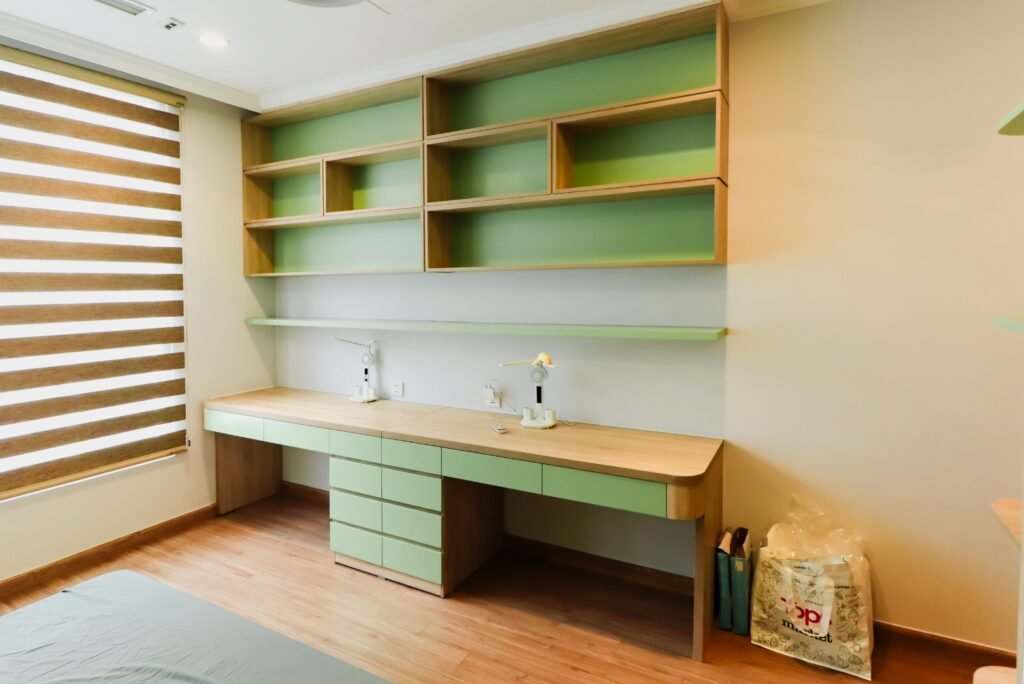
Clutter is the biggest enemy of a study corner. Good storage keeps the surface free and makes it easy for kids to tidy up.
Children’s Desk with Storage and Children’s Desk and Storage
A children’s desk with storage may have drawers, cubbies, shelves or a built-in organizer. A childs storage desk or children’s desk and chair with storage combines the work surface with extra capacity. study table for kids A children’s desk with storage bin has removable bins that kids can carry and tidy themselves, which is great for younger children.
Children’s Desk with Drawers
A children’s desk with drawers, also found as children’s desk and drawers, keeps pencils, paper and small items out of sight. Choose smooth-running drawers with stoppers so they cannot be pulled out fully, and check that knees clear them.
Children’s Desk with Shelves
A children’s desk with shelves, childs desk with shelves or children’s desk and shelves places books within reach. Open shelves help young children find what they need, but they can look messy, so add baskets for loose items.
Children’s Desk and Bookcase
A children’s desk and bookcase combination keeps reading materials next to the work area. Anchor any tall bookcase to the wall so it cannot tip over.
Space-Saving Ideas: Beds, Lofts and Murphy Designs
In small bedrooms, combining the bed and the desk can free a lot of floor space.
Children’s Bed with Desk and Children’s Bed and Desk
A children’s bed with desk, or children’s bed and desk, sets the desk beside or beneath the sleeping area. It saves space and keeps everything together. A child’s desk bed version often has built-in drawers or shelves too.
Loft Bed with Study Table and Junior Loft Bed with Desk
A loft bed with study table raises the bed and puts the desk underneath. A junior loft bed with desk is sized for younger children, with lower heights and safer rails. study table for kids This arrangement separates the sleeping area from the study area, which many parents find helpful.
Safety for loft beds is important. Check the weight rating, rail height, ladder design and ceiling clearance. Many manufacturers advise against loft beds for very young children, so follow the age guidance on the product.
Murphy Bed with Study Table
A murphy bed with study table folds the bed into the wall during the day and reveals a desk. It is a clever space-saver for shared rooms, studios and guest rooms, though it needs a professional-quality installation.
Children’s Bedroom Study Table and Child’s Bedroom Desk
For a children’s bedroom study table or childs bedroom desk, think about placement. Position the desk by a window if possible, so daylight falls from the side. Keep it away from the TV and from the bed, to separate rest from work.
Choosing the Right Chair: Kids Desk Chair Guide
The desk is only half the story. A kids desk chair, also called a children’s desk chair or childs desk chair, needs to be just as carefully chosen.
What to look for in a children’s desk chair or children’s study chair:
- Adjustable seat height, so feet can reach the floor or a footrest.
- Back support, especially for older kids who study for long periods.
- A stable base, with wheels only if the chair is well-balanced or has locking casters.
- Breathable, easy-clean fabric or a wipeable surface.
- A seat depth that fits, so the back of the knees does not press against the front edge.
The same rules apply to a childs chair for desk or a chair and table for students. A 2 chair study table set should give each seat the same quality.
If the desk is too high for the chair, study table for kids add a footrest so your child’s feet do not dangle. Dangling feet can reduce circulation and force the child to perch forward.
Style and Color: White, Pink and Character Study Tables
Kids are more likely to use a desk they like. Here are popular options:
- White children’s desk and small white children’s desk: bright, clean and easy to match with almost any room. White also makes small rooms feel larger.
- Pink study table and pink children’s desk: a favorite for many girls’ rooms, with soft pastel or bold bright versions.
- Disney study table and Disney princess study table: character-themed desks with printed artwork. They are fun for younger children, though older kids may outgrow them quickly.
- Ben 10 study table and Ben10 study table: another character-themed option popular with young fans.
- Building block study table: a desk with a surface or side panel that accepts building bricks, great for creative play and study alike.
- Cool children’s desks: designs with unusual shapes, bold colors or fun details, such as a chalkboard or whiteboard surface.
Character desks can be a good short-term choice. If you want something that lasts, pick a neutral desk and add personality with stickers, posters, a colorful chair and desk accessories.
Lighting: Children’s Desk Light
A children’s desk light is not optional. Poor lighting leads to eye strain and fatigue. Choose a lamp that:
- Has an adjustable arm or head
- Gives even, glare-free light, preferably LED
- Stays cool to the touch
- Has a stable base so it cannot tip over easily
- Sits on the side opposite your child’s writing hand, to avoid shadows
Combine the lamp with natural daylight when possible. study table for kids Remind your child to take regular breaks from close work and look into the distance, for example by following the 20-20-20 rule: every 20 minutes, look at something 20 feet away for 20 seconds.
Safety Checklist for Any Study Table for Kids
Children use furniture in unexpected ways, so safety comes first:
- Rounded corners and smooth edges.
- A stable base that does not tip or wobble.
- Non-toxic finishes and paints, with low emissions.
- Strong joints and hardware, especially on folding tables and bunk or loft beds.
- Wall anchors for tall shelves and hutches.
- Cord management, so lamp and laptop cables do not become trip or pull hazards.
- Weight limits, checked against your child’s size and growth.
- Finger-safe hinges on folding or drop-leaf desks.
Always follow the manufacturer’s assembly instructions, and re-tighten screws every few months.
Best Children’s Desks: What to Look For
Searches like best children’s desks and best desk for first grader are common, so here is a simple way to compare. A good desk for a first grader (around 6 to 7 years) typically has:
- A height of about 55 to 60 cm, or an adjustable range that includes it
- A surface of at least 80 to 90 cm wide
- A smooth, wipe-clean top
- Some storage for books and stationery
- A chair with adjustable height and a backrest
Compare options on these points:
| Feature | Why it matters | What to look for |
|---|---|---|
| Adjustability | Lets the desk grow with the child | Easy, tool-free height changes |
| Surface size | Space for books and devices | At least 90 cm wide for school-age kids |
| Storage | Keeps clutter away | Drawers, shelves, bins or hutch |
| Material | Durability and cleaning | Sealed wood, engineered wood, sturdy metal or quality plastic |
| Stability | Safe use and good writing | Solid base, no wobbling |
| Footprint | Fits the room | Measure first, include chair clearance |
| Style | Keeps the child interested | A color or theme they like |
| Price | Fits the budget | Balance cost against growth and durability |
Homework Desks and Homework Tables
Homework desks for bedroom use and homework tables serve a slightly different purpose from play tables. A homework table for students is built for sustained work. It should have a clear surface, study table for kids good lighting and a comfortable chair. For families who prefer shared study, a larger homework table in a common area, such as a dining room corner or the living room, lets parents supervise and help.
If you do use a shared space, give your child their own supplies box or caddy so everything can be set up and put away quickly.
Where to Buy: Children’s Desks for Sale, Online and Near You
If you are searching for children’s desks for sale, buy children’s desk or children’s desk near me, you have many options:
- Online marketplaces. Searching for an Amazon children’s desk, Amazon childs desk or Amazon childs desk and chair set offers wide choice, user reviews and photos. Read the dimensions carefully and check the return policy.
- Large furniture retailers. Stores selling an IKEA children’s desk or childs desk and chair IKEA-style sets are popular for simple, well-sized, affordable designs, and you can see them in person.
- Specialist kids’ furniture brands. Some brands focus on children’s play and study furniture, such as the KidKraft study desk and chair set category, with well-finished sets for different ages.
- Local furniture shops and carpenters. Searching children’s desk and chair set near me can lead you to local makers who can custom-build a size that fits your child and room.
- Second-hand marketplaces. Good for solid wood desks at lower prices. Check stability and finish, and clean thoroughly.
For a cheap children’s desk and chair set, compare several listings and check the weight rating, material and reviews before ordering. Very low prices may mean thin boards, weak hardware or paint that is not child-safe.
Study Table for Kids in Local Searches (Hindi and Urdu Terms)
Many families search in their own language. Bacche ka study table, bacchon ka study table, bacche log ka study table and chhota study table are common terms in Hindi and Urdu for a child’s desk or a small desk. Local sellers often use these names in their listings and social posts, so using them can help you find nearby carpenters, furniture markets and online shops. Whichever term you use, the same guidance applies: match the height to the child, choose stable construction and add storage.
How to Set Up a Study Corner
A great study table for kids also needs the right setting:
- Choose a quiet spot away from the TV and traffic.
- Use natural light. Place the desk so daylight falls from the side.
- Add a desk lamp for evenings.
- Keep essentials within reach, such as pencils, a ruler and an eraser, in a small organizer.
- Add a pinboard or whiteboard for schedules and reminders.
- Set a routine. Study at the same time each day.
- Limit distractions. Keep phones and toys in a drawer or basket.
- Let your child personalize it with a favorite poster or plant, within reason.
Common Mistakes to Avoid When Buying a Study Table for Kids
- Buying only for the future. A desk that is far too big can be as uncomfortable as one that is too small. Use an adjustable chair and footrest instead.
- Ignoring the chair. A great desk with a poor chair gives poor posture.
- Skipping storage. Without it, clutter takes over the surface.
- Forgetting to measure the room. Include space to pull out the chair and walk around.
- Choosing looks over stability. A wobbly desk is frustrating and unsafe.
- Not involving your child. Kids who help choose colors or themes are more likely to use the desk.
- Neglecting lighting. A dim desk causes eye strain and tiredness.
- Ignoring safety details. Check for sharp edges, finishes, anchors and weight limits.
Frequently Asked Questions (FAQs)
1. What is the best study table for kids?
The best study table for kids is one that fits your child’s height, is stable, has enough surface and storage, and suits your room. For many families, an adjustable desk with a matching chair is the most practical option.
2. What height should a children’s desk be?
It depends on age and height. As a rough guide, about 530 mm for ages 4 to 6, 590 mm for 6 to 8, 640 mm for 8 to 11 and 710 mm for 11 to 14. Check that elbows sit near desk height and feet rest flat.
3. Is a desk and chair set better than buying separately?
A set guarantees matching sizes and is easy to buy. Buying separately gives more control over features such as an adjustable or ergonomic chair. For older children, many parents buy the desk and chair separately.
4. What is the best study table for primary students?
A sturdy desk about 90 cm wide with a smooth surface, a drawer or shelf for supplies and a matching adjustable chair works well. Look for rounded corners and a stable base.
5. Are foldable study tables good for kids?
Yes, especially in small rooms. Choose one with a solid locking mechanism and a stable surface. Foldable tables are best for light use and may flex under heavy pressure.
6. Is a loft bed with a study table safe?
It can be, if it is well made, has proper rails and a safe ladder and is used for the recommended age. Follow the manufacturer’s age and weight guidance, and make sure ceiling height is adequate.
7. What is the best desk for a first grader?
A desk around 55 to 60 cm high, or adjustable, with a smooth surface of at least 80 to 90 cm, a little storage and a chair that lets feet rest on the floor or a footrest.
8. Do kids need a desk with storage?
It is very helpful. Drawers, shelves, bins and hutches keep supplies organized and surfaces clear, which supports focus and good habits.
9. How do I make a study table comfortable for long study sessions?
Use a chair with back support, an adjustable height, a footrest if needed, good lighting, a screen at eye level when using a laptop and regular breaks.
10. Can two children share a study table?
Yes, with a wide desk of 150 cm or more or a children’s double desk. Give each child their own chair, storage and lamp if possible.
11. Are character study tables worth buying?
They can motivate younger children, but older kids may outgrow them. If you want a longer-lasting choice, buy a neutral desk and add themed accessories.
12. Where can I find a children’s desk near me?
Search local furniture stores, carpenters and online marketplaces with delivery. Check dimensions, reviews, delivery times and return policies before buying.
Final Thoughts: Choosing the Right Study Table for Kids
The right study table for kids is not the most expensive or the most colorful. It is the one that fits your child’s body, suits your room and encourages them to sit down and get started. Begin by measuring your child and your space. Then choose the type that fits your needs: a kids desk and chair set for younger children, an adjustable study table for long-term use, a children’s desk with storage for busy school years or a loft bed with study table when floor space is scarce.
Add a supportive chair, good lighting and a tidy storage system, and let your child help pick a color or a theme. Check safety details, such as stability, edges and wall anchors. With a little planning, a simple desk can become a place where your child feels comfortable, focused and proud of their work.




One Comment