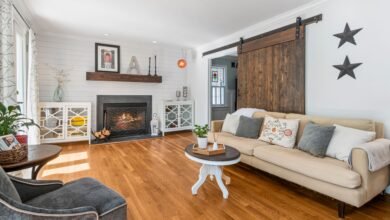
wall art for living room is a piece (or group of pieces) that covers roughly two-thirds of the width of your sofa, hangs with its center about 57 inches from the floor, and matches your room’s color palette and mood. Get those three things right and almost any art will look intentional.
Most guides show you pretty photos and leave you to figure out the rest. This one goes further. You’ll get exact sizing rules, a step-by-step plan, 25 ideas grouped by style, layouts for tricky walls, wall art for living room and options for small rooms, rentals, and tight budgets.
In this guide:
- How to choose wall art for your living room
- What size wall art to buy (with a sizing table)
- Hanging height and spacing rules
- 25 wall art ideas by style
- Layouts: single piece, diptych, triptych, gallery wall
- Special walls: above the sofa, TV wall, fireplace, stairs, narrow walls
- Small living rooms
- Frame, canvas, print, or original?
- Budget, DIY, and renter-friendly ideas
- Hanging hardware and safety
- Common mistakes
- Step-by-step checklist
- FAQs
How to Choose Wall Art for Living Room

Before you look at a single print, answer four questions. wall art for living room They save you from the most common regret: art that looked perfect online and wrong on your wall.
1. What is the mood of the room?
A living room is where people relax, talk, and entertain. Decide what feeling you want the art to support:
- Calm and restful: soft landscapes, muted abstracts, line art, neutral photography
- Energetic and social: bold color, large abstracts, graphic prints
- Cozy and traditional: framed botanicals, vintage prints, oil-style paintings
- Sleek and modern: black-and-white photography, geometric pieces, oversized minimal art
2. What is your color palette?
Pull two or three colors from things that won’t change soon: the sofa, rug, or curtains. Then choose art in one of three ways:
- Match: the art repeats colors already in the room, which feels calm and cohesive.
- Complement: the art uses colors opposite your main tone on the color wheel (for example, rust or orange accents with a navy sofa).
- Contrast with neutrals: in a neutral room, one piece with a single bold color becomes the focal point.
A reliable rule is the 60-30-10 approach. wall art for living room About 60% of the room is a dominant neutral, 30% is a secondary color, and 10% is an accent. Art is a perfect place for that 10%.
3. What is the wall actually like?
Measure it. Note the wall’s width and height, and the width of any furniture below the art. Also check:
- Light: Strong direct sun fades paper prints over time and causes glare on glass. wall art for living room Choose UV-protective glazing or canvas for sunny walls.
- Material: Drywall, plaster, brick, and concrete need different hanging hardware (more on that later).
- Competing features: Windows, vents, switches, and shelves all affect where art can go.
4. What is your budget and how long will you keep it?
Decide whether this is a long-term investment piece or a flexible, swap-it-every-year layer. wall art for living room That choice affects whether you buy an original, a framed print, or a printable you can change cheaply.
What Size Wall Art Works in a Living Room?

The number one reason wall art looks “off” is scale. Art that is too small looks lost, like a postage stamp on a billboard. Use these measured rules.
The 2/3 rule for art above furniture
Wall art (or a grouped arrangement) hung above a sofa, console, wall art for living room or sideboard should measure about two-thirds to three-quarters of the furniture’s width.
Worked example: Your sofa is 84 inches wide.
- 84 × 0.66 = about 55 inches
- 84 × 0.75 = 63 inches
- Target: a single piece or grouped arrangement between 55 and 63 inches wide.
Sizing table
| Furniture width | Ideal art width (66-75%) | Example setups |
|---|---|---|
| 60 in (loveseat) | 40-45 in | One 40×30 in piece, or a pair of 20×30 in |
| 72 in (small sofa) | 48-54 in | One 48×36 in piece, or three 16×24 in |
| 84 in (standard sofa) | 55-63 in | One 60×40 in piece, or a gallery wall about 58 in wide |
| 96 in (large sofa) | 64-72 in | A triptych totaling 66 in wide, or an oversized single piece |
| 120 in (sectional) | 80-90 in | Large gallery wall or two coordinated oversized pieces |
Gap rule
Leave 6 to 8 inches between the bottom of the art and the top of the sofa (or 4 to 6 inches for a console). Any higher and the art seems to float away from the furniture; any lower and people’s heads may bump it when leaning back.
Filling an empty wall with no furniture
Here, aim for art that fills about 50 to 60% of the usable wall width. For a 10-foot (120 in) wall, that means 60 to 72 inches of total art width.
When in doubt, go bigger
Beginners buy too small almost every time. If you are choosing between two sizes, take the larger one. A big piece makes a room feel intentional and also makes the ceiling feel higher.
Test before you buy
Cut kraft paper or newspaper to the exact size of the art and tape it to the wall with painter’s tape. Live with it for a day. This costs nothing and prevents expensive mistakes.
Hanging Height and Spacing Rules

The 57-inch rule
Museums and galleries hang art so the center of the piece is 57 inches (about 145 cm) from the floor. wall art for living room That is average eye level. Use this for art on its own wall, in hallways, and in groupings.
Above furniture
When art hangs over a sofa, console, or sideboard, the furniture rule wins. Keep the 6 to 8 inch gap above, and let the center fall where it falls. If your ceilings are high (over 9 feet), wall art for living room you can hang slightly higher, but the art must still feel connected to the furniture.
Spacing between multiple pieces
| Layout | Gap between frames |
|---|---|
| Gallery wall | 2 to 3 inches |
| Diptych or triptych | 2 to 4 inches (keep identical) |
| Mixed large and small | 3 inches, aligned by a shared center line or edge |
Tighter gaps look cohesive. Gaps over 4 inches make a group read as separate pieces.
How to calculate the hanging point
- Measure the height of the frame.
- Measure the distance from the top of the frame to the hanging wire (pulled taut) or hanger.
- Calculate: 57 in + (half the frame height) − (distance from top to hanger) = the height of the nail from the floor.
Example: The frame is 30 in tall, and the wire sits 4 in below the top when pulled tight. 57 + 15 − 4 = 68 inches. Place the nail at 68 inches.
25 Wall Art Ideas for Living Rooms (By Style)
Modern and Minimal
- Oversized abstract canvas. One large piece with soft shapes in your palette is the fastest way to a designer look.
- Black-and-white photography. Architecture, landscapes, or portraits in matching black frames feel sharp and timeless.
- Line art. Single-line faces, plants, or figures give a light, airy look without visual clutter.
- Geometric prints. Circles, arches, and grids work well in modern or Scandinavian rooms.
- Negative-space art. Pieces with generous blank space suit calm rooms and small walls.
Nature and Botanical
- Large landscape painting or photograph. Mountains, forests, or coastlines add depth and calm.
- Botanical prints in a grid. Six matching pressed-flower or leaf prints create a classic arrangement.
- Oversized leaf art. One large banana leaf or monstera print makes a bold, fresh statement.
- Ocean and abstract water art. Blues and soft whites suit coastal and light-filled rooms.
- Sky and cloud art. Soft gradient skies are easy to match with neutral palettes.
Statement and Bold
- Triptych in a single bold color. Three connected panels over a sofa give impact without complexity.
- Textured plaster or 3D art. Raised textures add shadow and dimension in plain rooms.
- Color-block art. Large blocks of color give a modern, graphic look and hide imperfections in wall paint.
- Neon or LED art sign. A subtle, warm light sign adds personality in modern and eclectic rooms.
- Oversized mirror as art. A statement mirror bounces light and doubles as decor (see the section on mirrors below).
Vintage, Cultural, and Handmade
- Vintage posters. Travel posters, exhibition prints, and old maps bring character and a story.
- Calligraphy and typographic art. Elegant lettering in a gold or black frame works in many traditions and interiors.
- Tapestry or woven wall hangings. Textile art adds softness and absorbs sound in echoey rooms.
- Macramé and fiber art. Good for boho and earthy styles.
- Hand-painted or original art. Original work, even from a local student, wall art for living room gives a one-of-a-kind focal point.
Personal and Practical
- Family photo collage. Use consistent frames and a limited color tone (all black-and-white, or all sepia) to keep it stylish.
- Framed fabric or wallpaper samples. An inexpensive way to get pattern and color without a full wall treatment.
- Wall shelves with leaning art. Picture ledges let you swap pieces freely without new nail holes.
- Pegboard or rail displays. Picture rails let you change the display often, wall art for living room which is useful for renters.
- Layered art with mirrors and objects. Mix a canvas, a small mirror, and a sculptural object for a curated look.
Layouts: How to Arrange Wall Art in a Living Room
Single large piece
The simplest option and often the best. Center it over the furniture or on the wall, wall art for living room apply the 2/3 rule, and you are done. This works best in modern and minimal rooms.
Diptych (two panels)
Two matching pieces hung side by side with a 2 to 4 inch gap. wall art for living room Their combined width should follow the 2/3 rule. Good for narrow vertical walls and for balancing a window or door.
Triptych (three panels)
Three panels form one image or a set of related pieces. Keep gaps identical. Triptychs are ideal above sofas because the wide shape follows the furniture.
Grid layout
Four, six, or nine identical frames in tidy rows. This is the safest layout for beginners and works especially well with botanical prints or photography. Use a level and a paper template to keep rows exact.
Salon-style gallery wall
An organic mix of sizes, frames, and subjects. wall art for living room It is the most personal layout and the most forgiving of mistakes if you plan carefully.
How to build one:
- Lay frames on the floor and arrange them within the exact outline of your target area (about two-thirds of the furniture width).
- Put the largest piece slightly off center, and place smaller pieces around it.
- Keep a consistent 2 to 3 inch gap.
- Unify the group with one common element: all black frames, or one repeating color, or matching mats.
- Trace each frame on kraft paper, cut out, and tape the templates to the wall. Adjust until it feels right.
- Hammer nails through the templates, tear off the paper, and hang.
Hanging order
Start with the center or largest piece first, then work outward. This keeps the arrangement balanced and prevents drift.
Wall Art Ideas for Specific Spots
Above the sofa
This is the wall most people ask about. wall art for living room Use the 2/3 rule, keep the 6 to 8 inch gap, and center the art on the sofa (not on the wall, if they differ). Wide, horizontal pieces and triptychs work best. Avoid tall narrow art here; it fights the proportions of the sofa.
The TV wall
A TV is a big dark rectangle that can make a wall feel heavy. Solutions:
- Frame the TV with a gallery wall. Put art on both sides, keeping a clear 3 to 4 inch border around the screen.
- Use a frame-style TV. Some TVs display art when off.
- Put art on the walls adjacent to the TV. Balance comes from the room as a whole, not just the one wall.
- Choose matte frames and dark tones near the screen to reduce visual contrast.
Above the fireplace
Fireplaces are natural focal points. Hang a single piece or a mirror at about 4 to 6 inches above the mantel. wall art for living room If you use the fireplace regularly, check heat clearance and avoid canvas or paper close to the firebox. A mirror or metal art is safest.
Narrow walls and between windows
Use tall, vertical pieces or a stacked pair. A column of two or three small frames fits perfectly.
Stair and hallway walls
Follow the angle of the stairs. Keep a consistent distance of about 2 to 3 inches between frames, and keep the same center-to-floor logic for each step.
Corners and awkward spaces
Use a leaning large mirror or art ledge. They are flexible, easy to move, and need little hardware.
Wall mirrors as art
Mirrors work especially well in living rooms with little natural light. wall art for living room Place them opposite or perpendicular to a window to bounce light around. Avoid placing mirrors where they reflect clutter.
Wall Art for Small Living Rooms
Small rooms need smart art, not tiny art.
- Go vertical. Tall pieces draw the eye up and make ceilings feel taller.
- Use fewer, larger pieces. Many small frames on a small wall can feel busy.
- Choose light and airy art. Pale palettes and open compositions feel spacious.
- Use mirrors. They add light and apparent depth.
- Repeat the palette. When art echoes the existing colors, the room feels bigger and calmer.
- Use a single statement wall. Concentrate your art on one wall and keep the rest simple.
Frame, Canvas, Print, or Original: Which Should You Choose?
| Option | Best for | Pros | Cons |
|---|---|---|---|
| Framed print | Most living rooms | Polished, protected, easy to match to decor | Glass can glare; heavier |
| Canvas | Sunny, bright rooms | No glare, lightweight, modern | Can look casual; edges need care |
| Original art | Focal points and long-term investment | Unique, personal, and valuable | Higher cost |
| Printable (digital) | Budget and frequent changes | Very cheap, instantly available | Print quality depends on your printer and paper |
| Metal or acrylic prints | Modern, high-contrast spaces | Vibrant, durable, and moisture-resistant | Reflective, and can be costly |
| Textile or tapestry | Cozy, echoey rooms | Soft, adds sound absorption | Collects dust |
Frame tips
- Black frames suit modern and graphic art.
- Wood frames add warmth and suit nature and vintage styles.
- Gold or brass frames suit traditional or glam rooms.
- White frames keep things light and airy.
- Mats (mount boards) give art breathing room and make small prints look larger. A wide mat on a small print can make it work in a bigger frame.
Glare
Hang glass-fronted art away from direct light sources, or choose non-glare or museum glass. Test glare from where people usually sit.
Budget-Friendly and DIY Wall Art Ideas
You do not need to spend a lot to get a high-end look.
- Print free or inexpensive public domain art. Many museums offer high-resolution digital downloads of historic artworks. Print them in a large format at a local print shop and frame them.
- Frame fabric. A piece of patterned fabric or wallpaper in a large frame is instant art.
- Paint your own abstract. Use painter’s tape, a large canvas, and two or three paint colors from your room.
- Use thrift-store frames. Repaint them in one color to unify mismatched frames.
- Create a botanical grid. Press leaves or flowers between book pages, then mount them in matching frames.
- Display your own photography. Print travel or family photos in black and white and hang them in a grid.
- Use oversized mats. A cheap print in a large frame with a wide mat looks custom and expensive.
Renter-Friendly Wall Art Ideas
If you cannot drill, you still have plenty of options.
- Picture ledges or shelves. One or two nails, and you can swap pieces forever.
- Leaning art. Place large framed art on the floor, a console, or a dresser, leaning against the wall.
- Adhesive hanging strips. Check the weight rating on the package and follow the instructions. They work well for lightweight frames on smooth, painted walls.
- Removable hooks. Suitable for light pieces; always respect the weight limit.
- Tension rods and picture rails. Some rooms already have rails; use them with hanging cords.
- Fabric or tapestry. Light, often hung with a rod or small hooks.
Always check your lease. Small nail holes are often acceptable, and can be filled and touched up when you move out.
Hanging Hardware and Safety
Use the right hardware for the wall and the weight.
| Wall type | Recommended hardware |
|---|---|
| Drywall, light art (under 10 lb) | Standard picture hooks or nails |
| Drywall, medium art (10-30 lb) | Self-drilling drywall anchors or two hooks |
| Drywall, heavy art or mirrors (30 lb+) | Toggle bolts or screws into wall studs |
| Plaster | Pilot holes plus plaster-safe anchors to avoid cracks |
| Brick or concrete | Masonry anchors and a drill |
Safety tips:
- Always check the weight rating on every hook or anchor and stay well below it.
- Use two hooks for wide frames to keep them level.
- Use a stud finder where possible, especially for mirrors and heavy art.
- Check for hidden wires and pipes before drilling.
- Keep art away from heat sources like radiators and fireplaces.
- Use bumpers on the bottom corners of frames to keep them straight.
10 Common Wall Art Mistakes to Avoid
- Buying art that is too small. Always measure first.
- Hanging art too high. Remember the 57-inch center rule.
- Ignoring the furniture below. Art should relate to the sofa or console.
- Mismatched palettes. Pull colors from the room.
- Too many styles in one group. Unify with a common frame color or palette.
- Gaps that are too wide. Keep the spacing at 2 to 3 inches.
- Ignoring lighting. Check glare and sunlight exposure.
- Skipping the paper template. Test the layout before making holes.
- Over-decorating every wall. Leave breathing space.
- Using weak hardware. Always match the anchor to the weight.
Step-by-Step Checklist: From Empty Wall to Finished Look
- Choose your wall and measure its width, height, and the furniture beneath.
- Define your mood and palette using colors from your sofa, rug, and curtains.
- Calculate your ideal art width (2/3 to 3/4 of the furniture width).
- Pick your layout: single piece, diptych, triptych, grid, or gallery wall.
- Cut paper templates and tape them to the wall. Live with them for a day.
- Choose art and frames that match your plan and palette.
- Mark your hanging height using the 57-inch rule or the 6 to 8 inch furniture gap.
- Install the right hardware for the wall and weight.
- Hang the center piece first, then work outward.
- Check with a level, step back, and adjust.
- Add lighting (a picture light or an adjustable lamp) if the piece deserves a spotlight.
Frequently Asked Questions
What size wall art should I put above my sofa?
Aim for art that is 66 to 75% of your sofa’s width. For an 84-inch sofa, that is roughly 55 to 63 inches. Leave 6 to 8 inches between the sofa top and the bottom of the art.
How high should I hang wall art in a living room?
Hang it so the center of the piece sits about 57 inches from the floor. Over furniture, keep a 6 to 8 inch gap above the furniture instead.
How many pieces of wall art should I hang on one wall?
One large piece, a pair, or a set of three is enough for most walls. Use a gallery wall of five or more only if you want a collected, personal look and have planned the layout carefully.
Should wall art match the furniture?
It should coordinate, not match exactly. Repeat one or two colors from the room, and let the art add a new texture or contrast.
Is it okay to mix frame styles?
Yes, if there is a unifying element: the same frame color, the same mat color, or a consistent subject or palette across the pieces.
What is the best wall art for a small living room?
Fewer, larger pieces in a light palette, preferably vertical to add height. Mirrors also help enlarge the space.
Final Thoughts
Great wall art for a living room is mostly about three things: scale, height, and cohesion. Choose a piece that is about two-thirds as wide as your furniture, hang it with its center near 57 inches (or 6 to 8 inches above the sofa), and pull its colors from the room around it. Do that, and even simple art will look professionally styled.