25+ Accent Wall Ideas for Every Room: Modern, Budget-Friendly & DIY Designs

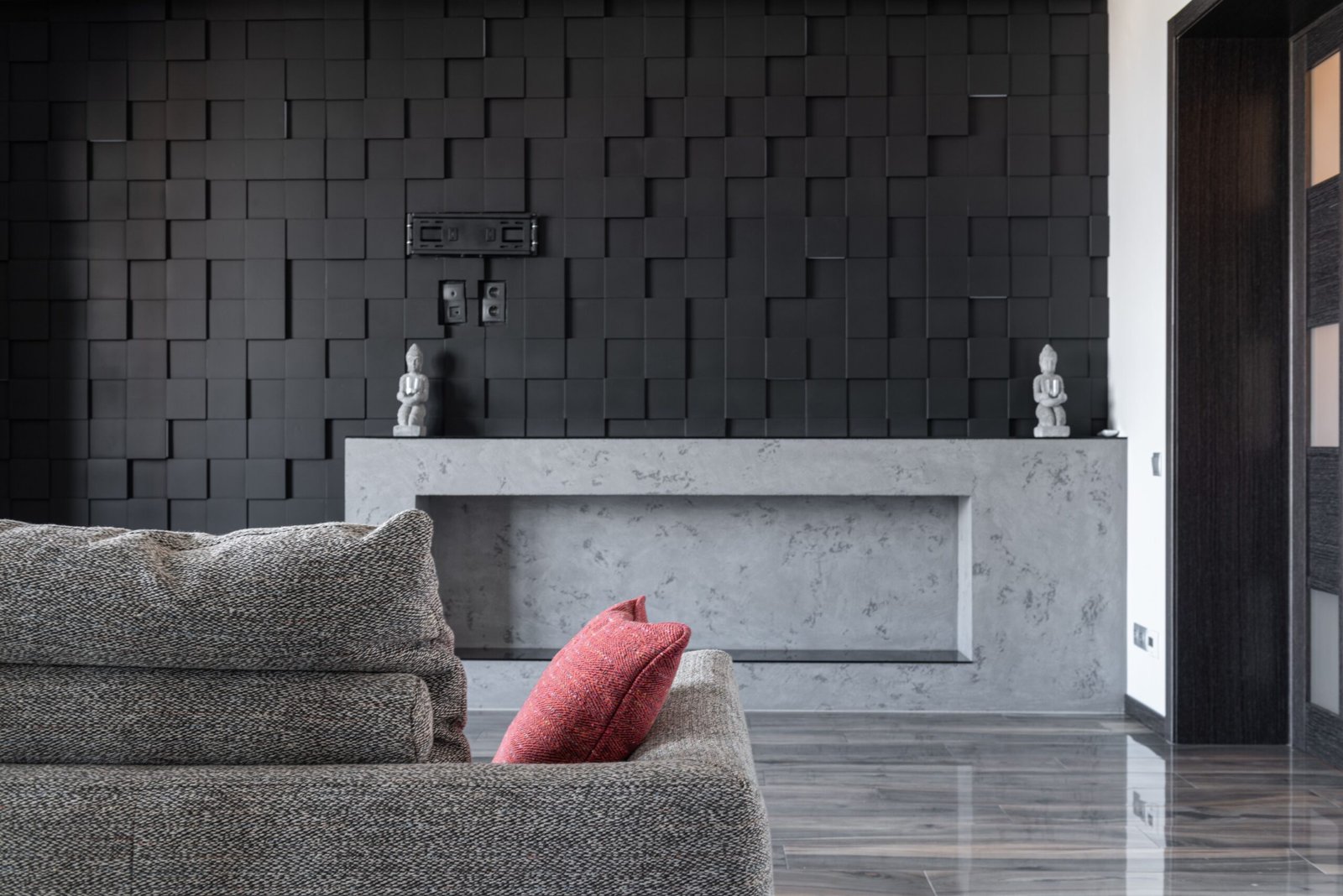
A single wall can change how an entire room feels. Done well, an accent wall adds depth, defines a focal point and gives a plain room personality without a full renovation. Done badly, it chops the room in half and looks like an afterthought. This guide covers more than 25 accent wall ideas, but it goes further than a gallery of pretty pictures. You will learn how to pick the right wall, which material suits which room, what each option roughly costs in money and effort, how to prepare and install it, and which mistakes to avoid.
What an accent wall is · Choosing the right wall · Ideas by room · Ideas by material · Comparison table · Budget and renter-friendly options · Step-by-step DIY · Finish, lighting and colour tips · Mistakes to avoid · FAQs
The best accent wall is the one that sits on the wall your eye lands on first when you enter the room, Accent Wall Ideas uses one bold element (colour, texture or pattern), and matches how much time, money and permanence you are willing to commit to. If you rent, choose peel-and-stick, removable panels or a styled wall of art and shelving.
What Is an Accent Wall and Why Does It Work?
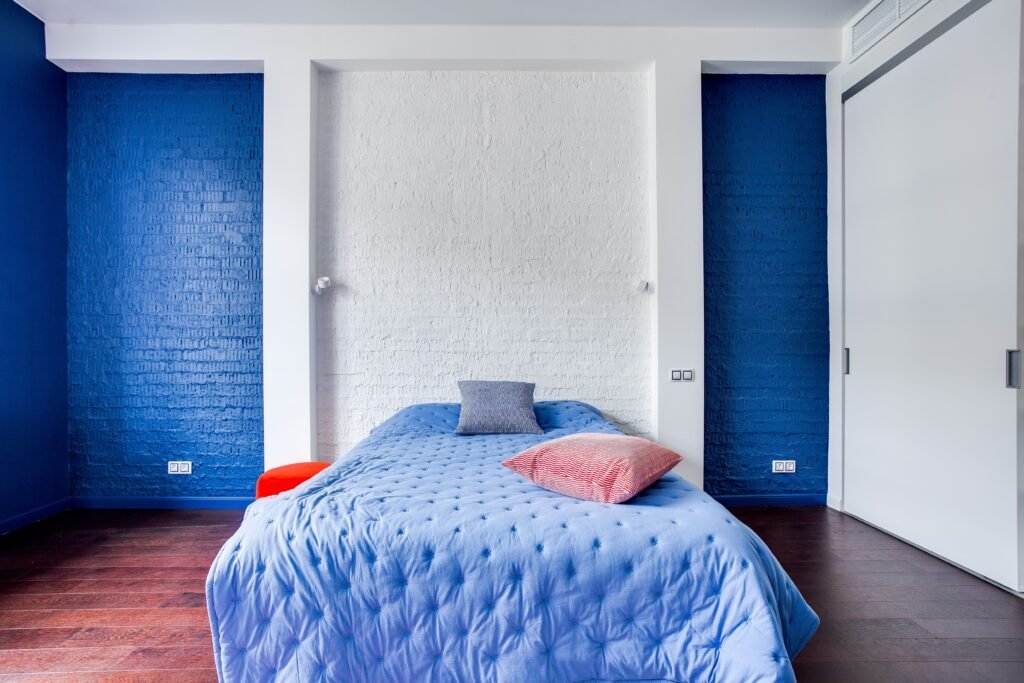
An accent wall is one wall in a room treated differently from the others, usually with a deeper colour, a pattern, a texture or a different material. It works for three reasons:
- It creates a focal point. Rooms without one feel flat. A strong wall gives the eye somewhere to rest.
- It adds depth. Dark or textured surfaces make a wall feel like it recedes or advances, which changes the sense of space.
- It lets you take a risk safely. You can try a bold colour or pattern on 15 to 20 percent of the room’s surface instead of committing to all four walls.
Are accent walls still in style? Yes, but the approach has matured. The older habit of painting one random wall bright red has given way to more considered choices: Accent Wall Ideas tonal colour, tactile materials like slats and plaster, architectural panelling, and even painting a ceiling or shelving unit. The principle is timeless. The execution should suit your room, not a trend.
How to Choose the Best Wall for Your Accent
This is the step most guides skip, and it is the one that decides whether the result looks designed or accidental.
Start with the room’s natural focal point
Stand in the doorway and notice where your eyes go first. That is usually the right wall. Common choices are the wall behind the bed, the wall behind the sofa or TV, the wall with a fireplace, Accent Wall Ideas or the wall at the end of a corridor. Avoid a wall that is broken up by several doors and windows, since the treatment will look patchy.
Check the light
A wall that receives light from the side shows texture dramatically, which is ideal for slats, plaster and brick. A wall facing a large window can look washed out with pale colours but rich with deep tones. A wall in shadow tends to look darker than the paint chip, so test before you commit.
Measure and mind the proportions
A good accent wall is generally a clear, uninterrupted surface. Measure its width and height so you can calculate paint, wallpaper rolls or panels accurately. As a rough guide, very narrow walls under about 1.2 metres (4 feet) often work better as a colour block or niche than as a full feature wall. Accent Wall Ideas In rooms with low ceilings, vertical elements such as slats or stripes can make the ceiling feel higher. In long narrow rooms, an accent on the short end wall makes the room feel wider.
Decide on colour, pattern and material together
Pick one hero element. If the wall is patterned, keep the furniture simple. Accent Wall Ideas If the wall is a bold colour, use a restrained material. Tie the accent back to the room by repeating its colour in a cushion, a rug or artwork on the other walls. Three tones in the room, applied in roughly a 60-30-10 balance, usually look cohesive.
Accent Wall Ideas by Room
Living room accent walls
The living room usually has the most obvious feature wall, which makes it the easiest place to be bold.
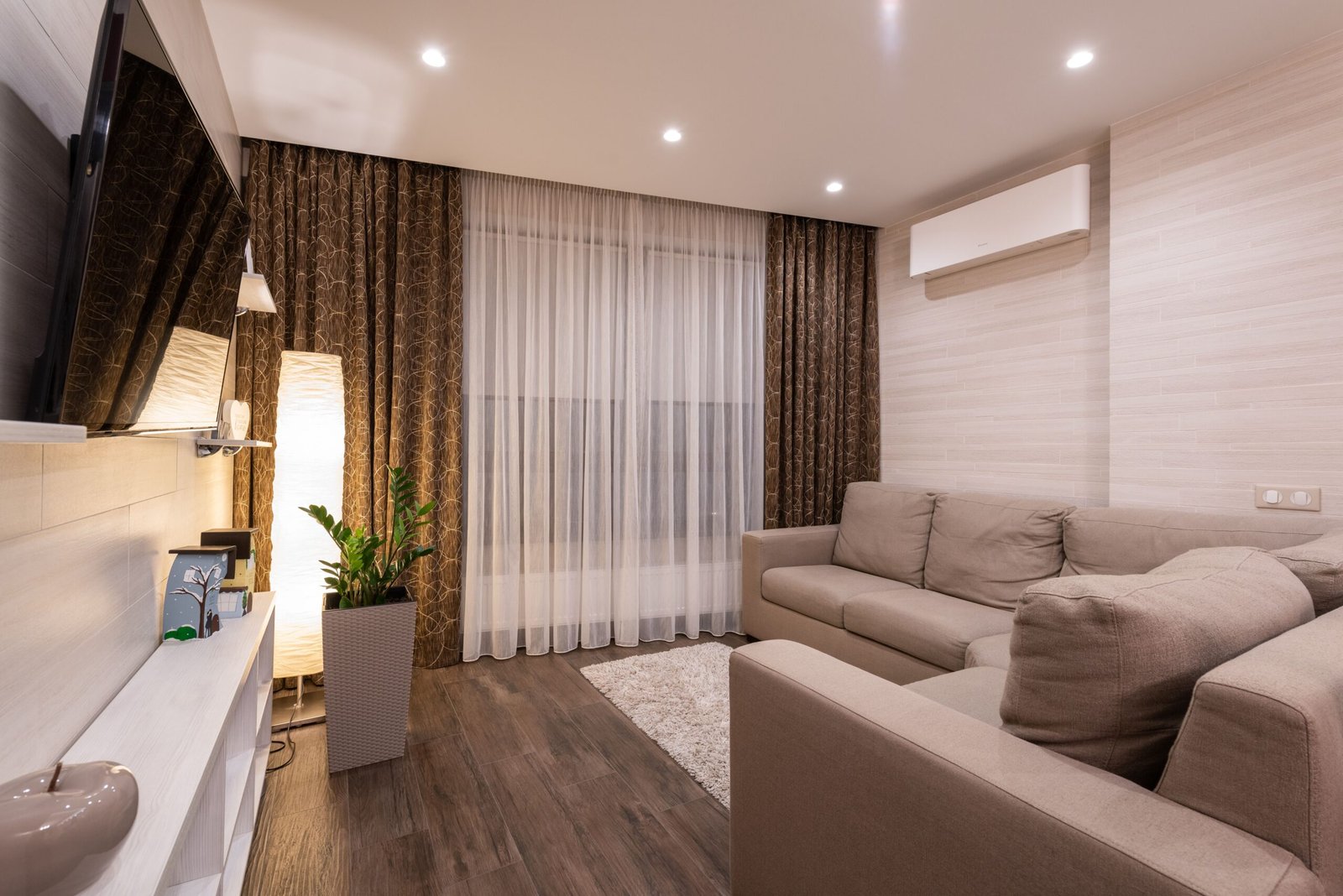
- Deep tonal paint behind the sofa. Choose a colour two to three shades darker than the other walls, such as deep green, inky blue or warm terracotta. Pair with warm lighting and light furniture so the room still feels open.
- Vertical wood slats behind the TV. Slats hide cables when combined with a cable channel, add acoustic softness and make the screen feel built in. Medium effort, mid to high cost.
- Fireplace wall in limewash or plaster. The soft, cloud-like movement of limewash suits a fireplace wall and feels calm rather than loud. Best for confident DIYers or a professional painter.
- Floor-to-ceiling shelving with a painted back panel. Paint the inside of the shelves a deep colour so books and objects stand out. This doubles as storage.
- Large-scale mural or landscape wallpaper. One big scene makes a wall feel like a window. Ideal for rooms with little view.
Small living room tip: Use a mid-tone rather than a very dark colour if the room has little daylight, Accent Wall Ideas or paint the wall in a light colour with a strong texture. Mirrors on the neighbouring wall bounce the colour around.
Bedroom accent walls
The wall behind the bed is the natural choice because you see it from the doorway and from the bed.
- Panelled headboard wall. Picture-frame moulding or board-and-batten, painted in a single colour, gives a built-in headboard look. A classic that does not date.
- Upholstered or fabric-panel wall. Soft, sound-absorbing and luxurious. Fabric panels can be made as separate boards so the look is removable.
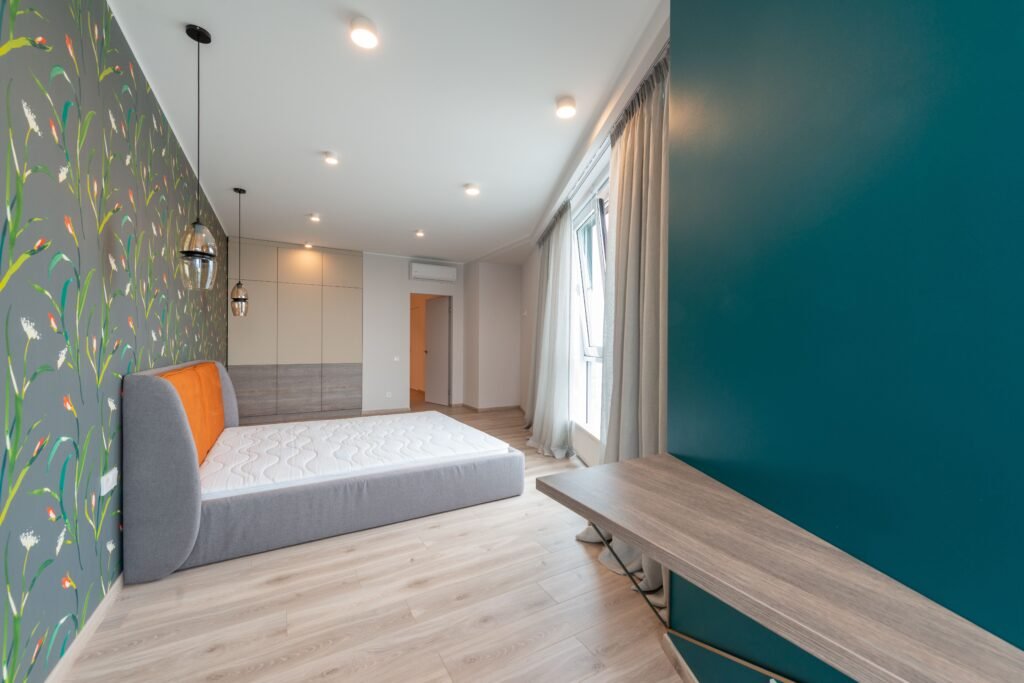
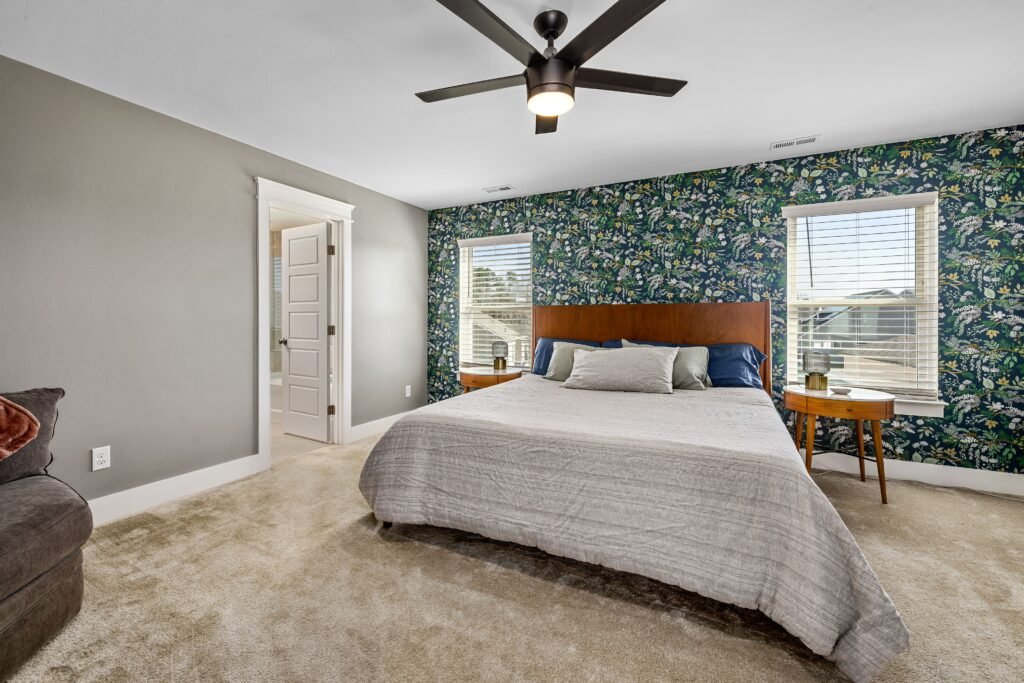
- Botanical or floral wallpaper. Choose a pattern with a calm rhythm so the room stays restful. Place the pattern only on the bed wall.
- Colour-wrapped alcove or nook. If your bed sits in a recess, paint the recess, including the ceiling inside it, for a cocooning effect.
- Arched or curved paint shape. A painted arch behind the bed works as a headboard even in a small room and is easy to do with tape and a template.
No suitable wall behind the bed? Use the opposite wall, paint the wall around a window, or build the effect with a large headboard, Accent Wall Ideas wall-mounted lamps and a single oversized artwork instead.
Dining room accent walls
- Dark wall with a gallery of frames. Dining rooms are often used in the evening, so deep colours feel intimate under warm light.
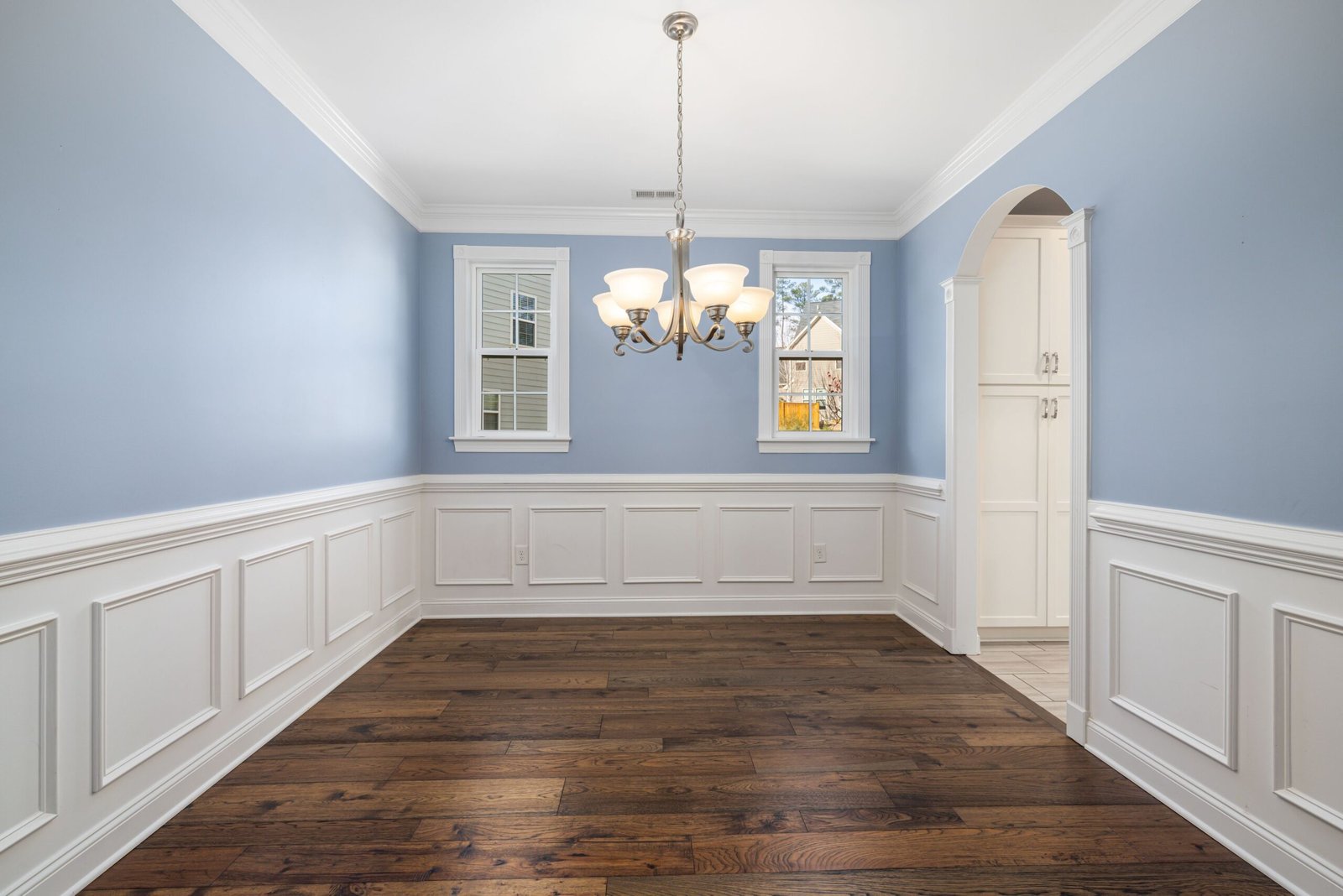
- Wainscoting with bold paint above. Lower panelling protects against chair scuffs while the upper wall carries the colour.
- Textured wallpaper or grasscloth. Adds richness without strong pattern. Choose a wipeable or sealed finish if you eat there often.
Kitchen accent walls
Kitchens need surfaces that tolerate heat, grease and moisture, so material choice matters more here.
- Patterned or handmade tile on one wall. Choose a glazed tile, which is easy to wipe down. Bold colour works well because tiles are durable.
- Washable paint in a rich colour on the end wall. Use a scrubbable satin or similar finish and keep the colour away from the stove splash zone.
- Open shelving against a colour-blocked wall. Frame dishes and glassware with a contrasting backdrop.
Entryway, hallway and home office accent walls
- Painted door-to-ceiling hallway end wall. A bold colour at the end of a corridor draws people through the space and makes it feel intentional.
- Peg-rail or storage wall in the entryway. A coloured panel with hooks and a bench turns a pass-through into a feature.
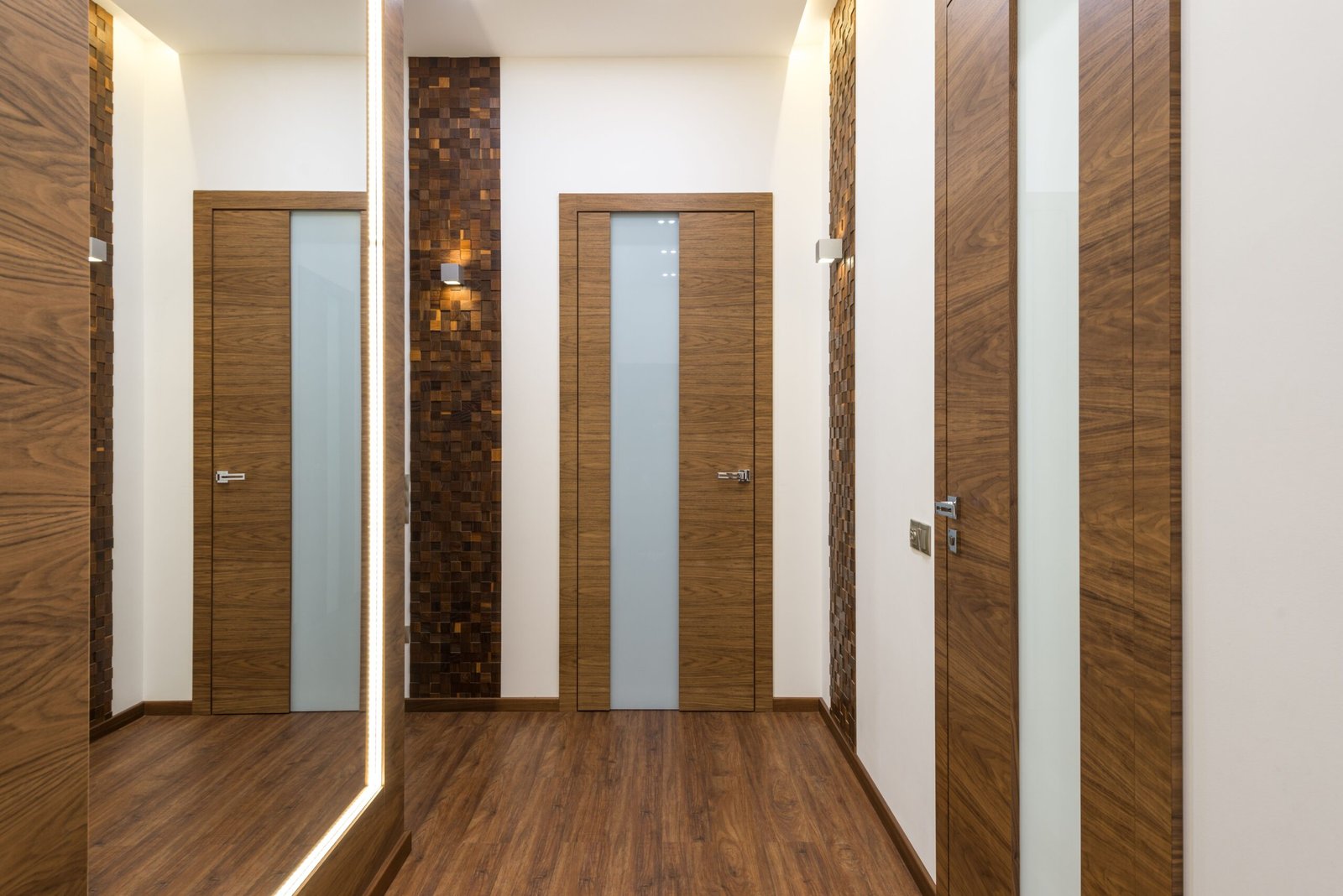
- Home office backdrop wall. Video calls look better with a calm, textured or deep-toned wall behind you. Slats, a muted green or a simple shelf wall all read well on camera.
- Nursery or kids’ room mural. Choose something easily repainted, such as a simple hand-painted or removable mural, since tastes change quickly.
Bathroom and small spaces
- Waterproof tile or sealed plaster in the shower wall. Where moisture is constant, choose materials rated for wet areas.
- Colour-blocked powder room. Powder rooms are the safest place to be dramatic. Dark paint, bold wallpaper (sealed or vinyl for humidity) and a statement mirror all work.
- Studio apartment room divider wall. In a one-room home, an accent wall can define the sleeping or working zone without building a partition.
Accent Wall Ideas by Material
Paint, colour blocking and geometric designs
- Colour blocking. Paint half the wall, or a large rectangle, rather than the whole surface. This works especially well in rooms with a high skirting or a low ceiling.
- Geometric shapes. Stripes, triangles and arches done with painter’s tape are cheap and bold. Use low-tack tape, press the edges firmly and seal them with a thin coat of the base colour before applying the second colour to prevent bleed.
- Ceiling accent. Carry the wall colour onto the ceiling for a cocooning, modern look. Best in rooms with enough height.
Wood slats, shiplap and wall panelling
- Slat walls. Available in real wood, veneer and lightweight alternatives. Choose real or veneer for warmth, and consider acoustic felt backing for a quieter room.
- Shiplap or board-and-batten. Adds texture and classic character. Paint it for a cleaner modern look or stain it for a natural finish.
- Panelling in a deep colour. Painting the panelling and the wall above in the same colour feels sophisticated and hides imperfections.
Wallpaper, murals and peel-and-stick designs
- Classic wallpaper. Offers the widest range of pattern. Needs a smooth, primed wall and careful pattern matching.
- Peel-and-stick wallpaper. Ideal for renters and quick changes. Smooth walls work best, and textured or freshly painted walls may hold the adhesive poorly, so test a small section first.
- Large murals. A single panoramic image has no repeat to match, which can make installation simpler than patterned rolls.
Stone, brick, tile and textured finishes
- Brick or brick veneer. Real brick brings authenticity, while thin veneer panels cost less and are lighter. White-washing brick keeps the texture while softening the look.
- Stone cladding. Heavy and premium, ideal for a fireplace wall. Check the wall can support the weight.
- Limewash, Venetian plaster and textured paint. These finishes give a soft, aged character that flat paint cannot. They show brush strokes, so practise first.
Fabric, upholstered walls, shelves and gallery walls
- Fabric or acoustic panels. Beautiful in bedrooms and media rooms.
- Gallery wall. Cheap, flexible and renter-friendly. Lay everything out on the floor first, keep consistent spacing of about 5 to 8 centimetres (2 to 3 inches) between frames, and anchor the arrangement to a sofa or console.
- Built-in shelves and niches. Create depth and storage, and let you rotate your display.
Accent Wall Materials Compared
Costs below are rough relative bands, not quotes. Accent Wall Ideas Prices vary widely by country, brand and labour rates, so always get local estimates.
| Option | Cost band | Effort | Permanence | Best for | Maintenance |
| Paint | Low | Easy | Easy to change | Any room | Touch up as needed |
| Colour blocking / geometric paint | Low | Easy to medium | Easy to change | Small rooms, kids’ rooms | Repaint when worn |
| Peel-and-stick wallpaper | Low to medium | Easy | Removable | Renters, quick refresh | Wipe gently, check edges |
| Traditional wallpaper | Medium | Medium | Semi-permanent | Bedrooms, dining rooms | Dust and spot-clean |
| Wood slats | Medium to high | Medium to hard | Semi-permanent | Living rooms, offices | Dust, occasional wipe |
| Panelling / board-and-batten | Medium | Medium | Semi-permanent | Bedrooms, hallways | Repaint when scuffed |
| Limewash / plaster | Medium to high | Medium to hard | Semi-permanent | Fireplace walls, bedrooms | Avoid scrubbing, spot-repair |
| Tile | Medium to high | Hard (pro recommended) | Permanent | Kitchens, bathrooms | Wipe, re-grout over time |
| Brick or stone | High | Hard (pro recommended) | Permanent | Fireplace walls | Seal, dust |
| Fabric panels | Medium | Medium | Removable if panel-mounted | Bedrooms, media rooms | Vacuum gently |
| Gallery wall / shelves | Low to medium | Easy | Removable | Renters, any room | Dust |
Budget-Friendly and Renter-Friendly Accent Wall Ideas
You do not need a big budget or a landlord’s permission to get the effect.
Low-cost ideas:
- Paint a colour block or arch instead of the full wall, which uses a fraction of the paint.
- Use a sample pot for a small feature such as a headboard shape.
- Build a simple frame-and-moulding pattern with inexpensive trim.
- Create a gallery wall from thrifted frames in one colour.
Renter-friendly ideas:
- Peel-and-stick wallpaper, tested on a small hidden area first. Check your lease and consider how it will come off.
- Freestanding panels or a large leaning mirror and artwork.
- Fabric hung from a tension rod or curtain track, which doubles as a soft backdrop.
- Removable slat panels mounted on a lightweight frame that leans or hooks without drilling.
- Large shelves or a tall bookcase painted a statement colour and moved with you.
Permanent ideas such as tile, brick, plaster and built-in joinery add value and last for years, but they require a budget, planning and often a professional.
DIY Accent Wall: Tools, Preparation and Step-by-Step Basics
Good preparation is the difference between a result that looks professional and one that looks amateur. Accent Wall Ideas Here is a basic process for a painted accent wall, with notes for other finishes.
Tools and materials: painter’s tape, drop cloths, filler and putty knife, fine sandpaper, primer, roller and angled brush, paint tray, paint, spirit level and measuring tape. For slats or panels, add a stud finder, drill, construction adhesive or screws, a saw and a nail gun or hammer.
Step 1: Measure and plan. Measure width and height, and calculate area. A standard litre of paint covers roughly 10 to 12 square metres (about 100 to 130 square feet per quart or so, Accent Wall Ideas depending on the product), and you usually need two coats. Check the label on your chosen paint.
Step 2: Test samples. Paint a large swatch on the actual wall, and look at it in the morning, afternoon and evening, with lights on and off. Colours change with light more than most people expect.
Step 3: Clear and protect. Move furniture, cover floors and tape around skirting, ceilings, switches and adjacent walls.
Step 4: Repair and clean. Fill holes and cracks, sand smooth, wipe off dust and grease. In kitchens and bathrooms, clean with a degreasing solution and make sure the wall is fully dry.
Step 5: Prime. Primer helps especially when going from dark to light, covering patches, or applying wallpaper. It also improves adhesion and colour accuracy.
Step 6: Cut in, then roll. Paint the edges with a brush first, then roll the main area in a W pattern for even coverage. Keep a wet edge to avoid visible lap marks.
Step 7: Second coat and tape removal. Let the first coat dry fully, apply the second, then remove tape while the paint is slightly tacky to get crisp lines, pulling slowly at a shallow angle.
For wallpaper: start at a plumb line rather than a corner, because corners are rarely straight. For slats or panels: locate studs, use a level at every row and plan your layout so you do not end with a thin sliver at the edge. For tile, brick or stone: consider a professional, because waterproofing, weight and alignment are unforgiving.
DIY or professional? DIY is realistic for paint, colour blocking, peel-and-stick wallpaper, simple panelling and gallery walls. Accent Wall Ideas Hire a professional for heavy stone or brick, wet-area tiling, large-format wallpaper on difficult surfaces, electrical work for built-in lighting and structural changes.
Finishes, Lighting and Colour Combinations
Choose the right paint finish
- Matt or flat: hides imperfections and feels modern, but marks easily. Best for low-traffic walls such as bedrooms.
- Eggshell or satin: a good all-rounder, easier to wipe. Suitable for living rooms, hallways and kids’ rooms.
- Semi-gloss: very durable and washable, best for trim, doors and high-moisture areas.
- Limewash or mineral paint: a chalky, soft look with natural variation. Follow the manufacturer’s sealing advice.
Use a washable finish in kitchens, bathrooms and anywhere with children or pets.
Plan the lighting
Lighting changes everything. Wall washers or sconces highlight texture on slats, Accent Wall Ideas plaster and brick. Picture lights flatter gallery walls. Warm bulbs (around 2700K) make deep colours feel rich, while very cool bulbs can make them feel cold. Add dimmers where possible.
Colour combinations that work
- Deep green with warm wood and cream for a calm, natural look.
- Navy with white trim and brass accents for a classic, tailored feel.
- Terracotta with off-white and olive for a warm, earthy room.
- Soft grey-blue with white and pale oak for a light, restful bedroom.
- Charcoal with warm neutrals for a moody, modern living room.
Coordinate by repeating the accent colour in at least two or three small items elsewhere in the room, and keep the other walls in a quieter neutral.
Common Accent Wall Mistakes and How to Avoid Them
- Choosing a wall at random. If the wall has no logic, the effect feels random. Pick the natural focal point.
- Picking a colour from a tiny chip. Always test a large swatch in your own light.
- Ignoring the rest of the room. The wall should connect with furniture, floors and fabrics, not fight them.
- Using too many ideas at once. One hero element is enough. Slats plus bold wallpaper plus dark paint will overwhelm.
- Skipping preparation. Poor filling, sanding and priming show through, especially under dark or glossy paint.
- Wrong material for the room. Avoid unsealed wallpaper or delicate textures in steamy bathrooms and splash zones in kitchens.
- Forgetting the lighting. A feature wall in the dark is wasted. Plan lighting before you finish.
- Choosing a wall full of interruptions. Too many windows, doors and vents break the surface.
- Following trends you will tire of. Choose finishes you can live with for years, or keep trendy elements easy to change.
- Ignoring the lease or practicalities. Renters should check their agreement and choose removable options.
Accent Wall Ideas: Frequently Asked Questions
Which wall should I choose as my accent wall?
Choose the wall that draws your eye when you enter the room, such as the wall behind the bed or sofa. Avoid walls with many doors, windows or radiators.
Are accent walls still in style?
Yes. The trend has shifted toward more considered treatments like tonal colour, texture, panelling and architectural details rather than a single bright wall.
Can I do an accent wall in a small room?
Yes. Use a mid-tone or a light colour with texture, choose the end wall of a narrow room, Accent Wall Ideas and avoid heavy pattern. Mirrors and good lighting help keep the room open.
Can renters have an accent wall?
Yes. Peel-and-stick wallpaper, removable panels, fabric, gallery walls and painted freestanding furniture create the effect without permanent changes. Check your lease first.
What if I do not have a wall behind my bed to use?
Use the opposite wall, paint around a window or alcove, or create the focal point with an oversized headboard, wall lights and artwork.
What is the most budget-friendly accent wall?
Paint is generally the cheapest, especially colour blocking or a painted arch. Gallery walls from thrifted frames are another low-cost option.
How do I choose between paint, wallpaper and wood?
Paint is best for budget and flexibility, wallpaper for pattern, wood slats or panelling for texture and warmth. Consider your budget, skill level, how long you will stay and the moisture level in the room.
Final Thoughts
The best accent wall is not the boldest or the most expensive. It is the one that suits your room’s light, your budget, your skill level and how long you plan to live there. Start with the focal wall, pick one hero element, test it in your own light, prepare the surface properly and finish with lighting and a few repeated accents. Follow those steps and your accent wall will look intentional, not accidental.