How to Start a Garden: A Complete Beginner’s Guide With Real Numbers (2026)


You do not need a big yard, expensive tools or a green thumb to grow food and flowers. You need a sunny spot, decent soil, a few easy plants and a plan that fits your time. This guide shows you how to start a garden in 12 clear steps, with real measurements, a budget breakdown, how to start a garden a starter tools list and a planting timeline for both hemispheres. It works whether you have a backyard, a balcony or only a windowsill.
How to Start a Garden: The 30-Second Answer
If you only have a minute, here is the short version:
- Choose a spot with 6 to 8 hours of direct sun and a water source nearby.
- Start small: 50 to 75 square feet (or one 4×8 ft bed, or a few large pots).
- Test your soil (texture, pH and, in older neighborhoods, lead) and fix it with compost.
- Plan beds no wider than 4 feet, with paths at least 28 inches wide.
- Grow easy crops you actually eat: lettuce, radish, bush beans, zucchini, tomatoes, herbs.
- Water deeply but not daily, mulch 2 to 3 inches, and check plants every few days.
The rest of this guide explains each step, so you can do it properly the first time.
What You Will Learn
- Step 1: Decide what kind of garden suits your life
- Step 2: Start small (and how small is small)
- Step 3: Choose the right location
- Step 4: Test and prepare your soil
- Step 5: Plan your layout
- Step 6: Know your climate and frost dates
- Step 7: Choose easy plants
- Step 8: Seeds or seedlings?
- Step 9: Plant correctly
- Step 10: Water, mulch and feed
- Step 11: Handle weeds and pests the gentle way
- Step 12: Harvest, learn and improve
- Budget, tools, common mistakes and FAQs
Step 1: Decide What Kind of Garden Fits Your Life

Before buying anything, answer two questions: how much space do you have, and how much time can you give it each week? Be honest. Many beginners build a large garden, how to start a garden then abandon it after one season because it demands more time than they have.
There are four common ways to begin, and each works well for beginners:
| Garden type | Best for | Upfront cost | Effort | Main drawback |
|---|---|---|---|---|
| In-ground bed | Backyards with decent soil | Lowest | Medium (digging and weeding) | Poor soil needs fixing first |
| Raised bed | Poor or compacted soil, bad backs, tidy look | Medium to high | Low once built | Costs more to build and fill |
| Containers and pots | Balconies, patios, rentals | Low to medium | Low, but needs frequent watering | Dries out fast in summer |
| Indoor windowsill | No outdoor space at all | Very low | Low | Limited to herbs, greens, microgreens |
If you are unsure, how to start a garden a single raised bed or three to five large containers is the safest starting point. You can always add more next season.
Step 2: Start Small (Here Is Exactly How Small)

“Start small” is the most repeated advice in gardening, but few guides tell you what it means in numbers. Here are practical starting sizes:
- In-ground: 50 to 75 square feet (about 5 to 7 square meters), for example 5 ft x 10 ft.
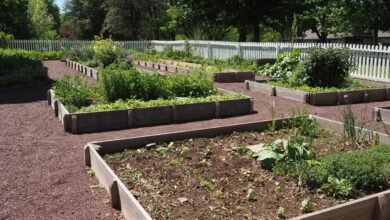
- Raised bed: one bed that is 4 ft x 4 ft or 4 ft x 8 ft. Never wider than 4 ft, or you cannot reach the middle without stepping on the soil.
- Containers: 3 to 5 pots of at least 5 gallons (20 liters) each. Tomatoes and peppers need that much room for roots.
- Windowsill: two or three trays or small pots of herbs and salad greens.
A small garden you tend well will always beat a big garden you neglect. how to start a garden Starting small also keeps costs low and teaches you how long watering, weeding and harvesting really take. Once you have one successful season, expanding is easy.
Step 3: Choose the Right Location
Location matters more than almost any other decision. You can improve soil, but you cannot move the sun. Check these five things:
Sunlight. Most vegetables, fruits and flowers need 6 to 8 hours of direct sun per day. Leafy greens and herbs tolerate 4 to 5 hours. Watch the space at 9 a.m., noon and 4 p.m. for one day, and note where shadows fall.
Hemisphere. In the Northern Hemisphere, how to start a garden the sunniest side of your home faces south. In the Southern Hemisphere, it faces north. Plant tall crops like corn, pole beans and tomatoes on the side furthest from the sun so they do not shade shorter plants.
Water access. A tap or hose within reach saves you hours. If the nearest water is more than 30 feet away, you will water less often and plants will suffer.
Level ground and drainage. Pick a flat or gently sloping area. Avoid the lowest corner of your yard where water collects after rain. A simple test: dig a hole 12 inches deep, fill it with water, and see how long it takes to drain. If water is still there after 4 hours, the spot drains poorly and a raised bed is a better choice.
Shelter and safety. Avoid very windy spots. If deer, rabbits, goats, stray animals or burrowing pests visit your area, plan a fence or barrier now. Fixing it later is far more work.
Pro tip: Seasonal shade changes. The sun sits lower in winter, so a wall or tree that is harmless in summer can shade your garden for months in the cold season. If you plan to garden year-round, how to start a garden observe the spot in different seasons first.
Step 4: Test and Prepare Your Soil

Good soil is the difference between plants that struggle and plants that thrive. Skipping this step is the most common reason beginner gardens fail.
The 2-Minute Soil Check
Dig a trowel of soil from 4 to 6 inches deep and squeeze a handful when it is slightly moist:
- Dark, crumbly, holds shape loosely: excellent. This is loam.
- Gritty, falls apart immediately: sandy. Drains fast and loses nutrients, so add compost.
- Sticky, shiny, forms a hard ribbon: clay. Drains slowly, so add compost and coarse organic matter.
The Proper Soil Test
A home kit or a lab test tells you pH and nutrient levels. Most vegetables prefer a pH between 6.0 and 7.0. If you live in an older house or near a busy road or industrial area, also test for lead. how to start a garden Many extension services consider soil with more than 400 ppm lead unsafe for growing food, in which case you should use raised beds filled with clean soil or grow in containers.
How to Fix and Prepare Your Soil
- Bare ground: spread at least 2 inches of compost on top and dig it in, then add a thin layer every time you plant.
- Lawn area: you have two good options.
- Lift the turf with a spade, stack it upside down in a corner (it becomes compost in about a year).
- Smother the grass (no-dig method): lay overlapping cardboard, wet it, and cover it with 4 to 6 inches of compost. You can plant into it after a few weeks.
- Raised beds: fill with a mix of roughly 50% good topsoil or loam and 50% compost, or use the common blend of about 60 to 70% soil, 20% compost and 5 to 10% drainage material such as perlite or coarse sand.
- Weeds: remove perennial weeds with their roots. Chopped roots left in the soil will regrow.
Avoid heavy use of synthetic fertilizers in a new bed. how to start a garden Fresh compost-rich soil usually feeds a first season well. After the first year, top up with compost once or twice a year.
Step 5: Plan Your Layout Before You Dig
A few minutes on paper saves hours of rework. how to start a garden Use graph paper, a free garden planner app, or simply mark the space with string, stakes or even a garden hose.
Use these proven measurements:
| Element | Recommended size | Why |
|---|---|---|
| Bed width | 3 to 4 ft maximum | You can reach the center from both sides |
| Bed length | 4 to 8 ft for beginners | Easy to manage and cover |
| Raised bed depth | 12 to 18 inches | Enough for roots of almost all vegetables |
| Path width | 28 to 36 inches (36 to 48 if you use a wheelbarrow) | Comfortable walking and cart access |
| Bed orientation | Long side north to south | Plants shade each other less |
| Tall crops | At the back or north side (Northern Hemisphere) | Prevents shading short plants |
Test before you build. Lay out rope, wooden boards or cardboard in the shape of your beds and walk through the space. If it feels tight, widen the paths.
Group by need. Put thirsty, fast-growing crops (lettuce, cucumbers) together, how to start a garden and tougher or slower crops (onions, garlic, herbs) together. Place the plants you harvest most often closest to the door.
Think vertical. Trellises, cages and stakes let climbing crops like beans, peas, cucumbers and small squash grow upward, saving ground space and keeping fruit clean and off the soil. Install trellises before or at planting time, not after the plants are big.
Add a few flowers. Marigolds, calendula, nasturtiums, how to start a garden zinnias and cosmos attract pollinators and beneficial insects, which can improve your harvest.
Step 6: Know Your Climate and Frost Dates
Timing is the second most important factor after location. how to start a garden Plant too early and frost kills seedlings. Plant too late and the plants run out of season.
Find these three facts about your area:
- Last spring frost date (the average date after which frost is unlikely).
- First fall frost date.
- Your growing zone or climate type. In the United States, use the USDA Plant Hardiness Zone map. In other countries, use your national meteorological or agricultural service.
Cool-season vs warm-season crops:
- Cool-season (lettuce, spinach, peas, radish, kale, carrots, broccoli): plant 2 to 4 weeks before the last frost, or in autumn in mild climates.
- Warm-season (tomatoes, peppers, cucumbers, beans, squash, corn, melons): plant after the last frost, when nights stay above 10 to 12 C (50 to 55 F).
If you live in a hot climate with mild winters, how to start a garden your main growing season may be autumn to spring, and summer may be the break period. Your local gardening club, nursery or agricultural extension office can tell you the local pattern.
Simple Planting Timeline
| Task | Northern Hemisphere | Southern Hemisphere |
|---|---|---|
| Plan, test soil, order seeds | Jan to Feb | Jul to Aug |
| Start tomato, pepper and eggplant seeds indoors | 6 to 8 weeks before last frost (Feb to Mar) | Jul to Aug |
| Direct-sow cool-season crops (peas, lettuce, radish, spinach) | Mar to Apr | Aug to Sep |
| Transplant warm-season crops | After last frost (Apr to Jun) | Oct to Dec |
| Sow beans, squash, cucumbers | May to Jun | Oct to Dec |
| Plant fall crops (kale, carrots, broccoli) | Jul to Sep | Jan to Mar |
| Plant garlic | Oct to Nov | Apr to May |
These months are general guides. Always adjust using your own frost dates.
Step 7: Choose Easy Plants You Will Actually Eat
The golden rule: grow what you and your family like to eat, especially things that are expensive or hard to find fresh. A garden full of vegetables nobody eats is a waste of effort.
Best Beginner Crops
| Crop | Why it is easy | Days to harvest (approx.) | Season |
|---|---|---|---|
| Radish | Fast and forgiving | 25 to 30 | Cool |
| Lettuce and salad greens | Quick, can be harvested leaf by leaf | 30 to 55 | Cool |
| Bush beans | Productive with little care | 50 to 60 | Warm |
| Zucchini / summer squash | Very productive | 45 to 60 | Warm |
| Cherry tomatoes | Reliable, forgiving | 60 to 75 | Warm |
| Cucumbers (on a trellis) | Fast growers | 55 to 70 | Warm |
| Kale and Swiss chard | Tough, long harvest | 45 to 60 | Cool, some heat tolerance |
| Herbs (basil, mint, parsley, chives) | Small space, high value | 30 to 60 | Varies |
Crops to Skip in Your First Year
Celery, melons, cauliflower, how to start a garden eggplant and broccoli can be fussy about temperature, water and pests. Try them in year two.
Start with just 4 to 6 different crops. Add more once you see what grows well in your conditions.
Step 8: Seeds or Seedlings?
Both work, and many gardeners use both.
Start with seedlings (transplants) if:
- You are a complete beginner.
- You want faster results.
- You are growing tomatoes, peppers, eggplant or broccoli, which need a long head start.
Start with seeds if:
- You are growing root crops (carrots, beets, radishes, parsnips) or fast crops (beans, peas, lettuce, cucumbers). These do best sown directly into the soil.
- You want to save money (a seed packet costs a fraction of the price of a transplant).
- You want rare or unusual varieties.
How to buy good seedlings: choose compact, deep green plants with no yellow leaves, no spots, and roots that do not circle tightly at the bottom of the pot. how to start a garden Avoid plants that are already flowering or fruiting or very tall and leggy. Oversized, stressed plants often bolt (go to seed early) or struggle after planting.
Always read the seed packet. It tells you planting depth, spacing, sun needs and the number of days to harvest.
Step 9: Plant Correctly
Harden off transplants. Seedlings raised indoors or in a greenhouse need 7 to 10 days to adjust to outdoor sun, wind and temperature. Start with 1 to 2 hours outside in shade and gradually increase.
Plant on a cloudy, calm afternoon if you can. This reduces transplant shock. Water the plants in thoroughly after planting.
Follow spacing on the packet. Crowded plants compete for light and water and are more prone to disease. Overcrowding is one of the biggest beginner mistakes.
Plant tomatoes deep. Bury two thirds of the stem, because roots will form along it for a stronger plant.
Stagger your plantings. Instead of sowing a whole row of lettuce at once, how to start a garden sow a small batch every 2 weeks. You will harvest steadily instead of being swamped by 30 heads on the same day.
Label everything. Plant tags or lollipop sticks save you from guessing later.
Step 10: Water, Mulch and Feed
Watering
Most plants prefer soil that stays evenly moist, never soggy, never bone dry.
- Water deeply and less often. A deep soaking 2 to 3 times a week usually beats a light sprinkle every day, because it pushes roots down where moisture lasts longer. Young seedlings and newly sown seeds need lighter, more frequent watering until they establish.
- Water the soil, not the leaves, ideally in the morning. This reduces fungal disease and evaporation.
- Check with your finger. Push a finger 2 inches into the soil. If it feels dry, water. If it feels damp, wait.
- Containers dry out faster. In hot weather they may need water every day.
- Consider drip irrigation or a soaker hose. A basic kit with a timer saves time and water, and is affordable even for small gardens.
Mulch
Cover bare soil with 2 to 3 inches of mulch (straw, shredded leaves, how to start a garden wood chips or compost). Mulch keeps soil moist, blocks weeds and slowly feeds the soil. Keep it a couple of inches away from plant stems.
Feeding
Fresh compost-rich soil usually feeds plants through the first season. After that:
- Add 1 to 2 inches of compost each season.
- Use a balanced organic fertilizer for hungry plants like tomatoes, squash and corn, following label directions, or base it on your soil test.
- More fertilizer is not better. Too much nitrogen gives lots of leaves and few fruits.
Step 11: Handle Weeds and Pests the Gentle Way
Weeds: Start early, when weeds are small. Mulch, hand-pull after rain when the soil is soft, and use a hoe to slice through young weeds. Ten minutes twice a week is easier than two hours once a month.
Pests and diseases: Walk through your garden every 2 to 3 days, look under leaves and catch problems early. Use the least harmful method first:
- Hand-pick larger pests such as caterpillars and slugs.
- Spray aphids off with a strong stream of water or use a mild soap spray.
- Use insect netting or row covers to protect brassicas and young seedlings.
- Fence out larger animals and use hardware cloth (not chicken wire) under beds if burrowing pests are an issue.
- Rotate crops each year so the same plant family does not grow in the same spot, which reduces soil-borne disease.
- Plant flowers and herbs nearby to support helpful insects like ladybugs and hoverflies.
A few chewed leaves are normal and a sign of a healthy ecosystem. Avoid broad-spectrum pesticides, because they kill beneficial insects along with the pests.
Step 12: Harvest, Learn and Improve
Harvest regularly. Picking beans, zucchini, cucumbers and herbs often encourages the plant to produce more. Pick lettuce leaves from the outside, leaving the center to keep growing. Harvest in the morning when plants are crisp.
Keep a simple garden journal or notes on your phone:
- What you planted and when
- What grew well and what failed
- Pest or weather problems
- Photos each month
These notes become your personal gardening guide, how to start a garden and they are the fastest way to improve each year. Every gardener loses plants. The skill is learning from each result.
How to Start a Garden on a Budget
Starting a garden can cost very little or quite a lot. how to start a garden The numbers below are rough estimates in US dollars and vary by country, so treat them as a guide.
| Item | Low-budget option | Mid-range option |
|---|---|---|
| Containers | Free or reused buckets, crates, food-grade barrels (drill drainage holes) | $10 to $30 each for quality pots |
| Raised bed | Untreated wood boards or found materials, $40 to $100 | Metal or cedar kit, $100 to $300 per bed |
| Soil and compost | Bulk compost and topsoil, about $30 to $80 per bed | Bagged premium mix, $100 to $200 per bed |
| Seeds | $2 to $4 per packet | $4 to $6 per packet |
| Seedlings | $2 to $4 each (buy only a few) | $4 to $8 each |
| Basic tools | Borrow, secondhand, or buy only a trowel and fork | $50 to $120 for a decent starter set |
| Watering | Watering can or hose | Drip kit with timer, $30 to $80 |
| Mulch | Free leaves, grass clippings, straw | Bagged mulch, $5 to $8 per bag |
Typical first-year totals: about $20 to $60 for a small container garden, $80 to $250 for one in-ground bed, and $200 to $500+ for two or three raised beds.
Ways to save money:
- Start from seed for easy crops.
- Make your own compost from kitchen scraps and garden waste.
- Ask neighbors for cuttings, divisions and seed swaps.
- Collect free wood chips from local tree services.
- Buy soil and compost in bulk rather than small bags.
- Skip decorative extras in year one.
How to Start a Garden Without a Yard
No yard is not a problem. Many productive gardens grow on balconies, rooftops and windowsills.
- Balcony or patio: use large containers (5 gallons or more for tomatoes, peppers, eggplant; 1 to 2 gallons for herbs and lettuce). Make sure every pot has drainage holes. Check the weight limit of your balcony before adding many heavy pots.
- Vertical space: use wall planters, hanging baskets, railing boxes and tall trellises for beans, cucumbers and peas.
- Sun requirement: most fruiting crops need at least 5 to 6 hours of sun. Leafy greens and herbs manage with 3 to 4 hours.
- Windowsill or indoor: grow herbs, microgreens and salad greens on a bright south-facing (Northern Hemisphere) window, or use a small LED grow light for 12 to 14 hours a day.
- Community garden or allotment: ask your local council, library or gardening groups. It is a great way to get space, tools and advice from experienced neighbors.
- Potting mix: use quality potting mix for containers, not soil from the ground, which compacts and drains poorly in pots.
Starter Tools Checklist
You do not need much. Buy these first and add more only when you need them:
- Hand trowel for planting and transplanting
- Hand fork or hoe for loosening soil and weeding
- Spade or shovel for digging and moving compost (if you have a bed or lawn)
- Garden gloves
- Watering can or hose with a spray nozzle (or drip kit)
- Pruning snips or scissors for harvesting and trimming
- Wheelbarrow or bucket for moving soil, compost and weeds
- Stakes, cages or trellis for climbing plants
- Plant labels and a marker
- A notebook or phone for your garden journal
10 Common Beginner Mistakes (and Easy Fixes)
- Starting too big. Fix: begin with one bed or a few pots, and expand next season.
- Choosing a shady spot. Fix: confirm 6 to 8 hours of sun before building anything.
- Skipping the soil. Fix: test it, and add compost every season.
- Putting raised beds directly on weedy lawn. Fix: smother grass with cardboard or lay a weed barrier first, or weeds and grass will invade within a year.
- Planting too early. Fix: know your last frost date, and harden off seedlings.
- Overcrowding plants. Fix: follow the spacing on the seed packet.
- Watering a little every day. Fix: water deeply, less often, and check soil with your finger.
- Growing what you do not eat. Fix: choose crops you cook with regularly.
- Using the wrong size containers. Fix: tomatoes and peppers need at least 5 gallons, and every pot needs drainage holes.
- Ignoring the garden for a week or two. Fix: set a 10-minute daily or alternate-day check, because small problems are easy to fix and big ones are not.
Frequently Asked Questions
How do I start a garden for the first time?
Pick a sunny spot with 6 to 8 hours of direct light, keep it small (about 50 to 75 square feet or one 4×8 ft bed), test and improve your soil with compost, then plant easy crops like lettuce, radishes, beans, zucchini and herbs. Water deeply, mulch and check your plants every few days.
What is the best month to start a garden?
It depends on where you live. In temperate Northern Hemisphere climates, spring (March to May) is best for most crops, with planning starting in winter. In the Southern Hemisphere, September to November is the main start. In hot climates, autumn through early spring is often the best growing window. Use your local last frost date to time planting.
How much does it cost to start a garden?
A small container garden can cost $20 to $60, one in-ground bed about $80 to $250, and a few raised beds $200 to $500 or more. Starting from seed, using free or reused containers and making your own compost lowers the cost significantly.
Do I need raised beds to start a garden?
No. Raised beds help if your soil is poor, compacted, contaminated or poorly drained, or if you want easier access and a tidier look. In good soil, an in-ground bed works well and costs less.
How big should a beginner garden be?
About 50 to 75 square feet in the ground, one 4×4 or 4×8 ft raised bed, or three to five large containers. You can expand once you know how much time it takes.
What are the easiest vegetables for a beginner?
Radishes, lettuce and salad greens, bush beans, zucchini, cherry tomatoes, cucumbers, kale, Swiss chard and herbs such as basil, mint and chives.
How often should I water a new garden?
Water newly sown seeds and young seedlings lightly and often until they establish. Established plants usually do best with a deep soaking 2 to 3 times a week, adjusted for weather, soil type and containers. Always check the soil 2 inches down before watering.
Can I start a garden in poor or clay soil?
Yes. Add 2 to 4 inches of compost and mix it into the top layer, or build raised beds and fill them with a topsoil and compost mix. Improving soil is a yearly habit, not a one-time job.
Is it cheaper to grow your own vegetables?
It can be, especially for herbs, salad greens, tomatoes and other crops that are expensive to buy fresh. The savings grow over time as you reuse tools, make compost and save seeds. Even if you save little money, the freshness and flavor are hard to match.
What should I do if my plants die?
Do not be discouraged. Check water, light, drainage and pests, write down what happened, and try again. Nearly every gardener loses plants, and each loss teaches you something about your space.
Final Thoughts
Now you know how to start a garden without guesswork: choose a sunny spot, start small, build good soil, plan simple beds, grow easy crops you enjoy, water deeply and keep notes. You do not have to do everything perfectly in year one. You only need to begin.
Pick one step from this guide today. Measure a sunny corner, test your soil, or plant a pot of herbs on the windowsill. Small, steady actions turn into a thriving garden within a season.