How to Build a Raised Garden Bed: The Ultimate Easy DIY Guide With Cut Lists, Soil Math and Costs


A raised bed gives you better control over soil, fewer weeds, easier access and a tidy, productive garden, and a basic one takes only a few hours to build. This guide shows you how to build a raised garden bed from scratch: where to put it, what size to make it, which materials are safe and durable, the exact cut list for a 4×4 and a 4×8 bed, how to assemble it, what to put in the bottom, how much soil to buy, and what to plant. how to build a raised garden bed You will also find a cost breakdown, a troubleshooting table and a printable checklist.
Build a Raised Bed in 8 Steps
- Pick a flat, sunny spot with 6 to 8 hours of direct sun and a water source nearby.
- Choose a size: 4 ft wide maximum, 4 to 8 ft long, 10 to 18 inches high.
- Choose your material: cedar or redwood (long-lasting), untreated pine or fir (cheaper, shorter life), or galvanized steel or masonry.
- Cut or order your boards using the cut list below.
- Assemble the frame with exterior screws and corner posts, and check that it is square.
- Level and place the bed, and add a pest barrier or weed barrier only if your site needs one.
- Fill with soil (about 50 to 60% topsoil, 30 to 40% compost and 5 to 10% aeration material), leaving 1 to 2 inches below the rim.
- Plant, water and mulch.
The sections below explain every step and when each choice applies.
Why Build a Raised Garden Bed?

Raised beds are popular for good reasons, how to build a raised garden bed but they are not the right answer for every yard. Here is an honest summary.
Advantages
- Better soil control. You fill the bed with a mix you choose, which helps most when your native soil is heavy clay, very sandy, compacted or contaminated.
- Better drainage and earlier warm-up. Soil above ground drains faster and warms sooner in spring.
- Fewer weeds and less compaction. You never walk on the growing area, so the soil stays loose.
- Easier on the body. Taller beds (18 to 24 inches) reduce bending and help gardeners with mobility limits.
- Neat, defined space. Beds make layout, crop rotation and trellis placement simple.
Limitations
- Upfront cost. Lumber, soil and compost add up, especially for several beds.
- They dry out faster than ground soil, so you will water more often.
- Wood is not permanent. Even good wood eventually rots.
- Poor native soil still matters for deep-rooted crops if the bed has no bottom contact with the ground.
If your native soil is decent and you want to save money, how to build a raised garden bed an in-ground bed may work just as well. If you want control, access and a tidy look, a raised bed is a great choice.
Choose the Right Location and Size
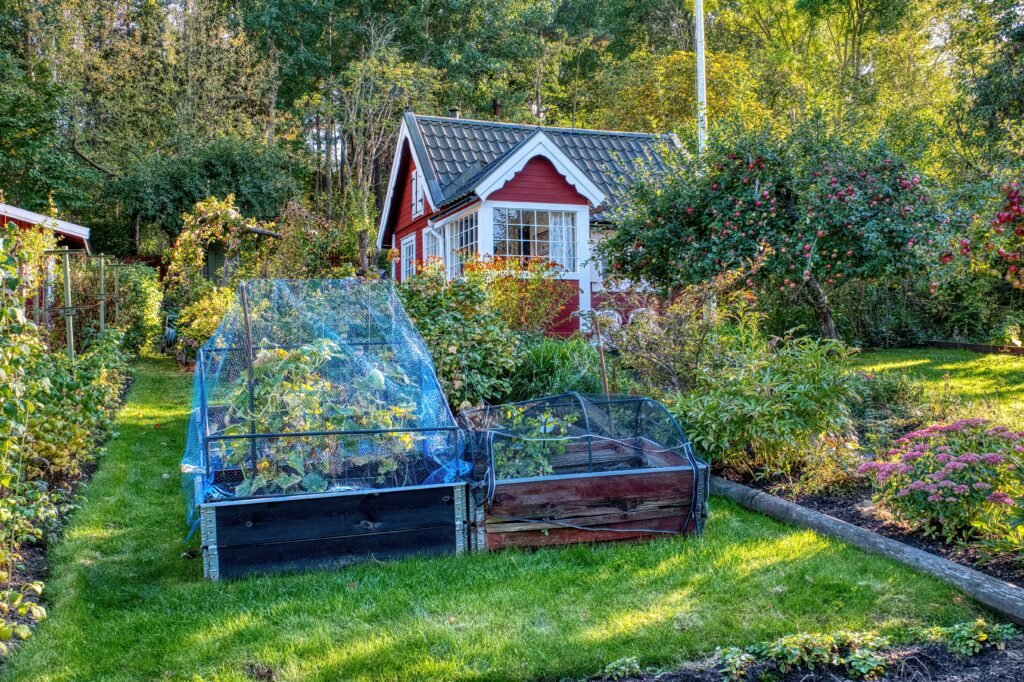
Sunlight, Water and Ground
- Sun: most vegetables need 6 to 8 hours of direct sun. Leafy greens and herbs tolerate 4 to 5 hours. Watch the spot at morning, noon and afternoon before you build.
- Water: choose a spot within hose reach. how to build a raised garden bed Carrying water every day is the main reason beginners give up.
- Level ground: build on flat or gently sloping ground. On a slope, dig out the high side or use level supports so the frame sits level. A tilted bed drains unevenly and the soil shifts downhill.
- Orientation: if possible, run the long side north to south so plants shade each other less. In the Southern Hemisphere, the principle is the same, but place tall crops on the south side.
- Access: leave at least 2 to 3 feet (28 to 36 inches) between beds so you can walk and push a wheelbarrow.
- Keep trees and fences in mind. Roots can invade beds, and shade can cut your sun hours, especially in winter when the sun sits lower.
Best Raised Garden Bed Dimensions
| Dimension | Recommended | Why |
|---|---|---|
| Width | 3 to 4 feet | You can reach the middle from either side. Never go wider than 4 ft unless the bed is against nothing and you can reach both sides. |
| Length | 4 to 8 ft (up to 12 ft with bracing) | Longer boards bow outward unless braced. |
| Height | 10 to 12 inches (minimum), 12 to 18 inches (ideal), 24 inches (accessible) | More height means more soil and cost. |
| Beginner sizes | 4×4 ft or 4×8 ft | Easy to build, fill and reach. |
| Small spaces | 2×4 ft or 3×6 ft | Fits patios and narrow strips. |
How Deep Should a Raised Garden Bed Be?
It depends on the crops and whether the bed sits on loosened ground (so roots can grow below it):
- 6 to 8 inches: lettuce, spinach, radishes, herbs, many salad greens
- 10 to 12 inches: most vegetables, including beans, peppers, cucumbers, kale and onions
- 12 to 18 inches: tomatoes, carrots, beets, potatoes, squash and any root crop that needs depth
- 18 to 24 inches: best when you want easier access or when the bed sits on concrete, rock or very poor ground
If the bed has open ground underneath, roots can go deeper than the frame, so 10 to 12 inches of frame is enough for many crops. If the bed sits on a hard surface, aim for at least 12 to 18 inches of soil.
Choose Safe, Durable Materials

The material you choose affects cost, how to build a raised garden bed lifespan, safety and appearance. Here is how the main options compare.
| Material | Typical lifespan* | Cost | Pros | Watch out for |
|---|---|---|---|---|
| Cedar or redwood | 10 to 20+ years | High | Naturally rot-resistant, attractive, no chemicals | Price, availability, and can still weather |
| Untreated pine or fir | 3 to 7 years | Low | Cheap, easy to find, easy to cut | Rots faster in wet or humid climates |
| Modern pressure-treated lumber | 15+ years | Medium | Long life | Safety is debated among gardeners; check guidance from your local extension service |
| Galvanized corrugated steel | 15 to 25+ years | Medium to high | Durable, no rot, quick to assemble | Hot to touch in hot sun, sharp edges, cost |
| Concrete blocks or stone | Decades | Medium to high | Permanent, strong, can plant in hollow cores | Heavy, harder to adjust, can slightly raise soil pH over time |
| Recycled plastic or composite boards | 20+ years | High | Won’t rot | Cost, may flex, check product quality |
*Lifespan varies a lot with climate, ground moisture and wood quality; treat these ranges as rough guidance, not a guarantee.
Wood Safety: What to Avoid
- Never use railroad ties, creosote-treated wood, or lumber treated with old arsenic-based preservatives (CCA, used in residential lumber before about 2004).
- Pallets: use only pallets stamped HT (heat treated). Avoid MB (methyl bromide) and any pallet that has held chemicals.
- Modern pressure-treated wood: many extension services consider current copper-based treatments low risk for garden beds, while some gardeners prefer to avoid them. how to build a raised garden bed If you want extra peace of mind, line the inside with heavy plastic sheeting (leave drainage open at the bottom) or choose cedar, redwood, steel or masonry instead.
- Paint and stain: skip them on the inside of the bed. If you want a finish, use a plant-safe or food-safe sealant and keep it off soil contact surfaces.
If you are unsure, ask your local cooperative extension or agricultural office. Recommendations can differ by region.
Tools and Materials Checklist
Tools
- Tape measure and pencil
- Handsaw or circular saw (or ask the lumber yard to cut boards for you, which many do for free or a small fee)
- Drill/driver with a bit for pilot holes
- Level (a 2-ft or 4-ft spirit level)
- Speed square or carpenter’s square
- Shovel and rake
- Wheelbarrow
- Safety glasses and gloves
Materials for one 4×8 ft bed (single 2×10 board high)
- Three 2×10 boards, 8 ft long (cut as shown below)
- Four corner posts: 4×4 or doubled 2×2 lumber, about 10 inches long (cut from scrap)
- About 24 exterior-grade wood screws (#9 or #10, 2.5 to 3 inches long)
- Optional: cardboard or landscape fabric, hardware cloth, mulch
- Soil and compost (see the soil math section)
Actual lumber sizes are smaller than the nominal names. how to build a raised garden bed A 2×10 is really about 1.5 by 9.25 inches, and a 2×12 is about 1.5 by 11.25 inches. Plan for the real size when you calculate soil.
Cut Lists for 4×4 and 4×8 Beds
These cut lists make the outside of the bed exactly 4 feet wide, with two long boards and two shorter end boards that sit between them.
4×4 ft Bed (single 2×10 height, about 9.25 inches)
| Part | Qty | Cut length | Notes |
|---|---|---|---|
| Side boards | 2 | 48 inches | Outer faces |
| End boards | 2 | 45 inches | Fit between sides |
| Corner posts | 4 | 9 to 10 inches | From 4×4 or doubled 2×2 |
Outside size: 48 x 48 inches. Inside: about 45 x 45 inches. You can get all boards from two 8-foot 2x10s.
4×8 ft Bed (single 2×10 height)
| Part | Qty | Cut length | Notes |
|---|---|---|---|
| Side boards | 2 | 96 inches (8 ft) | Long sides |
| End boards | 2 | 45 inches | Fit between sides |
| Corner posts | 4 | 9 to 10 inches | Inside corners |
| Mid-span brace (optional) | 1 | cut to fit | Prevents bowing |
Outside size: 96 x 48 inches. Inside: about 93 x 45 inches. how to build a raised garden bed Three 8-foot 2x10s cover everything: two uncut for the sides, and one cut into the two 45-inch ends with some left over.
Making It Taller
Stack a second board on top to reach about 18 inches. Offset the seams between layers if you can, and extend the corner posts to about 18 inches so they tie both layers together. how to build a raised garden bed Taller beds push harder on the sides, so add a mid-span brace (a stake or a tie across the top) on any bed longer than 6 feet or taller than 12 inches.
How to Build a Raised Garden Bed Step by Step
Time needed: about 1 to 2 hours for a basic bed once the lumber is cut. Skill level: beginner.
Step 1: Measure and Cut the Boards
Measure twice and cut once. Mark each board, cut square across the width, how to build a raised garden bed and label the parts. If you do not have a saw, a lumber yard can cut boards to your cut list. garden bed Sand any rough edges that could snag hands or gloves.
Step 2: Prepare the Site
- Clear grass, rocks and debris from the footprint, plus a few inches around it.
- Level the ground as well as you can by scraping high spots into low spots.
- Loosen the soil underneath with a garden fork to 6 to 8 inches so roots can grow down.
Step 3: Assemble the Frame
- Lay a side board and an end board on the ground so they form a corner. Place a corner post inside the corner.
- Drill pilot holes (this prevents splitting), how to build a raised garden bed then drive two to three screws through each board into the post. Staggering screws holds better than putting them in a straight line.
- Repeat for the other corners until the frame is complete.
- For taller or longer beds, attach a mid-span brace so the sides cannot bow.
Tip: pre-assembling on a flat surface like a driveway is easier. Then carry the frame to the garden.
Step 4: Check That It Is Square
Measure the two diagonals of the frame from corner to corner. how to build a raised garden bed If they are equal, the frame is square. If not, push the long diagonal inward until they match, then tighten the screws.
Step 5: Level and Position the Bed
Set the frame in place and check the top with a level in both directions. how to build a raised garden bed Dig out soil under high spots or add a little soil under low spots until the frame sits firmly and level. Do not rely on soil fill to hold the bed level, because it will shift.
Step 6: Add the Right Bottom Layer (If You Need One)
This step confuses many beginners, so see the next section for a simple decision guide.
Step 7: Fill with Soil
Fill the bed in layers and water between layers so the soil settles. how to build a raised garden bed Leave 1 to 2 inches of space below the top edge to hold water and mulch. See the soil mix and soil volume sections below.
Step 8: Plant, Water and Mulch
Plant, water deeply, and cover the surface with 2 to 3 inches of mulch (straw, shredded leaves or wood chips) to hold in moisture and block weeds.
What to Put in the Bottom of a Raised Garden Bed
There is no single answer. how to build a raised garden bed The right bottom layer depends on what is underneath and what problem you want to solve.
| Your situation | What to do |
|---|---|
| Bed sits on lawn or weedy ground | Remove the sod, or cover it with plain cardboard (no tape, no glossy print) overlapped by 6 inches and wetted. It smothers grass and breaks down within a season. |
| Aggressive perennial weeds (bermudagrass, bindweed, crabgrass) | Dig out as many roots as you can first. Then use heavy-duty landscape fabric under the bed. Cardboard alone may not stop them. |
| Gophers, moles or voles | Fasten hardware cloth (1/2-inch mesh, not chicken wire) across the bottom of the frame and extend it a few inches up the sides. |
| Good, loose native soil | Usually nothing. Just loosen the surface and let roots grow into the ground. |
| Compacted or clay soil | Loosen it with a fork to 6 to 8 inches before filling. Do not add a layer of gravel. |
| Bed sits on concrete, patio or rock | Use a deeper bed (at least 12 to 18 inches), keep drainage paths open, and use a quality soil mix so water can escape. |
| Worried about contamination from the old ground | Line the bottom with landscape fabric and fill with fresh clean soil, and consider a soil test. |
About gravel layers: adding gravel or rocks at the bottom of a bed on open ground generally does not improve drainage and can hold water higher in the soil. how to build a raised garden bed For drainage, fill with a well-draining mix and make sure the base is not sealed shut.
How to Fill a Raised Garden Bed with Soil
Best Soil Mix
A good starting blend for vegetables (adjust to what you can buy locally):
- 50 to 60% topsoil or loam for structure
- 30 to 40% compost for nutrients and water-holding
- 5 to 10% aeration material such as perlite, pumice, coarse sand or small lava rock
Simple tips:
- Avoid filling with 100% compost, which can be too rich or too salty for some plants.
- Avoid straight garden soil in tall beds if it is heavy clay.
- Use bulk soil from a landscape supplier if you are filling several beds, because it is cheaper than bags.
- Ask the supplier for a “raised bed mix” or “vegetable garden mix” and ask what is in it.
- If you suspect lead or other contaminants in old city yards, test the soil first. Your local extension service can point you to a lab.
Calculate How Much Soil You Need
Formula: length (ft) x width (ft) x depth (ft) = cubic feet. Divide by 27 to get cubic yards.
Use the inside measurements and the depth you will actually fill. how to build a raised garden bed Then add 10 to 15% for settling, because new soil compacts over the first season.
| Bed (inside size x fill depth) | Cubic feet | Cubic yards | With 10% extra |
|---|---|---|---|
| 4 x 4 ft x 1 ft (12 in) | 16 | 0.6 | about 17.6 cu ft |
| 4 x 8 ft x 1 ft (12 in) | 32 | 1.2 | about 35 cu ft (1.3 cu yd) |
| 3 x 6 ft x 1.5 ft (18 in) | 27 | 1.0 | about 30 cu ft |
| 4 x 8 ft x 0.75 ft (9 in) | 24 | 0.9 | about 26 cu ft |
Worked example: a 4 x 8 ft bed filled 12 inches deep needs 4 x 8 x 1 = 32 cubic feet. Divide by 27 and you get about 1.2 cubic yards. Add 10% and order roughly 1.3 cubic yards, how to build a raised garden bed or about 35 cubic feet. If bags are 2 cubic feet each, that is about 18 bags. Always check the bag size on the label, because it varies by brand.
Quick split for 35 cubic feet: about 19 cubic feet of topsoil, 12 cubic feet of compost and 3 to 4 cubic feet of aeration material.
What to Plant in Your Raised Garden Bed
Choose crops you will actually eat, and match them to your sun and season.
| Crop type | Examples | Notes |
|---|---|---|
| Salad greens | Lettuce, spinach, arugula, kale | Shallow roots, grow in 6 to 8 inches, cool-season friendly |
| Root crops | Carrots, beets, radishes, onions | Need loose soil, 10 to 12 inches or more |
| Climbers | Pole beans, peas, cucumbers | Put a trellis on the north side, install it at planting |
| Fruiting crops | Tomatoes, peppers, zucchini, eggplant | Need full sun and 12 to 18 inches of soil, space them well |
| Herbs | Basil, parsley, chives, thyme | Great in small corners or edges |
| Flowers | Marigolds, calendula, nasturtiums | Attract pollinators and beneficial insects |
Spacing basics: follow the seed packet or plant tag. how to build a raised garden bed Crowded plants compete for water and light and get more disease. A common way to plan is the square-foot method, dividing the bed into 1-foot squares and planting a set number of plants in each, based on plant size.
Timing: plant cool-season crops before or around your last spring frost, how to build a raised garden bed and warm-season crops after it. Check your local frost dates, because they differ widely by region.
Watering and Maintaining Your Raised Bed
- Water deeply. Raised beds drain faster and dry out sooner than ground soil. Check by pushing a finger 2 inches into the soil. If it is dry, water.
- Consider drip irrigation or a soaker hose. It saves time and keeps leaves dry. A timer makes it nearly automatic.
- Mulch. Keep 2 to 3 inches of mulch on the surface to reduce evaporation and weeds.
- Top up each season. Soil settles and nutrients get used. Add 1 to 2 inches of compost every year, and fork it in lightly.
- Rotate crops. Do not plant the same plant family in the same bed year after year. Rotate tomatoes, beans, brassicas and roots to reduce soil-borne problems.
- Check the frame. Look for loose screws, bowing boards or rot at the base once a year, and fix small problems early.
- End of season: pull spent plants, add compost, and cover the soil with mulch or a cover crop so it is not left bare over winter.
Cost: What It Really Takes to Build a Raised Bed
Prices differ by country and change often. how to build a raised garden bed These are rough estimates in USD for one 4×8 ft bed, one board high, and are meant to help you plan, not to quote prices.
| Item | Budget build | Mid-range build | Premium build |
|---|---|---|---|
| Lumber (three 8-ft 2×10 boards) | Untreated pine: about $45 to $90 | Treated lumber or standard cedar: about $90 to $180 | Premium cedar or redwood: about $180 to $300+ |
| Screws and posts | $8 to $15 | $10 to $20 | $15 to $25 |
| Bottom layer (cardboard/fabric/hardware cloth) | $0 to $20 | $15 to $40 | $30 to $60 |
| Soil and compost (about 1.3 cubic yards) | $40 to $90 (bulk) | $90 to $180 | $150 to $300 (bagged premium mix) |
| Mulch | $0 to $10 | $10 to $20 | $15 to $30 |
| Estimated total | about $100 to $225 | about $215 to $440 | about $390 to $700+ |
Metal or composite kits often cost about the same or more than building from lumber, how to build a raised garden bed but save time. Fill costs often surprise people, so budget for soil as much as for the frame.
Ways to save:
- Buy soil and compost in bulk instead of bags.
- Start with one bed rather than three.
- Ask a lumber yard to cut boards for you.
- Use free wood chips from tree services for mulch and paths.
- Fill the lower part of a very deep bed with rotted logs, branches and leaves (the hugelkultur approach), then top with soil. Note that this can settle significantly over time and ties up nitrogen as the wood breaks down, so use it only when you are comfortable topping up soil later.
Troubleshooting: Common Raised Bed Problems
| Problem | Likely cause | Fix |
|---|---|---|
| Boards bowing outward | Soil pressure on long or tall sides | Add a mid-span brace or stake and tie across the top |
| Soil sinking | Normal settling, organic matter breaking down | Top up with compost, expect 10 to 20% the first year |
| Bed drying out fast | Small volume, hot sun, wind | Add mulch, use drip or soaker hose, water deeply |
| Waterlogged bed | Sealed bottom, heavy soil mix, poor site drainage | Open the base, add aeration material, raise the bed or relocate |
| Wood rotting | Constant moisture at ground contact | Choose rot-resistant wood, raise it slightly on gravel or paving stones at the base, use a liner on the inside |
| Weeds growing up from below | Perennial roots under the bed | Remove roots first, then use cardboard or heavy fabric |
| Plants growing poorly | Low fertility, wrong sun, too much or too little water | Test soil, add compost, check hours of sun, adjust watering |
| Burrowing pests | Gophers, voles, moles | Hardware cloth on the base |
| Soil too hot or too cold | Metal frames in extreme climates | Mulch well, choose a lighter color or a different material |
10 Common Mistakes When You Build a Raised Bed
- Making it too wide. Anything over 4 ft is hard to reach.
- Picking a shady spot. You can fix soil but not sunlight.
- Using unsafe wood. Avoid railroad ties, creosote and old CCA lumber.
- Skipping the level check. An uneven frame shifts and stresses joints.
- No bracing on long or tall beds. Boards will bow within a season or two.
- Filling with cheap, heavy or pure compost. Use a balanced mix.
- Adding a gravel layer for drainage. It does not help in an open-bottomed bed.
- Underestimating soil needs. Do the math before you buy.
- Forgetting water. Raised beds dry out faster, so plan for irrigation.
- Building too many beds at once. Start with one, learn, then expand.
Printable Checklist
- Pick a sunny, level spot with water nearby
- Choose bed size (width 4 ft or less)
- Choose material and confirm it is safe
- Buy or cut boards using the cut list
- Buy screws, corner posts and tools
- Clear and loosen the ground
- Assemble, square and level the frame
- Add bottom layer only if your site needs it
- Calculate soil volume and add 10% for settling
- Fill in layers and water to settle
- Plant, mulch and water deeply
- Set a reminder to top up compost each season
Frequently Asked Questions
How deep should a raised garden bed be?
Aim for 10 to 12 inches for most vegetables, 12 to 18 inches for tomatoes and root crops, and at least 12 to 18 inches if the bed sits on concrete or rock. Shallow-rooted greens grow in 6 to 8 inches.
What is the best wood for a raised garden bed?
Cedar and redwood last longest without chemical treatment but cost more. Untreated pine or fir is cheaper but lasts fewer years, especially in wet climates. Avoid railroad ties, creosote-treated wood and old arsenic-treated lumber. For modern pressure-treated wood, check your local extension service guidance.
Do I need to put anything under a raised bed?
Only if your site calls for it. Use cardboard to smother grass, heavy landscape fabric for aggressive perennial weeds, and hardware cloth for gophers or voles. On loose, healthy soil, you can usually leave the bottom open.
Should I put gravel in the bottom of a raised bed?
Generally no. A gravel layer does not improve drainage in a bed on open ground and can keep the soil above it wetter. Use a well-draining soil mix and keep the base open instead.
How much soil do I need for a 4×8 raised bed?
For a 12-inch-deep bed, you need about 32 cubic feet (1.2 cubic yards). Add 10 to 15% for settling, so order about 35 to 37 cubic feet.
How wide should a raised garden bed be?
3 to 4 feet. That lets you reach the middle from both sides without stepping on the soil. Beds against a wall or fence should be 2 to 3 feet wide.
Can I build a raised bed on grass?
Yes. Remove the sod or smother it with overlapping cardboard, build the frame, and fill with soil. Check that no tape or plastic is left on the cardboard.
Should raised beds have drainage holes or a bottom?
Beds on open ground do not need a bottom or drainage holes because water drains into the soil beneath. Beds on concrete need a way for water to escape, such as gaps along the base or drainage holes in the frame.
How long does a wooden raised bed last?
There is no exact number. Cedar and redwood often last 10 to 20 years or more, while untreated pine may last 3 to 7 years. Climate, soil moisture and wood quality all matter.
Is it cheaper to build or buy a raised bed?
Building from basic lumber is usually cheaper if you already have or can borrow tools. Kits cost more but save time and cutting. The soil is often the largest single cost either way.
Can I grow vegetables in treated-wood raised beds?
Many extension services say modern treated lumber is low risk, but views differ. If you prefer to avoid it, choose cedar, redwood, steel or masonry, or line the inside of the frame with plastic sheeting so soil does not touch the wood.
Final Thoughts
Now you know how to build a raised garden bed that is strong, safe and sized for real gardening: pick a sunny, level spot, keep the bed 4 feet wide or less, choose safe materials, follow the cut list, brace longer beds, pick a bottom layer that fits your site, and calculate soil before you buy. A first bed can be finished in a weekend, and a well-built one will give you many seasons of vegetables, herbs and flowers.
Start with one bed. Measure your space, choose your size, and write down your cut list today. Then fill it, plant it and enjoy your first harvest.