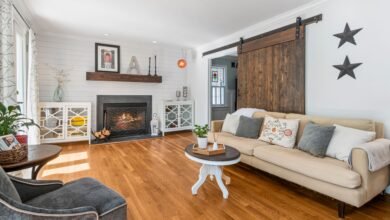
Mid Century Modern Home Decor Ideas: 30 Ways to Style Every Room (2026 Guide)


Mid century modern home decor ideas focus on clean lines, warm wood like teak and walnut, low furniture with tapered legs, earthy colours and sculptural lighting. Add a statement lamp, a geometric rug and a wood sideboard, keep surfaces uncluttered, and mix vintage with modern pieces so the room feels lived in, not themed.
That is the short version. The rest of this guide covers what most articles on this style skip: real measurements, a colour system you can actually follow, mid century modern home decor ideas how to tell a genuine vintage piece from a reproduction, what things cost, how to adapt the look to a small flat or a rental, how wood and leather behave in hot and humid climates, and how to buy furniture across borders. Brand names appear only as examples, and there are no affiliate links.
At a Glance
- Period: roughly 1945 to 1969
- Core materials: teak, walnut, oak, moulded plywood, leather, wool, brass, glass, ceramics
- Core shapes: tapered legs, gentle curves, organic forms, simple geometry
- Core colours: warm neutrals plus olive, mustard, teal and burnt orange
- Golden rule: a few well-chosen pieces beat a room full of retro props
mid century modern home decor ideas :

Mid-century modern (often shortened to MCM or mid-mod) is a design movement that peaked between the mid-1940s and the late 1960s. It grew out of the post-war period, mid century modern home decor ideas when new materials such as moulded plywood, fibreglass, tubular steel and foam made well-designed furniture cheaper to produce, and when houses were built with open plans and large windows that connected indoors and outdoors.
The name itself is newer than the style. It became a popular label in the 1980s, partly through writer Cara Greenberg’s 1984 book on 1950s furniture. People at the time simply called it modern design.
What it is not:
- It is not every retro object. The 1970s brought shag rugs, harvest-gold appliances and heavy dark panelling, which belong to a different look.
- It is not a showroom of famous chairs. A home made entirely of iconic pieces feels like a museum, not a place to live.
- It is not one fixed recipe. mid century modern home decor ideas Scandinavian, American, Brazilian and Japanese designers all interpreted modernism differently, and a good room reflects that range.
Where the Style Comes From
The movement drew on three streams: the Bauhaus idea that form should follow function, Scandinavian craft traditions that prized good joinery and natural wood, mid century modern home decor ideas and American industrial production that made modern design available to ordinary households.
A few reference points worth knowing (verify exact dates against museum sources before ordering anything):
- Charles and Ray Eames (USA): moulded plywood chairs and the Eames Lounge Chair of 1956, produced by Herman Miller.
- Eero Saarinen (Finland/USA): the Womb Chair (1948) and the Tulip pedestal chair and table (1956), both for Knoll.
- George Nelson (USA): the Bubble lamps and the Platform bench, among many other pieces for Herman Miller.
- Hans Wegner (Denmark): the Wishbone chair (1949) and dozens of other chairs celebrated for their craftsmanship.
- Arne Jacobsen (Denmark): the Ant chair (1952) and Egg chair (1958).
- Finn Juhl (Denmark) and Alvar Aalto (Finland): sculptural wood forms and bent laminated wood.
- Poul Henningsen (Denmark): the layered PH pendant lamps that diffuse glare.
- Isamu Noguchi (USA/Japan): the glass-topped Noguchi coffee table (1947) and the paper Akari light sculptures.
- Sori Yanagi (Japan): the Butterfly stool (1954).
- Sergio Rodrigues, Joaquim Tenreiro and Lina Bo Bardi (Brazil): warm hardwoods, leather slings and bold sculptural chairs.
- Pierre Jeanneret (Switzerland/France): furniture for the new city of Chandigarh, India, in the 1950s, often in teak and cane, now collected worldwide.
- Clara Porset (Cuba/Mexico): modern furniture rooted in Latin American materials.
The lesson for your home: this was a global conversation, so your version does not need to look American or Scandinavian. Local hardwoods, cane work and handmade ceramics fit the spirit perfectly.
Mid-Century Modern vs Scandinavian vs Contemporary vs Japandi
These styles overlap, and people often mix them up. Here is how they differ.
| Mid-Century Modern | Scandinavian | Contemporary | Japandi | |
|---|---|---|---|---|
| Wood tones | Warm teak, walnut, rosewood-look finishes | Pale birch, ash, pine | Varies with trends | Light to mid oak, dark accents |
| Colour | Earthy plus bold accents (mustard, teal, orange) | White, grey, soft pastels | Neutral, changes by season | Muted, calm, natural |
| Shapes | Tapered legs, organic curves, geometry | Simple, soft, cosy | Clean, current | Low, minimal, handcrafted |
| Mood | Confident and sculptural | Bright and cosy | Polished and current | Quiet and balanced |
| Pattern | Geometric, atomic, abstract | Light, minimal | Limited | Almost none |
If you like the shapes but find the colours too bold, mid century modern home decor ideas a Scandinavian or Japandi palette on mid-century forms is a very comfortable middle path.
The Core Elements of Mid-Century Modern Decor

Use this as a checklist when planning any room:
- Warm wood with visible grain, in satin or oiled finishes rather than high gloss.
- Legs you can see: tapered, splayed or hairpin legs make furniture look lighter and let floor show underneath.
- Low, long silhouettes: sofas, sideboards and beds that sit closer to the ground.
- Organic and geometric shapes together: kidney-shaped tables beside a grid of square frames.
- Mixed materials: wood with leather, brass, glass, wool, cane or ceramic.
- Sculptural lighting: one or two pieces that act as objects, not just lamps.
- Statement art and handmade objects rather than rows of small accessories.
- Clear surfaces: a few things on each shelf, with space around them.
- Indoor-outdoor connection: plants, big windows, and uncluttered sightlines.
Mid-Century Modern Colour Palette: A System You Can Follow
Most guides only list colours. A better approach is to assign each colour a job, using roughly a 60-30-10 split.
| Role | Share of room | Colours | Where to use them |
|---|---|---|---|
| Base | About 60% | Warm white, cream, oatmeal, soft greige | Walls, large rug, sofa |
| Wood and secondary | About 30% | Teak, walnut, olive, deep teal, charcoal | Furniture, curtains, an accent wall |
| Accent | About 10% | Mustard, burnt orange, tangerine, turquoise, brick red | Cushions, art, a lamp, one armchair |
How to choose paint and fabric:
- Pick the wood first. Teak and walnut lean red-brown and warm, so match them with warm whites, not cool blue-whites.
- Choose two accents only. Three or more accents in one room quickly turns into a theme party.
- Repeat each accent at least twice, at different heights (for example, orange in a cushion and in a piece of art).
- Test paint on two walls and look at it morning and evening. mid century modern home decor ideas North-facing rooms (in the northern hemisphere) will make warm colours look duller.
Neutral and blonde-wood versions: if you prefer a calm room, keep the base warm white, use oak or ash instead of walnut, add one muted accent such as olive or rust, and let texture (boucle, linen, wool) do the work.
Mid-Century Modern Living Room Ideas
1. Start with one low, clean-lined sofa. Look for tapered legs, a straight back and a seat that sits roughly 15 to 18 inches (38 to 46 cm) off the floor. Keep the fabric simple and let cushions carry the colour.
2. Choose a coffee table that fits the room, not a showroom. Leave about 14 to 18 inches (35 to 45 cm) between sofa and table. A round or kidney-shaped table softens a room full of straight lines and is kinder in tight spaces.
3. Anchor the seating with a rug of the right size. At minimum, the front legs of the sofa and armchairs should rest on the rug. In a standard living room this often means about 8 by 10 feet (240 by 300 cm); in a smaller room, 5 by 8 feet (150 by 240 cm) with only the front legs on it.
4. Add one sculptural armchair. A lounge chair in leather or wool is the classic choice. Angle it slightly towards the sofa to encourage conversation.
5. Use a sideboard as the room’s workhorse. A credenza typically stands around 28 to 32 inches (70 to 80 cm) tall. Put a lamp and two objects on top, and keep a media console or storage inside.
6. Give the TV a calmer setting. Place it on a low wood unit, mid century modern home decor ideas surround it with art or shelves, and avoid hanging it above a fireplace if it forces you to look up.
7. Float furniture away from walls. Pulling a sofa 6 to 12 inches (15 to 30 cm) from the wall, or using it to divide an open-plan room, is very much in the spirit of the style and makes the room feel larger.
Mid-Century Modern Dining Room Ideas
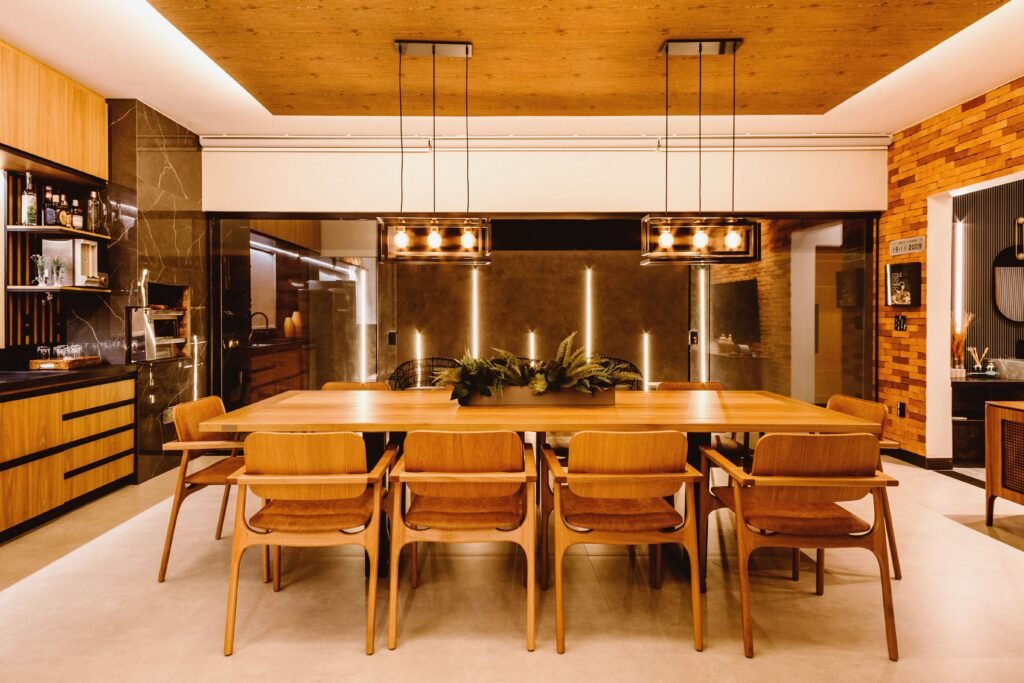
8. Choose a table that suits the people, not just the photo. A tulip table works well for four; for six or more, choose an oval or rectangular wood top, which gives more elbow room than round. mid century modern home decor ideas Standard table height is around 28 to 30 inches (71 to 76 cm), with about 10 to 12 inches (25 to 30 cm) between seat and tabletop.
9. Mix chair styles in one colour family. Four matching chairs can look dated. Try two armchairs at the ends with side chairs along the sides, or choose chairs in different woods that share a finish tone.
10. Hang the light at the right height. A pendant or chandelier should sit about 30 to 36 inches (75 to 90 cm) above the tabletop, mid century modern home decor ideasand be roughly one-half to two-thirds the table’s width.
Mid-Century Modern Kitchen Ideas
11. Use flat-panel wood or painted cabinets with simple pulls. Slab doors in walnut veneer, oak or a muted green work well. Choose slim brass, wood or leather pulls, and avoid ornate profiles.
12. Add a graphic backsplash. Slim rectangular tiles in a stacked pattern, hex tiles or a single glossy ceramic in teal or white give the period feel without covering the whole kitchen in pattern.
13. Hang pendants over the island or counter at 30 to 36 inches (75 to 90 cm) above the surface. Globe, dome or cone shades fit the era. mid century modern home decor ideas Space multiple pendants about 24 to 30 inches (60 to 75 cm) apart, measured centre to centre, so they read as a set.
Mid-Century Modern Bedroom Ideas
14. Choose a low platform bed with a slim wood headboard. It keeps the room open and lets the wall behind it breathe.
15. Use matching-but-not-identical nightstands. Two small teak or walnut tables with drawers, or one table plus one wall-hung shelf, feel more relaxed than a showroom pair.
16. Add a dresser with sculptural handles and a mirror above. A low, wide dresser around 30 inches (75 cm) tall balances the bed. Place a lamp, mid century modern home decor ideas one ceramic piece and one plant on top, not ten items.
17. Keep the palette softer than the living room. Oatmeal bedding, a rust throw and one piece of abstract art produce a calm room without losing character.
Mid-Century Modern Bathroom Ideas
18. Install a floating vanity. A wall-hung wood vanity shows more floor, which makes small bathrooms look larger. Use a veneer or finish rated for bathrooms, and ensure good ventilation.
19. Pick tile and fittings carefully. Large-format neutral tile, or small mosaic in green or blue, pairs well with brushed brass or black fittings. A round mirror and a simple globe sconce finish it.
Mid-Century Modern Entryway Ideas
20. Create a landing spot. A narrow wall-hung console or a slim bench with tapered legs, mid century modern home decor ideas a wall mirror and a hook rail in wood give a welcoming first impression without crowding the passage. Keep a clear walkway of at least 36 inches (90 cm).
21. Add one object with personality. A ceramic bowl for keys, a small lamp or a piece of art sets the tone for the whole home.
Mid-Century Modern Home Office Ideas
22. Use a compact wood desk with tapered legs. A simple writing desk 47 to 55 inches (120 to 140 cm) wide fits most corners. Pair it with a task lamp with a swing arm.
23. Choose an ergonomic chair that does not break the look. Modern task chairs in black leather, mid century modern home decor ideas mesh or upholstered wool in a warm colour can sit comfortably in a mid-century room. Comfort comes first; authenticity second.
Lighting, Rugs, Textiles and Wall Art: The Details That Make the Room
24. Choose one statement ceiling light. The Sputnik chandelier is the cliché; consider also a paper lantern, an opal glass globe, a layered pendant or a brass pendant with clean arms. Hang it at least 7 feet (210 cm) above the floor in open spaces and out of walking paths.
25. Layer light at three heights. Combine ceiling light, a floor lamp (an arc lamp over a sofa, for example) and a table lamp. Use warm bulbs (about 2700K) so wood looks rich, not yellow-grey.
26. Pick a rug with a simple geometric or abstract pattern. Wool and wool-blend rugs hold up well and add texture. If you love pattern, choose it in one place only: the rug or the cushions, not both.
27. Hang art at eye level. The centre of a picture should be at about 57 inches (145 cm) from the floor. mid century modern home decor ideas Over a sofa or sideboard, leave 6 to 8 inches (15 to 20 cm) between furniture and frame, and keep the art about two-thirds the width of the furniture beneath it.
28. Add texture with textiles. Wool throws, linen curtains, mid century modern home decor ideas bouclé cushions and cotton or hemp weaves bring softness to hard lines. Choose curtains that hang from just below the ceiling to the floor to emphasise height.
Plants and Accessories
29. Use plants as sculpture. A single large plant in a ceramic or wooden stand beats a dozen small ones. Group small pots in odd numbers (three or five). Plants add life and softness, but they are not a meaningful air purifier in a typical home, despite what many articles claim, so choose them for looks and mood.
If you have cats or dogs, check each plant with a trusted source such as the ASPCA toxic and non-toxic plant database. Pothos, monstera, snake plant and fiddle-leaf fig are commonly listed as toxic to pets, mid century modern home decor ideas while spider plant, parlour palm and Boston fern are listed as non-toxic.
30. Edit your accessories. Pick a few well-made objects: a hand-thrown vase, a wooden bowl, a brass candleholder or a stack of design books. Leave empty space around them. The style is about restraint.
How to Tell Vintage from Reproduction
Genuine vintage pieces can be wonderful, but fakes and altered pieces are common. No single check is enough; use several together.
- Look for maker’s marks. Labels, stamps and burned-in marks are common on authentic pieces, but they can be replaced or faked. Treat them as one clue, not proof.
- Study the underside and the back. Original unfinished wood darkens with age, joints show consistent tool marks, and screws and hardware look appropriate for the era. Fresh, uniform stain on an old-looking piece is a warning sign.
- Check the joinery. Solid dovetails, mortise-and-tenon joints and carefully shaped parts suggest quality. Staples, thick glue lines and particleboard cores suggest a modern budget item (not necessarily bad, just not vintage).
- Feel the weight and wear. Real age shows in natural wear where hands, elbows and feet touch. Even, artificial distressing does not.
- Expect replaced parts. Foam, upholstery and finishes are often renewed on vintage furniture. Ask what is original.
- Compare prices. If a famous-designer piece costs a small fraction of the usual market price, be suspicious. Ask for provenance, receipts or auction history.
- Ask the seller for more photos. Request clear images of labels, the underside, joints and any damage. A reputable seller will provide them.
Authorised reproduction vs unauthorised replica: an authorised reproduction is made under licence by the design’s rights holder or its partner. A replica copies the design without permission. The legality of replicas differs by country and by how old the design is, so check local rules, mid century modern home decor ideas and note that this guide is not legal advice. Whatever you choose, be clear in your own mind whether you are buying vintage, licensed or inspired-by, and pay accordingly.
Buying Internationally: Shipping, Duties and Local Makers
The best mid-century piece for you may be in another country, or perhaps in a workshop around the corner.
- Shipping: furniture is bulky. Get quotes for door-to-door freight, including insurance, and ask for crating or edge protection for fragile veneer.
- Import duties and taxes: these vary by country and product, and can add significantly to the total. Check your customs authority’s rules before paying.
- Protected woods: all rosewood (Dalbergia) species are regulated under CITES, the international wildlife trade agreement, and some other woods are restricted or require legal sourcing proof. If you buy or move antique rosewood furniture across borders, check what documentation is required. Reputable sellers should be able to explain this.
- Condition risk: wood can crack or warp in transit between very different climates. Ask about acclimatisation and return policies.
- Local carpenters: many cities have skilled makers who can build tapered-leg tables, platform beds and sideboards from local hardwood. Bring a drawing and photos, discuss moisture content and finish, mid century modern home decor ideas and ask to see previous work. Locally available woods such as sheesham, oak, ash and teak can work beautifully if properly seasoned.
- Secondhand platforms: use local marketplaces, auctions and estate sales to find real vintage or good mid-century-style furniture at lower prices, and inspect in person if you can.
Mid-Century Modern Decor on a Budget
The table below gives indicative planning ranges in US dollars for a single room as of late 2026. mid century modern home decor ideas Prices vary widely by country, brand and condition, so use them as a guide and convert to your local currency using current rates.
| Room | Budget (secondhand, flat-pack, DIY) | Mid-range (new, good quality) | Premium (designer or authentic vintage) |
|---|---|---|---|
| Living room | $400 to $900 | $2,000 to $5,000 | $8,000 and up |
| Dining room | $300 to $700 | $1,500 to $3,500 | $5,000 and up |
| Bedroom | $350 to $800 | $1,500 to $3,500 | $5,000 and up |
| Kitchen refresh (no remodel) | $200 to $600 | $1,000 to $3,000 | $5,000 and up |
| Home office | $200 to $500 | $800 to $2,000 | $3,000 and up |
Where to spend and where to save:
- Spend on the sofa frame, a solid wood table or sideboard, a good mattress and the main light. These are used every day and last.
- Save on cushions, throws, vases, frames, side tables and plant pots. Secondhand shops, flea markets and local makers are good sources.
- DIY upgrades: screw-in tapered legs on a plain sofa or cabinet, new brass or wood handles on flat-pack drawers, spray-painted lamp bases, or a framed print of your own.
- Phase it: buy one major piece per quarter instead of filling a room at once. It almost always leads to better choices.
Small Spaces and Rentals
You can get the look without drilling a single hole.
- Choose furniture on legs. Seeing floor underneath makes small rooms feel bigger.
- Pick one hero piece. A good armchair, a sideboard or a lamp is enough to set the tone.
- Use plug-in sconces and floor lamps instead of rewiring.
- Swap hardware. Replace cabinet handles with brass or wood ones, and keep the originals to put back when you move out.
- Add legs. Screw-in tapered legs can lift a basic sofa, bed or cabinet. Check the weight rating.
- Lean art. Large pieces leaning on shelves or a sideboard look relaxed and avoid wall damage. For hanging, use removable hooks within their weight limit.
- Use rugs and textiles to define zones in a studio or open-plan flat.
- Go for multi-function. A drop-leaf table, nesting tables or a sideboard with storage saves space.
Mid-Century Modern in Hot and Humid Climates
Most guides assume a temperate European or North American home. In hot, humid or air-conditioned homes, materials behave differently.
- Wood moves. It absorbs and releases moisture, expanding and shrinking. Aim for steady indoor humidity of about 40 to 55% where possible. A cheap hygrometer helps.
- Be careful with air conditioning. Cold, dry air blowing directly on wood or leather dries it out. Keep furniture away from vents and avoid large swings between on and off.
- Veneer can lift or bubble in persistent humidity or after water exposure. Solid wood, or high-quality veneer on a stable core, is a safer choice.
- Teak is a good tropical choice because it contains natural oils that help it cope with humidity. Other dense hardwoods also do well when properly seasoned.
- Leather can grow mildew if air is stagnant and damp. Allow airflow, wipe spills quickly and avoid placing it against an outside wall. Fabric or cane can be more comfortable in heat.
- Cane and rattan are breathable and period-appropriate, but need protection from direct moisture and strong sun.
- Sun fades colours and dries wood. Use sheer curtains, UV-filtering film or move pieces away from windows.
- Choose breathable fabrics such as linen, cotton and wool blends over heavy synthetic velvets.
- Keep colours lighter if the room is very bright. Warm whites and pale woods reflect heat and light well.
How to Mix Mid-Century Modern With Other Styles
A home with a single style can feel staged. Mixing makes it personal.
- With contemporary: keep mid-century wood furniture and add a modern sofa or simple lighting.
- With traditional: one antique piece such as an old mirror or carved chest adds depth against clean lines.
- With Scandinavian or Japandi: share a calm palette and natural textures.
- With bohemian: add woven baskets, kilims and lots of plants, but keep the furniture simple.
- With industrial: metal shelving and concrete textures suit the period’s love of new materials.
A useful ratio is about 70% mid-century influence and 30% everything else.
How to Care for Wood, Veneer, Leather and Brass
Wood (teak, walnut, oak): dust with a soft cloth and clean with a barely damp cloth, mid century modern home decor ideas drying immediately. Oiled finishes such as teak or Danish oil can be refreshed once or twice a year, or when wood looks dry. Test any product on a hidden area. Use coasters and felt pads, and avoid direct sun.
Veneer: never soak it. Wipe spills quickly and avoid wax or oil build-up. If a corner lifts, a professional repair is better than forcing it down with glue.
Leather: dust regularly, wipe with a slightly damp cloth, and condition once or twice a year with a leather-appropriate product. Keep it away from radiators, vents and direct sun.
Brass: check whether it is lacquered or unlacquered. mid century modern home decor ideas Lacquered brass needs only gentle cleaning with a soft cloth, because abrasive polish can strip the coating. Unlacquered brass develops a patina, and you can polish it if you prefer a bright finish.
Upholstery: vacuum gently, treat stains early, and follow the label’s cleaning code.
Common Mistakes That Make a Room Look Like a Theme Set
- Buying everything vintage. The room feels like a museum. Mix in modern pieces.
- Matching wood tones exactly. A little variation looks more natural.
- Too many colours. Stick to a base and two accents.
- Bulky furniture. The style relies on visible legs and light shapes.
- Hanging art too high. Use the 57-inch (145 cm) rule.
- A rug that is too small. It makes the whole room look disconnected.
- Cold, bright bulbs. They flatten warm wood. Use warm white.
- Cluttered shelves. Leave space for each object to be seen.
- Cheap imitation finishes. Printed wood grain peels and looks fake. If budget is tight, choose a simple painted piece rather than fake grain.
- Forgetting comfort. Some period chairs are beautiful but not comfortable for hours. Sit before you buy.
Frequently Asked Questions
What is mid-century modern decor? It is a style based on mid-20th-century design, featuring simple lines, natural materials such as walnut and teak, tapered legs, earthy colours, and a balance of function and beauty.
What colours are mid-century modern? Warm neutrals form the base. Typical accents include mustard, olive, teal, burnt orange and turquoise, while teak and walnut provide the wood tones.
What furniture is mid-century modern? Look for low sofas with tapered legs, lounge chairs, sideboards or credenzas, tulip tables, moulded chairs, platform beds and sculptural lamps.
What is the difference between mid-century modern and Scandinavian design? Scandinavian style is lighter, with pale woods and white walls, and emphasises cosiness. Mid-century modern uses richer woods, bolder colours and more sculptural forms. Many mid-century designers were Scandinavian, so the two overlap.
How can I tell if a piece is vintage or a reproduction? Check maker’s marks, the underside, joinery, wear patterns and price, and ask the seller for provenance. No single sign is conclusive, so use several together.
Can mid-century modern work in a small apartment or rental? Yes. Choose furniture with legs, use plug-in lighting, swap handles, lean art and rely on rugs and textiles to bring the look together.
What wood is used in mid-century modern furniture? Teak and walnut are the best known. Oak, ash, rosewood (now regulated), birch plywood and cane were also widely used.
How do you care for teak and walnut furniture? Dust regularly, wipe with a barely damp cloth, keep it out of direct sun, use coasters, and refresh oiled finishes once or twice a year with a suitable product.
Is mid-century modern still in style in 2026? Yes. It has stayed popular for years because the furniture is durable, simple and easy to combine with other styles. Rather than following trends, focus on pieces you love and use.
Does mid-century modern work in hot, humid climates? Yes, with care. Choose teak or well-seasoned hardwood, keep furniture away from AC vents and damp walls, control humidity, and consider cane, linen and cotton in place of heavy leather and velvet.
Final Throught
Great mid-century modern home decor is less about owning famous chairs and more about restraint and balance: warm wood, low shapes, one or two bold colours, good lighting and plenty of breathing room. Start with a single room and a single hero piece, get the rug, lighting and art height right, and add vintage or handmade pieces slowly. Done this way, your home will look intentional, not themed, and it will still feel good in ten years.